

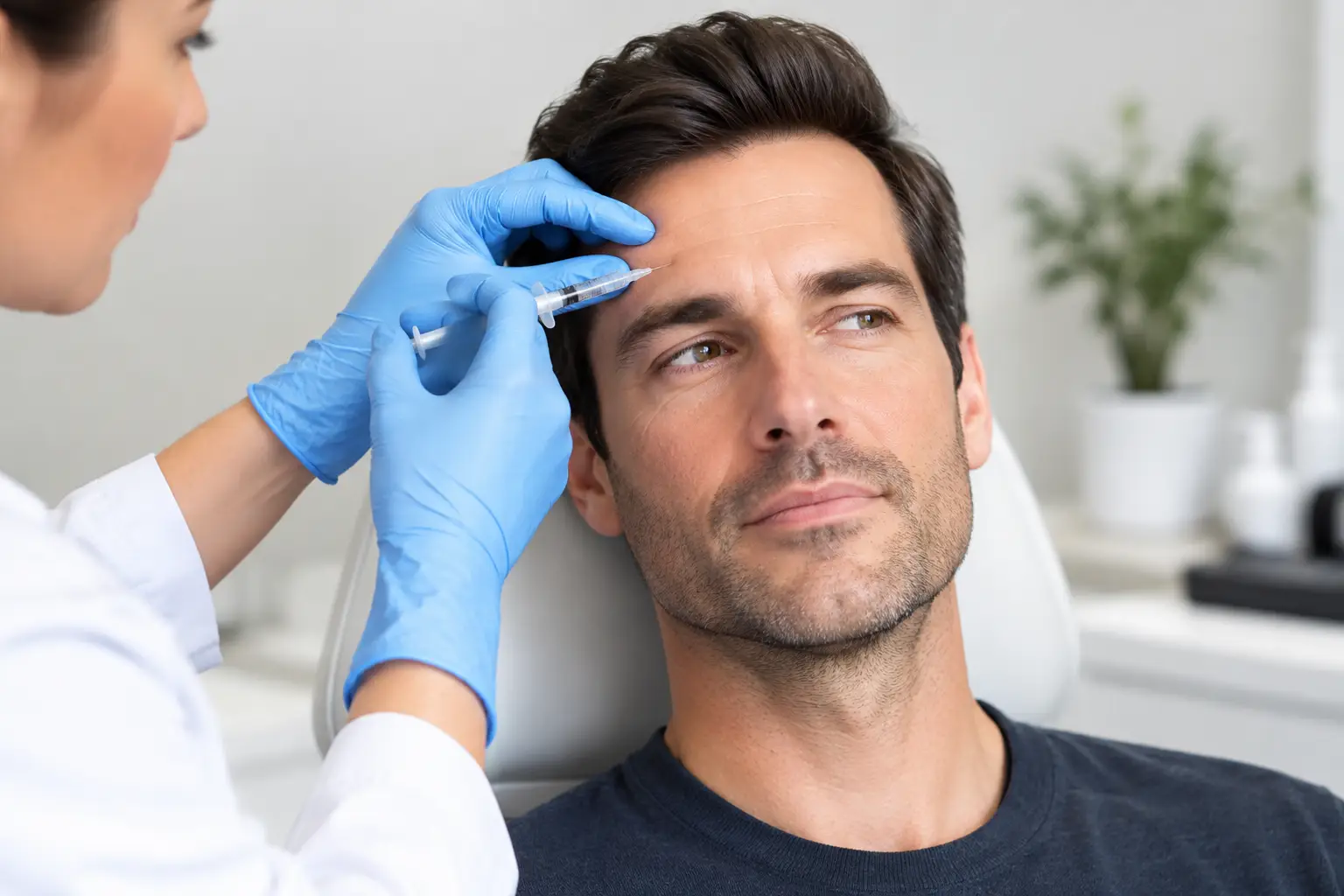
Wondering when should men start Botox? Learn how age, expression lines, skin quality, and goals shape a personalized treatment plan for natural results.
A sharp suit, a disciplined training routine, and a consistent grooming routine can all support a polished appearance. But when forehead lines begin to make you look tired, tense, or older than you feel, the question becomes more personal: when should men start Botox? The honest answer is not tied to one birthday. It depends on your facial movement, skin quality, genetics, sun exposure, and what you want to see in the mirror.
Botox can soften the expression lines that become more noticeable with time, especially across the forehead, between the brows, and around the eyes. For men who value a refined, rested appearance without changing their character, the goal is usually not a frozen face. It is a more relaxed version of their natural expression.
When Should Men Start Botox?
Many men first consider Botox in their late 20s or 30s, when dynamic lines begin to remain visible after the face is at rest. These are often the early forehead creases, vertical “11 lines” between the brows, or crow’s feet that linger after squinting or smiling. Starting at this stage can be an effective preventive approach because relaxing repetitive muscle movement may help keep lines from becoming more deeply etched.
That said, a man in his early 40s or 50s can still be an excellent candidate. Botox does not have an age limit for healthy adults seeking aesthetic treatment. If lines are already present at rest, treatment can soften their appearance, although deeper creases may require a more tailored plan that combines Botox with skin-quality treatments, collagen-stimulating injectables, or resurfacing procedures.
The best time to begin is when expression lines bother you and a qualified medical injector confirms that Botox is suitable for your anatomy and goals. Starting solely because of pressure from social media, a partner, or a passing trend is rarely the right reason. A premium treatment plan should feel considered, personal, and aligned with how you want to look.
The Signs That It May Be Time
Age is less useful than what your face is showing. If you notice lines in photographs even when you are not making an expression, Botox may be worth discussing. The same applies if colleagues repeatedly ask whether you are stressed or tired when you feel perfectly well.
Men with highly expressive faces may see movement lines earlier than friends of the same age. Genetics matter, but so do lifestyle factors. Dubai’s intense sun exposure, frequent outdoor activities, dehydration, smoking, and inconsistent sunscreen use can all make skin look less resilient over time. Squinting in bright light can also strengthen the muscles around the eyes and brows, making wrinkles more pronounced.
A consultation is especially useful when you are unsure whether the concern is muscle movement, volume loss, skin texture, or a combination of all three. Botox treats dynamic wrinkles caused by repetitive contractions. It does not replace lost facial volume, erase every static line, or correct loose skin on its own. Knowing the distinction helps you choose a treatment that delivers visible results without overpromising.
Why Men Need a Different Botox Approach
Male Botox is not simply a higher-dose version of a standard treatment. Men often have stronger facial muscles, a broader forehead, lower brow positioning, and different aesthetic priorities. A treatment plan must respect these details.
For many male patients, preserving a confident brow shape is essential. Too much relaxation in the wrong area can create a heavy or overly arched appearance that feels unfamiliar. The injector must assess how your brows sit naturally, how strongly you animate, and whether your forehead muscles are helping compensate for eyelid heaviness.
Dose is equally individual. Some men need more units than women to achieve a comparable level of muscle relaxation, but more is not automatically better. An experienced injector starts with facial anatomy and desired movement, not a one-size-fits-all number. The aim is controlled refinement: smoother lines, softer tension, and enough expression to look like yourself.
Preventive Botox in Your 20s and 30s
Preventive Botox can make sense for men in their late 20s and 30s who have strong expressions and early lines that concern them. It is often approached conservatively, with carefully placed injections designed to reduce excessive creasing while allowing natural movement.
This is not a commitment to looking treated forever. Results gradually wear off, typically over several months, and maintenance is a personal choice. Some clients prefer regular appointments to keep lines consistently softened, while others book treatment before a major event, a professional milestone, or a season of frequent travel and photography.
There is a trade-off to consider. Starting earlier may help manage repetitive movement before lines become deeper, but it also means building an ongoing aesthetic maintenance routine. The right choice is one that fits your budget, comfort level, and long-term expectations, not an arbitrary age benchmark.
Starting Botox in Your 40s, 50s, and Beyond
If you are starting later, Botox can still create a meaningful improvement. It is particularly effective for reducing a furrowed brow, softening forehead lines, and easing crow’s feet that can make the eye area appear more fatigued. The result may be a more approachable, rested look rather than a dramatic transformation.
For deeper static lines, patience matters. Botox can stop the muscle from repeatedly folding the skin, but it may not fully remove a crease that has been present for years. Skin-focused treatments may be recommended alongside it, depending on your concerns. Options such as hydrating facials, collagen-supporting treatments, or carefully selected injectables can improve the overall quality and structure of the face.
This combination approach is where medical judgment matters most. A skilled practitioner will not add treatments simply to create a larger plan. They will identify what is actually causing the concern and recommend only what supports a balanced, natural-looking result.
What Happens During a Botox Consultation
A proper Botox consultation begins with more than asking which lines you dislike. Your practitioner should review your medical history, previous injectable treatments, medications, allergies, and aesthetic preferences. They should also assess your face at rest and in motion, including how you raise your brows, frown, smile, and squint.
You should be able to clearly explain whether you want subtle softening, a smoother forehead, a less intense frown, or a refreshed eye area. Photographs can be useful, but the most valuable reference is your own face. Natural-looking treatment is built around preserving the features that already make you recognizable.
The injection appointment itself is usually quick, with minimal downtime. Small bumps or pinpoint redness can occur immediately afterward and generally settle quickly. Your provider will give aftercare instructions, including guidance on exercise, heat exposure, and touching the treated areas. Results do not appear instantly. Most people begin to notice a change within several days, with the full effect developing over roughly two weeks.
Choosing the Right Provider Matters
Botox is a medical injectable, not a casual beauty service. Results depend heavily on the injector’s understanding of facial anatomy, product placement, dose, and the way masculine features should be preserved. Choosing a medically supervised clinic also means your treatment can be adjusted thoughtfully over time as your face, preferences, and lifestyle evolve.
At Fit4You Polyclinic, every aesthetic journey begins with a personalized assessment designed to support refined, natural-looking enhancement. The focus is not on chasing an overdone result. It is on creating a treatment plan that helps you look rested, confident, and distinctly yourself.
A Better Question Than “What Age?”
Rather than asking what age men should begin Botox, ask whether your expression lines reflect how you want to be seen. If they make you look more stressed, tired, or severe than you feel, a professional consultation can give you clarity without committing you to treatment. The right time is when you have clear goals, realistic expectations, and a qualified injector who understands that the best result is one no one can quite identify - they simply notice that you look well.
Interested in this treatment?
Book a free consultation with our specialists at Fit4You Polyclinic Dubai.
Book Free Consultation