

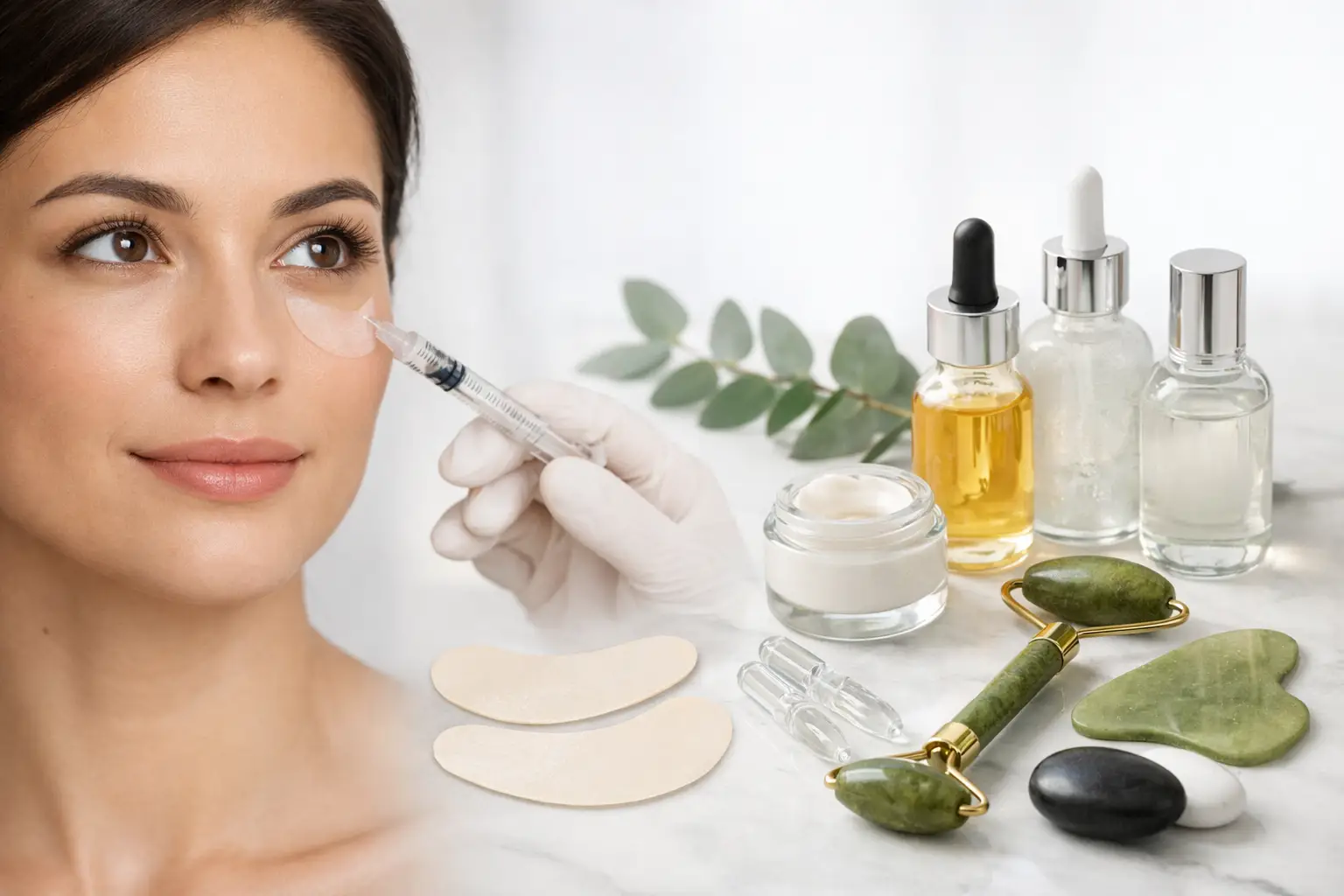
Considering under eye filler alternatives? Learn which treatments improve hollows, crepey skin, and tired-looking eyes with less risk.
That tired, shadowed look under the eyes is not always about sleep. For many people, the real issue is a mix of volume loss, thinning skin, pigmentation, and subtle changes in facial structure. That is exactly why under eye filler alternatives have become such an important conversation in aesthetic medicine. Filler can be effective in the right patient, but it is not the best answer for every under-eye concern, and in this area especially, precision matters.
The under-eye area is delicate, expressive, and quick to show age, stress, and dehydration. It is also one of the easiest areas to overcorrect. If you want a fresher appearance without adding filler to the tear trough, there are several advanced options that can improve skin quality, support collagen, and soften the look of hollowness in a more measured way.
Why patients look for under eye filler alternatives
Under-eye filler has become widely known as a solution for hollow tear troughs, but demand for alternatives continues to grow for good reason. Some patients are not ideal filler candidates because they have puffiness, fluid retention, very thin skin, or under-eye bags caused by fat protrusion rather than volume loss. In these cases, filler can make the area look heavier or more swollen instead of brighter.
Others simply prefer a different strategy. They may want gradual, natural-looking improvement, less product in the face, or treatments that focus on skin texture and collagen rather than volume alone. In a premium clinical setting, the goal is not to force one treatment onto every concern. It is to match the anatomy, the skin condition, and the lifestyle of the patient with the most intelligent approach.
The best under eye filler alternatives depend on the real cause
The phrase "under-eye hollows" sounds simple, but the cause is often layered. One patient may have early volume loss. Another may have crepey skin and dehydration. Someone else may be dealing with pigmentation, prominent veins, or midface descent that casts a shadow beneath the eyes.
That is why a proper consultation matters. The most effective treatment plan usually starts with identifying whether the area needs collagen support, skin thickening, tightening, brightening, or structural support from the cheeks rather than the tear trough itself. Once that is clear, the alternatives become far more strategic.
Skin boosters for crepey, tired-looking under-eyes
For patients whose main concern is fine lines, dehydration, and a papery skin texture, skin boosters can be a strong alternative to filler. Treatments such as Profhilo or carefully selected injectable skin-rejuvenation protocols do not work by creating obvious volume. Instead, they improve hydration within the skin and support overall quality.
This is often a better fit for patients who say the under-eye area looks tired, wrinkled, or thin rather than deeply hollow. The result is usually softer, fresher skin with a more refined finish. It is not a one-visit transformation in the way some people expect from filler, but it can look more elegant and believable over time.
The trade-off is that skin boosters are subtle. If there is a pronounced tear trough caused by structural volume loss, they may help the quality of the skin without fully correcting the shadow.
PRP and regenerative approaches
Platelet-rich plasma, often called PRP, is one of the most discussed under eye filler alternatives because it uses your body’s own growth factors to support repair and rejuvenation. In the right patient, PRP can improve crepiness, mild darkening, and overall skin vitality under the eyes.
This option tends to appeal to patients who want a regenerative approach rather than a volumizing one. The area can look healthier and better supported, especially after a series of sessions. It is also useful for patients who are cautious about traditional injectables in a high-risk area.
PRP does have limits. It is not designed to replace significant lost volume, and results build gradually. Patients looking for dramatic correction after one appointment may find it too gentle. Patients who value low-maintenance, natural progress often find it worth considering.
Energy-based tightening around the eye area
When the issue is mild laxity rather than hollowing alone, energy-based treatments can make a visible difference. Ultrasound and radiofrequency technologies are designed to stimulate collagen and tighten tissue over time. This can be especially useful when the under-eye area appears tired because the skin has become thinner and less supported.
For the right candidate, these treatments help improve firmness and refine texture without placing filler into the tear trough. They are often chosen by patients who want a non-surgical option with little interruption to their schedule. In a technology-led clinic, this approach fits well with patients seeking visible results while avoiding an overfilled appearance.
What matters here is patient selection. Energy-based treatments can improve quality and support, but they do not erase prominent fat pads or severe hollowing. They work best as part of a wider anti-aging plan, especially when paired with skin-focused treatments.
Microneedling and RF microneedling for texture and collagen
If the under-eye concern is mostly fine lines, thinning skin, or a creased appearance when smiling, microneedling can be a smart option. RF microneedling adds controlled heat to stimulate collagen more deeply, which can make it particularly effective for skin that looks fragile or prematurely aged.
This is one of the more practical alternatives for patients who want to improve the canvas rather than add volume. Smoother texture can reduce the tired look of the eyes even when the anatomy has not changed dramatically. It also works well for those who are starting to notice aging under the eyes but are not ready for injectables in that area.
The key is realism. Microneedling improves skin behavior, not facial structure. If shadows come mainly from volume loss or cheek descent, this treatment alone will not fully solve the issue.
Cheek support instead of direct under-eye filling
One of the most overlooked alternatives is treating the midface rather than the tear trough itself. In some patients, the under-eye shadow is made worse because the cheek has flattened or descended, reducing support beneath the eye. Restoring structure higher in the face can soften the transition and make the under-eye area look less hollow without placing filler directly where swelling is most likely.
This is a sophisticated approach and one that often produces a more natural result. Rather than chasing the hollow, the treatment plan addresses the support system around it. For patients who want refinement without obvious change, this can be one of the most elegant strategies available.
It is not the right answer for every case, but when anatomy points in that direction, it often outperforms direct correction under the eyes.
Polynucleotides and next-generation eye rejuvenation
Newer regenerative injectables, including polynucleotide-based treatments, are gaining attention for the under-eye area because they focus on tissue repair, hydration, and skin resilience. These are not classic fillers. They are used to improve the condition of delicate skin and support a healthier, smoother appearance over a series of sessions.
For patients who want innovation without heaviness, this category is especially appealing. It aligns with the modern preference for skin quality over instant fullness. At Fit4You Polyclinic, this kind of personalized, technology-forward thinking reflects what patients increasingly want from aesthetic care - tailored treatments that respect the face rather than simply adding volume.
As with other regenerative options, patience is part of the process. The improvement tends to be progressive, not immediate.
When surgery may be the better answer
Not every under-eye concern should be treated non-surgically. If there are prominent eye bags, significant skin laxity, or fat prolapse, lower blepharoplasty may ultimately be more effective than any injectable or device-based option. This is where honest consultation matters most.
Aesthetic medicine works best when it stays within its strengths. A non-surgical treatment can refresh, tighten, and improve skin quality, but it cannot fully replace surgery in cases where anatomy clearly calls for it. The most trustworthy plan is the one that tells you that.
How to choose the right alternative
If you are exploring under eye filler alternatives, the best question is not "What is the best treatment?" It is "What is actually causing my under-eye concern?" That shift changes everything.
For crepey texture and dehydration, skin boosters or regenerative injectables may be ideal. For laxity, energy-based tightening may be more effective. For early aging and collagen loss, microneedling or PRP may make sense. For structural shadowing, cheek support may be the smarter route. And for advanced eye bags, surgery may be the treatment that truly fits.
The under-eye area rewards restraint. The most beautiful result is usually the one that looks rested, smooth, and quietly polished - not noticeably treated. A thoughtful plan, built around your anatomy rather than a trend, is what gets you there.
Interested in this treatment?
Book a free consultation with our specialists at Fit4You Polyclinic Dubai.
Book Free Consultation