

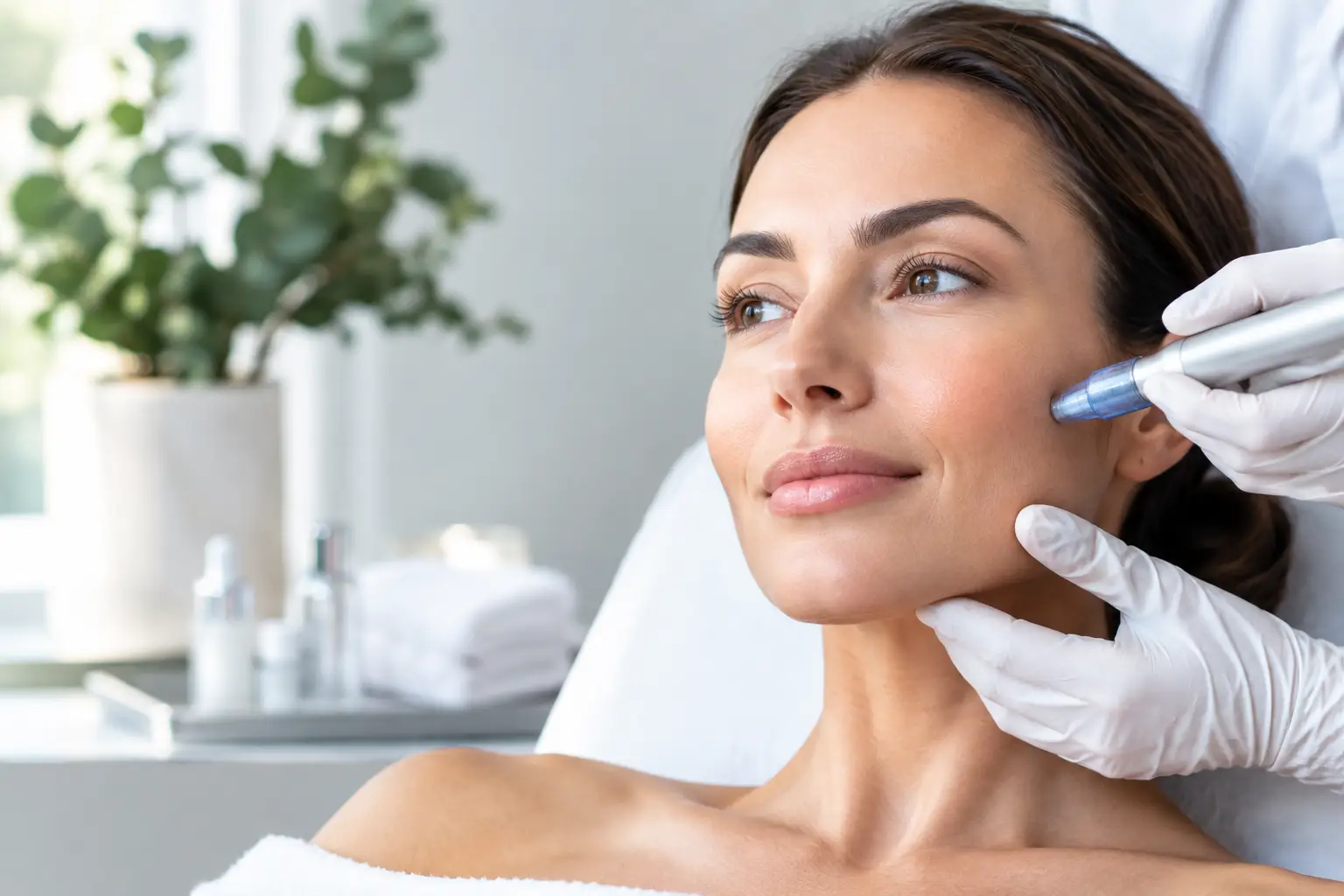
Regenerative dermatology 2026 focuses on collagen, cellular signaling, and personalized care for firmer, healthier-looking skin with minimal downtime.
A polished complexion is no longer defined by how much volume has been added or how aggressively a concern has been treated. Regenerative dermatology 2026 is moving aesthetic care toward a more refined goal: helping skin rebuild its own support structure, improve its quality over time, and look naturally rested rather than visibly altered.
For clients who want meaningful rejuvenation without surgery or extended downtime, this shift matters. The most successful plans are not built around a single trending injectable or device. They combine medically guided treatments that encourage collagen renewal, improve hydration, address pigmentation and texture, and protect the results with intelligent maintenance.
What regenerative dermatology means in 2026
Regenerative dermatology refers to treatments designed to stimulate the skin's natural repair processes. Rather than simply filling a line or temporarily tightening the surface, these approaches aim to improve the environment beneath the skin: collagen, elastin, hydration, cellular communication, and tissue support.
The word “regenerative” deserves a careful interpretation. It does not mean that every treatment can reverse aging, replace surgery, or create entirely new skin. Results depend on the concern being treated, the quality of the skin at the starting point, lifestyle factors, and the expertise behind the treatment plan. But when appropriately selected, regenerative treatments can create changes that are gradual, elegant, and increasingly visible over several months.
This is especially appealing for patients who notice early laxity, crepey texture, dullness, fine lines, enlarged pores, acne scarring, or a face that appears tired despite healthy habits. It is also highly relevant after periods of weight change, stress, travel, sun exposure, or hormonal shifts, all of which can affect skin quality and facial support.
The treatments shaping regenerative dermatology 2026
The best regenerative strategies are layered. A consultation should establish whether the priority is collagen stimulation, skin hydration, pigmentation correction, volume restoration, or structural tightening. Often, more than one concern is present, but treating everything at once is not always the wisest approach.
Biostimulators for gradual facial support
Biostimulatory injectables are among the most important developments in modern facial rejuvenation. Unlike traditional fillers, which primarily create immediate volume or contour, biostimulators are chosen to encourage collagen production over time. They can be valuable for diffuse volume loss, thinning skin, temple hollowing, cheek support, and areas where a soft, long-term improvement is preferred over a more sculpted result.
Sculptra is a well-known example of this category. The treatment is typically performed as a series, with results developing progressively rather than appearing overnight. That makes it a strong option for clients who value discretion and want others to notice that they look refreshed, not “done.”
The trade-off is patience. Biostimulators require thoughtful placement, appropriate treatment intervals, and realistic expectations. They are not the answer for every wrinkle or every facial shape, and they should be performed by an experienced medical professional who understands facial anatomy and product selection.
Injectable skin remodeling
Hydration and skin elasticity have become central to aesthetic planning. Injectable skin remodelers, including Profhilo, are designed for patients whose skin feels less resilient, less luminous, or increasingly fine in texture. Rather than focusing on contouring, these treatments support a smoother, more hydrated-looking complexion and can be considered for the face, neck, décolletage, and hands when clinically appropriate.
This category is particularly useful when a client wants to improve the overall quality of their skin without changing their features. It may also complement other treatments beautifully. For example, a patient can use a skin remodeler to enhance glow and elasticity while using a biostimulator for deeper collagen support or targeted filler for a precise structural concern.
Energy-based collagen stimulation
Non-surgical skin tightening continues to evolve because it meets a clear demand: visible improvement with little interruption to work, social plans, or travel. Technologies such as Sofwave use controlled ultrasound energy to stimulate collagen production in the deeper layers of the skin. The goal is firmer, tighter-looking skin that develops naturally over time.
Energy-based treatments can be particularly relevant for mild to moderate skin laxity around the brow, jawline, neck, and lower face. They do not produce the same result as a surgical facelift, especially when laxity is advanced. Yet for the right candidate, they can help postpone more invasive procedures or maintain the outcome of previous aesthetic treatments.
Treatment planning is essential. Skin thickness, degree of laxity, age, facial anatomy, and previous procedures all influence whether ultrasound, radiofrequency, laser-based care, injectables, or a combination will offer the most satisfying result.
Resurfacing and laser-led skin renewal
Skin regeneration is not only about firmness. Uneven tone, sun-related pigmentation, rough texture, acne marks, and enlarged pores can make the complexion look older even when facial contours remain strong. Laser and resurfacing treatments help address these visible concerns by encouraging controlled skin renewal.
The right approach depends on complexion, sensitivity, downtime tolerance, and the issue being treated. In a sunny climate such as Dubai, disciplined sun protection is particularly important before and after any procedure that targets pigment or stimulates renewal. A powerful treatment without proper aftercare can compromise the result, especially for skin prone to post-inflammatory hyperpigmentation.
A conservative series of treatments can sometimes outperform one overly aggressive session. The goal is healthy, even, luminous skin, not a recovery process that feels harder than the concern itself.
Why personalized combinations create better results
A single treatment can be excellent, but a coordinated plan is often more effective because facial aging and skin change rarely have one cause. Loss of collagen can occur alongside dehydration, pigmentation, muscle movement, reduced volume, and sun damage. Treating only one layer may leave the overall result incomplete.
A patient with early jawline softness, for instance, may benefit from ultrasound tightening and a collagen-stimulating injectable. Another patient may need skin remodeling for dehydration, a Hydrafacial for immediate clarity, and a carefully timed laser treatment for persistent discoloration. Someone with deeper structural volume loss may still benefit from dermal filler, but in a more restrained, strategic way than was common in the past.
This is where medical judgment matters most. More treatments do not automatically mean better results. The ideal plan respects facial proportion, avoids unnecessary product, allows time to assess response, and evolves as the skin changes.
What to ask before choosing a regenerative treatment
The appeal of regenerative care has made it easy for marketing language to outpace clinical reality. Before committing to a treatment, ask what concern it is specifically intended to improve, when you should expect visible change, how long results may last, and what maintenance is likely to involve.
You should also ask whether the treatment is appropriate for your skin type, medical history, and current medications. Pregnancy, active skin infection, certain autoimmune conditions, recent procedures, and a history of abnormal scarring can affect eligibility. A reputable clinic will discuss risks, recovery, and alternatives rather than promising a universal solution.
Photography and skin analysis can also be helpful. They create a clear baseline and make subtle changes easier to assess over time. This is valuable with regenerative treatments, where progress may be gradual and cumulative rather than dramatic after one appointment.
The maintenance mindset: protect the investment
Regeneration works best when daily habits support the treatment plan. Consistent broad-spectrum sunscreen, medical-grade skincare when recommended, adequate hydration, sleep, and avoiding smoking can all influence how skin ages and recovers. These foundations are not glamorous, but they are often what preserve the refinement achieved in the treatment room.
Maintenance may include periodic Hydrafacial treatments, skin boosters, collagen-stimulating sessions, or targeted laser care depending on your needs. The right interval is personal. Some clients prioritize a focused correction before a major event, while others prefer a year-round plan that keeps skin consistently clear, firm, and luminous.
At Fit4You Polyclinic, regenerative care is approached as a bespoke aesthetic journey, guided by certified specialists and selected for results that complement your features rather than compete with them. The most compelling result is not a new face. It is skin that looks stronger, smoother, and unmistakably like your own.
Interested in this treatment?
Book a free consultation with our specialists at Fit4You Polyclinic Dubai.
Book Free Consultation