

This PRP hair restoration guide explains candidacy, treatment timing, results, and aftercare for natural-looking support for thinning hair in Dubai.
Hair thinning rarely announces itself all at once. It may begin with more strands in the shower, a widening part, reduced density at the temples, or a hairline that no longer frames the face the way it once did. This PRP hair restoration guide explains how platelet-rich plasma can support healthier-looking, fuller hair through a personalized, medically supervised treatment plan.
PRP is not a shortcut or a replacement for a proper diagnosis. It is an advanced, non-surgical option for people who want to address early-to-moderate thinning without surgery, prolonged downtime, or an artificial-looking result. The most successful plans begin by identifying why the hair is thinning, then setting a realistic strategy for maintaining and improving density over time.
What PRP Hair Restoration Is
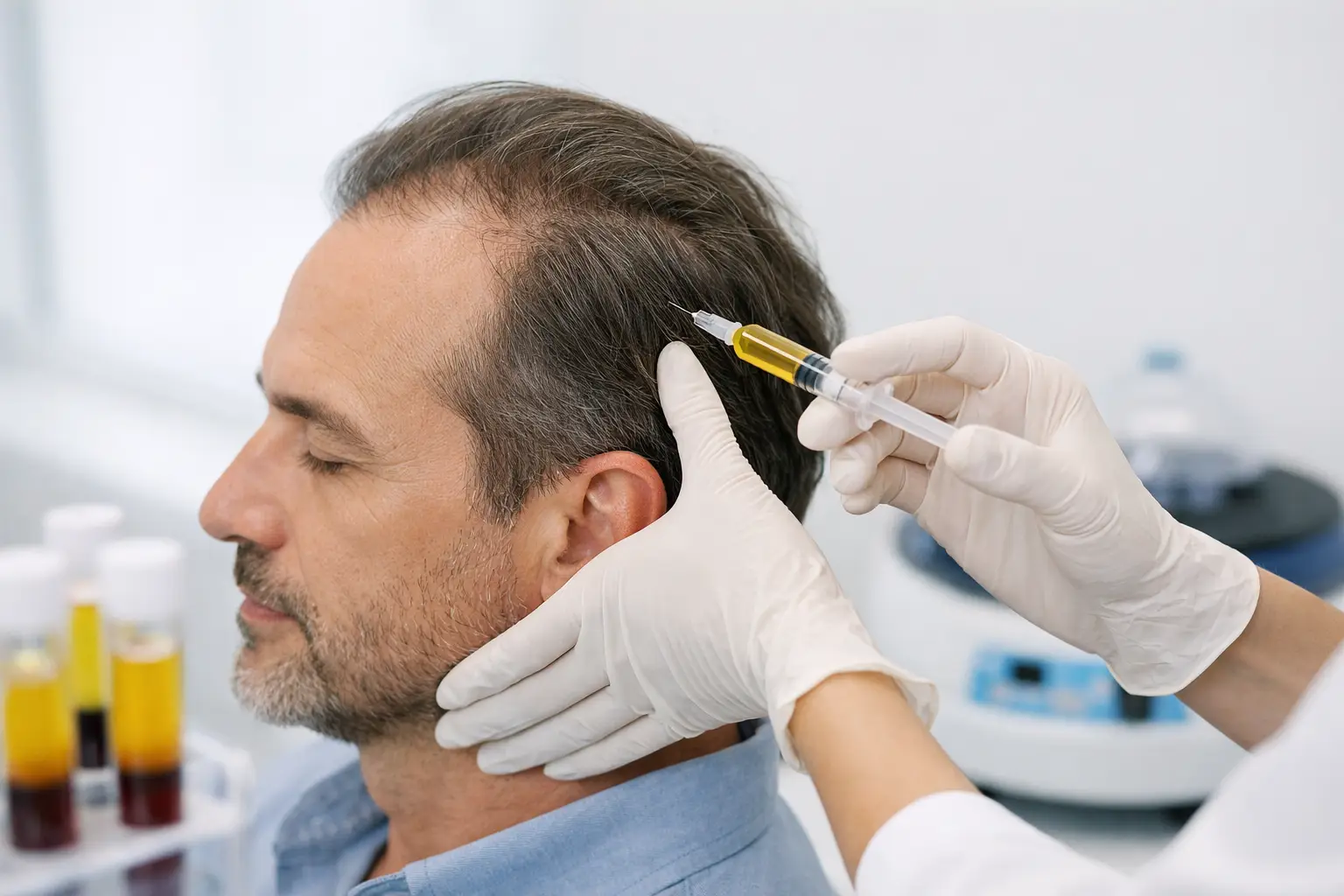
PRP stands for platelet-rich plasma. The treatment uses a concentrated portion of your own blood that contains platelets and naturally occurring growth factors. After a small blood draw, the sample is processed in a centrifuge to separate and concentrate the platelet-rich plasma. The PRP is then placed into targeted areas of the scalp using precise injections.
The goal is to support the environment around weakened hair follicles. Growth factors in the plasma may encourage follicular activity, improve scalp circulation, and help existing hairs grow with better quality. For the right candidate, this can translate into reduced shedding, stronger-feeling strands, and improved visible density over a series of treatments.
PRP does not create new follicles where none remain. That distinction matters. When follicles are still present but producing finer, shorter, or slower-growing hair, PRP may be particularly valuable. Areas that have been smooth and bare for many years are less likely to respond as noticeably.
Who Is a Good Candidate for PRP Hair Restoration?
The best candidates typically have early or progressive thinning, rather than advanced hair loss. Men noticing recession at the temples or thinning at the crown and women experiencing a widening part or diffuse loss may be suitable candidates, provided an assessment confirms that PRP is appropriate.
A consultation should look beyond the scalp. Hair shedding can be influenced by genetics, hormonal shifts, stress, recent illness, nutrition, thyroid concerns, medication changes, styling damage, and inflammatory scalp conditions. Treating the cause is just as important as treating the visible concern. For example, sudden shedding after a stressful period may require a different approach from gradual genetic thinning.
PRP may be recommended as a standalone treatment or as part of a broader hair restoration plan. It is often paired with clinician-guided scalp care, topical or oral therapies when medically appropriate, and lifestyle measures that support healthy hair growth. The right combination depends on your diagnosis, goals, medical history, and tolerance for ongoing maintenance.
When PRP May Not Be the Right Choice
PRP is not suitable for everyone. People with certain blood disorders, active scalp infections, uncontrolled medical conditions, or conditions affecting platelet function may need an alternative approach. Pregnancy, breastfeeding, and the use of specific medications can also affect treatment timing.
A premium aesthetic clinic should never promise that every type of hair loss will respond. Honest recommendations protect both your health and your investment. If a scalp evaluation suggests that another treatment, medical referral, or hair transplant consultation would better serve your goals, that should be discussed clearly.
What Happens During a PRP Hair Treatment?
A PRP appointment is typically completed within about 45 to 60 minutes, although timing can vary based on the treatment area and preparation protocol. Your clinician begins with a detailed scalp assessment and photographs when appropriate, creating a meaningful baseline for tracking changes.
A small amount of blood is drawn, much like a routine lab test. It is then placed in a specialized centrifuge to isolate the platelet-rich component. Once prepared, the PRP is carefully injected into areas of thinning using a strategic pattern designed around your hairline, part, crown, and existing density.
Most clients describe the procedure as manageable, especially when numbing options and comfort techniques are used. You may feel brief pressure or a pinching sensation at injection points. Mild tenderness, scalp tightness, or small areas of redness can occur afterward, but these effects usually settle quickly.
For clients with demanding schedules, the appeal is clear: there is generally little to no social downtime. You can often return to work or daily plans the same day, although your provider may advise avoiding intense workouts, excessive heat, swimming, or scalp irritation for a short period.
How Many Sessions Will You Need?
PRP is usually delivered as a series rather than a one-time appointment. A common starting plan includes three sessions spaced roughly four to six weeks apart. After the initial series, maintenance treatments may be recommended every four to six months, depending on the pattern of hair loss and your individual response.
This schedule is not arbitrary. Hair growth follows a slow cycle, and changes in follicle behavior take time to become visible. A single treatment may offer support, but consistent sessions give the scalp a more meaningful opportunity to respond.
Your plan should be tailored rather than packaged as a guarantee. Someone with mild diffuse thinning may need a different schedule from a client managing ongoing hereditary hair loss. Seasonal shedding, hormonal changes, and adherence to supporting treatments can also influence when maintenance is needed.
When Will You See PRP Hair Restoration Results?
Patience is part of the treatment. Some clients notice less shedding or improved hair texture within the first few months, while visible changes in density often take three to six months. Results may continue to develop over six to 12 months as hairs move through their natural growth cycles.
The most realistic goal is improvement, not instant transformation. PRP can help existing hair look fuller and healthier, but it cannot guarantee a return to the density you had years ago. Consistent photography, taken in the same lighting and angle, is one of the most reliable ways to see subtle but meaningful progress.
Results depend on factors including age, genetics, the duration of thinning, scalp health, treatment technique, and whether other underlying contributors are being addressed. Clients who begin treatment sooner often have more active follicles to work with, which is why early consultation can make a difference.
Aftercare That Protects Your Investment
Aftercare is straightforward, but it matters. Follow your clinician’s instructions regarding hair washing, exercise, sun exposure, and products for the first day or two. Avoid scratching, massaging, or applying heavy styling products to the treated scalp immediately after your session.
Because PRP relies on your body’s own platelet activity, your provider may also discuss medications and supplements before treatment. Do not stop prescribed medication on your own. Instead, share a complete medical history so your care plan can be designed safely.
Long-term hair health benefits from everyday consistency. A balanced diet with adequate protein, gentle scalp care, stress management, and prompt attention to new shedding can all support the work being done in the treatment room. Chemical services, tight hairstyles, and frequent high-heat styling may also deserve a closer look if breakage is contributing to the appearance of thinning.
Choosing a Clinic for PRP Hair Restoration
PRP is only as thoughtful as the assessment and protocol behind it. Look for a medically supervised setting that evaluates your pattern of loss, discusses your health history, uses appropriate sterile technique, and explains what the treatment can and cannot do. Credentials, experience, and a clear approach to follow-up matter as much as the treatment itself.
At Fit4You Polyclinic, hair restoration planning is approached with the same precision as every aesthetic journey: personalized, evidence-aware, and centered on results that still look like you. The objective is not a dramatic overnight claim. It is a refined plan that supports confidence, respects your time, and gives your hair the best possible conditions to thrive.
If thinning is affecting how you style your hair, show up in photographs, or feel in professional settings, a scalp consultation can replace uncertainty with a clear next step. The earlier you understand what is happening, the more options you may have to protect the hair you have.
Interested in this treatment?
Book a free consultation with our specialists at Fit4You Polyclinic Dubai.
Book Free Consultation