

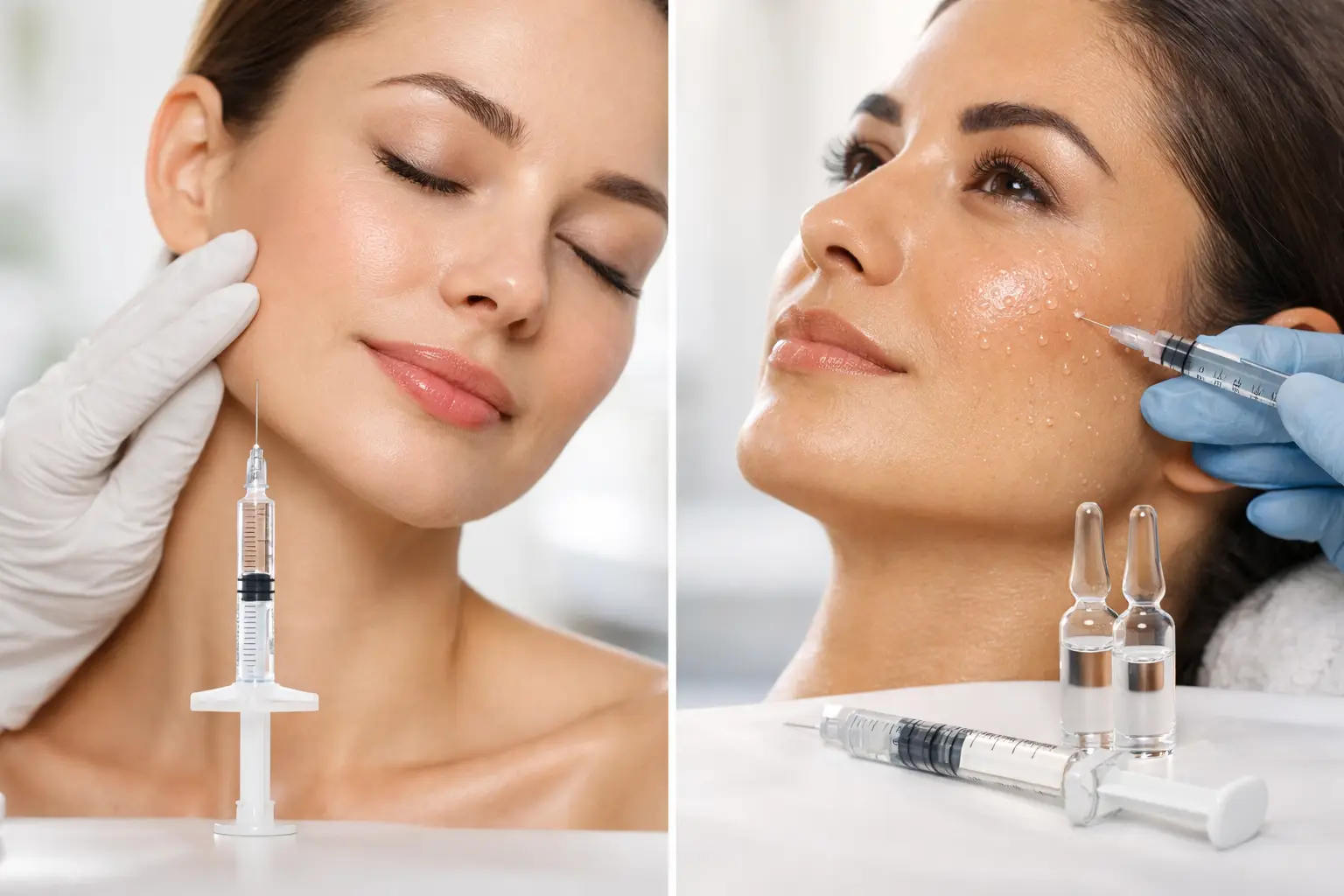
Profhilo vs skin boosters - understand the difference in hydration, glow, texture, and lift so you can choose the right injectable for your skin.
If you are comparing profhilo vs skin boosters, you are probably not looking for a dramatic change in facial shape. You want skin that looks fresher, smoother, and more refined - the kind of result people notice without being able to pinpoint why. That is exactly where this decision matters, because while both treatments improve skin quality, they do not work in the same way or suit the same goals.
At a glance, Profhilo and skin boosters can seem interchangeable. Both are injectable treatments built around hyaluronic acid, both are used to improve hydration and radiance, and both appeal to patients who want natural-looking rejuvenation with minimal downtime. But the similarities stop there. The difference comes down to how the product behaves in the skin, what concern it is best for, and what kind of result you want to see in the mirror.
Profhilo vs skin boosters: the core difference
The simplest way to understand profhilo vs skin boosters is this: Profhilo is designed to spread broadly through the skin and stimulate overall skin remodeling, while skin boosters are generally placed more precisely to improve hydration, texture, and fine lines in targeted areas.
Profhilo contains a high concentration of stabilized hyaluronic acid and is injected at specific points so it can diffuse beneath the skin. Rather than creating volume like a filler, it works more like a bio-remodeling treatment. It is chosen for skin that feels crepey, tired, lax, or less resilient than it used to be.
Skin boosters are a broader category. Different brands and formulations exist, but the shared purpose is to deeply hydrate the skin and improve surface quality. They are often used more superficially and can be customized for delicate areas such as under the eyes, cheeks, neck, or around the mouth. If your concern is dullness, dehydration, or early fine lines, skin boosters often make sense.
That distinction matters because one treatment leans more toward structural skin improvement, while the other often focuses more on micro-hydration and texture refinement.
What Profhilo is best at
Profhilo is often chosen by patients who say their skin no longer looks firm, even if they are not ready for fillers or more intensive procedures. The treatment helps address laxity, loss of elasticity, and that subtle thinning that can make the face look older even when there are not many deep wrinkles.
Its strength is not precision. Its strength is overall quality. Patients often notice that their skin looks more supple, smoother, and better supported. The glow is there, but the bigger value is that the skin starts behaving like healthier skin again.
This is why Profhilo is frequently recommended for the lower face, cheeks, jawline area, neck, and sometimes the hands. It suits people who want a refreshed appearance without added contour or visible fullness. For many patients in their 30s, 40s, and 50s, it sits in that ideal space between skincare and volumizing injectables.
What skin boosters are best at
Skin boosters are excellent when the main complaint is dryness, dullness, rough texture, or fine etched lines. They deliver hyaluronic acid in a way that helps the skin attract and retain water, giving it a fresher and more luminous finish.
Where Profhilo tends to be broad and remodeling-focused, skin boosters can be more tailored. That makes them useful for smaller, more delicate, or more treatment-specific zones. Think under-eye crepiness, smoker's lines, cheeks that look flat from dehydration, or skin that needs a smoother finish before an event season.
The result is usually less about tightening and more about refinement. Skin can appear plumper, more rested, and more polished. For younger patients, skin boosters can be a smart preventive treatment. For mature patients, they can complement other aesthetic procedures beautifully.
Profhilo vs skin boosters for glow, texture, and firmness
This is where the choice becomes more practical.
If your top priority is glow, either option may help, but skin boosters often deliver that dewy, hydrated look more directly. If your skin looks fatigued, makeup sits poorly, or you feel you have lost bounce rather than volume, skin boosters are often the faster match.
If your top priority is firmness, Profhilo usually has the advantage. It is better suited to skin that feels less elastic or has started to loosen around the lower face and neck. The improvement is still subtle and natural, but the focus is on support rather than surface shine.
If texture is your main issue, it depends on the type of texture. Dehydrated, papery, rough-feeling skin often responds beautifully to skin boosters. Crepey texture linked to age-related thinning may benefit more from Profhilo. This is why a proper consultation matters - two people can both describe their concern as “bad texture” and need completely different treatment plans.
Which treatment lasts longer?
Longevity depends on the product used, your skin condition, metabolism, and your treatment schedule. In general, Profhilo is often performed as an initial course of two sessions spaced about four weeks apart, followed by maintenance. Many patients notice progressive improvement over the following weeks, with results lasting around six months depending on the individual.
Skin boosters vary more. Some are done as a series of treatments, while others may be repeated seasonally or before key events. If hydration is your main issue, maintenance may be needed more regularly, especially in climates that are harsh on the skin.
So when patients ask which lasts longer, the more useful question is which result you want to maintain. If you are treating laxity and collagen-depleted skin, Profhilo may offer a longer-lasting improvement in skin behavior. If you are chasing continuous luminosity and smoothness, skin boosters may become part of a more frequent skin maintenance plan.
Downtime, comfort, and what to expect
Both treatments are considered low-downtime, which is part of their appeal. You can usually expect mild swelling, small injection marks, or minor bruising for a short period after treatment.
Profhilo is injected at fewer points, but the product itself spreads under the skin, so you may notice temporary bumps at the injection sites immediately afterward. These usually settle quickly. Skin boosters may involve more injection points depending on the technique and treatment area, especially if the goal is precise correction.
Neither treatment is about instant overfilled results. The best outcomes build gradually, leaving skin looking healthier rather than “done.” That subtlety is exactly why these treatments are so popular among patients who want elegant, credible rejuvenation.
Who is the better candidate for each?
Profhilo tends to be ideal for patients noticing early to moderate skin laxity, reduced elasticity, crepiness, or overall skin fatigue. It is especially attractive if you do not want filler but still want visible rejuvenation.
Skin boosters tend to suit patients with dehydration, dullness, acne-related textural irregularity, fine superficial lines, or delicate-area concerns. They are also a strong option for younger patients who want prevention and glow rather than correction.
Of course, age alone is not the deciding factor. A patient in their early 30s with significant dehydration may be a stronger skin booster candidate than someone older with firmer skin. A patient in their late 20s with early laxity after weight changes might benefit from Profhilo sooner than expected. Good treatment planning is always about skin condition, not just age bracket.
Can you combine Profhilo and skin boosters?
Yes - and in the right patient, combination treatment can be the smartest approach.
Profhilo and skin boosters are not competitors in every case. Sometimes they solve different layers of the same concern. One can improve skin quality and support, while the other fine-tunes hydration and surface texture in a more focused way. This is particularly useful when the face needs both overall rejuvenation and delicate-area refinement.
At a medically led aesthetic clinic such as Fit4You Polyclinic, that decision should be based on facial assessment, skin thickness, degree of laxity, existing injectables, and your tolerance for maintenance. Luxury aesthetic care is not about choosing the trendiest treatment. It is about choosing the treatment plan that gives your skin the most elegant result.
So, how do you choose?
If you want skin that feels tighter, stronger, and more resilient, Profhilo is often the more appropriate choice. If you want skin that looks juicier, smoother, and more radiant, skin boosters may be the better fit. If you want both, a layered treatment plan may give the most complete result.
The real answer to profhilo vs skin boosters is not which one is better overall. It is which one is better for your skin now. The most refined results come from treating the actual issue beneath the surface, not just choosing the name you hear most often.
Beautiful skin rarely comes from one-size-fits-all decisions. It comes from precision, timing, and knowing when hydration is enough - and when the skin needs something more restorative.
Interested in this treatment?
Book a free consultation with our specialists at Fit4You Polyclinic Dubai.
Book Free Consultation