

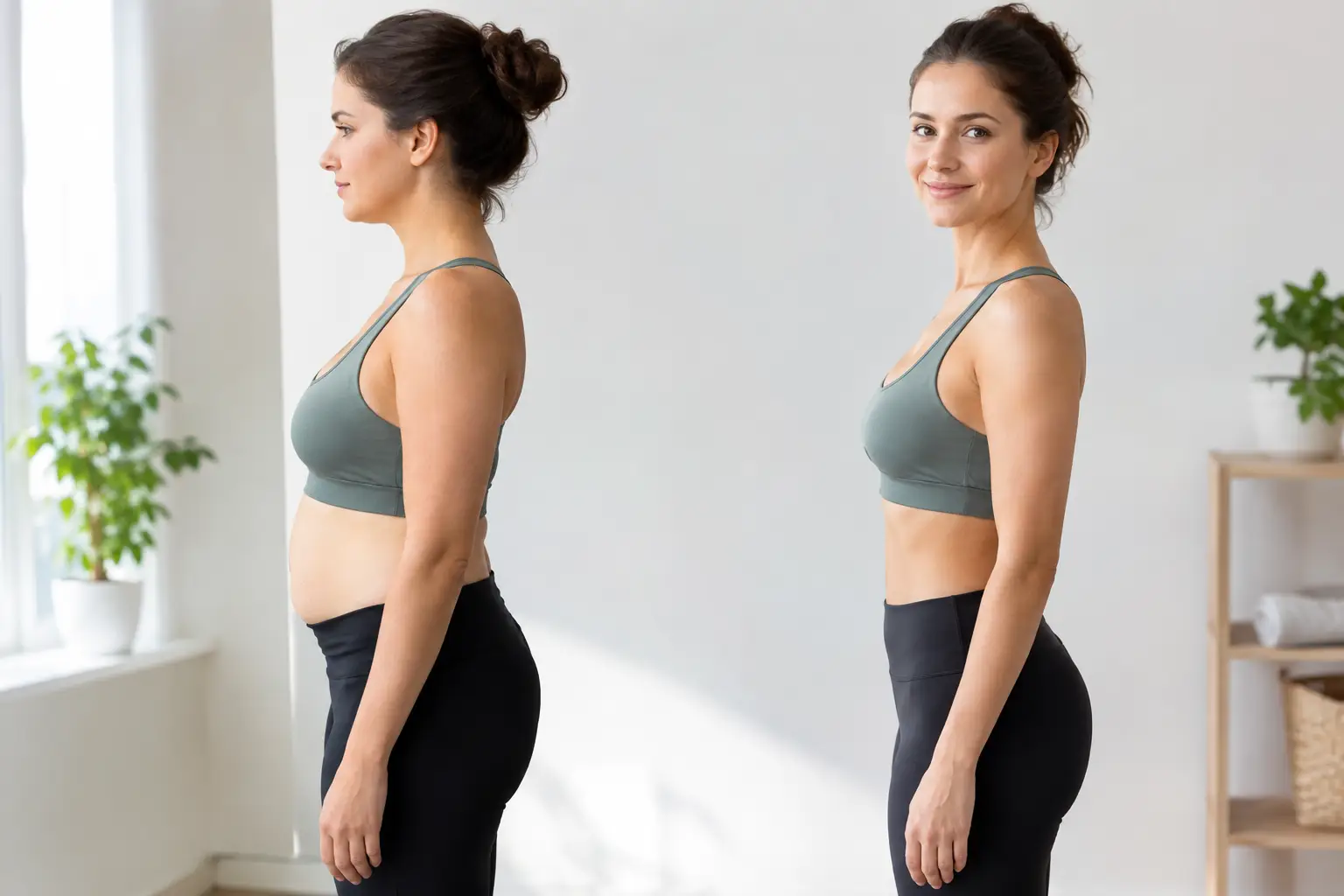
See a post pregnancy body contouring example, from assessment to treatment timing, with non-surgical options for skin laxity, fat, and cellulite concerns.
A post pregnancy body contouring example is rarely about changing a new mother back into someone she was before. It is about addressing the physical changes that may remain after pregnancy, breastfeeding, disrupted sleep, and a busy return to everyday life - with a plan that respects recovery, health, and natural proportions.
For some women, the concern is a lower-abdominal fullness that does not respond as expected to nutrition and exercise. For others, it is crepey skin around the stomach, cellulite on the thighs, or a loss of firmness through the arms and hips. A refined non-surgical plan begins by separating these concerns rather than promising one device can correct all of them.
A Post Pregnancy Body Contouring Example in Practice
Consider a client who is 14 months postpartum, has finished breastfeeding, and is close to her comfortable, stable weight. She exercises consistently and feels well, but notices stubborn fullness below her navel, mild loose skin across the abdomen, and visible cellulite on her outer thighs. Her goal is not dramatic weight loss. She wants her clothing to sit more smoothly and to feel confident in fitted dresses and swimwear.
At a medically supervised consultation, the first step is a detailed assessment. A qualified practitioner reviews medical history, recent pregnancies, breastfeeding status, medications, prior procedures, skin quality, body-fat distribution, and any signs of diastasis recti, or separation of the abdominal muscles. If a client has a hernia, significant muscle separation, unexplained swelling, or a concern requiring surgical correction, body contouring devices are not presented as a substitute for appropriate medical care.
For this client, the assessment finds localized fat, mild skin laxity, and cellulite, but no major abdominal muscle separation. Her plan may combine targeted fat reduction with treatments designed to support firmer-looking skin and a smoother texture. The sequence matters. Treating fat first can make sense when fullness is the leading concern, while collagen-stimulating treatments may be prioritized when laxity is more noticeable than volume.
Phase one: refining localized fullness
Non-surgical body contouring is designed for areas of resistant fat, not broad weight loss. Technologies such as radiofrequency-based body sculpting can be selected to target the abdominal area while supporting a more defined silhouette over a series of sessions. The sensation, number of appointments, and expected timeline depend on the technology and the individual's tissue characteristics.
A client should expect gradual change rather than an overnight transformation. The body needs time to process treatment effects, and visible refinement may develop over several weeks. Stable weight, hydration, movement, and a realistic maintenance routine all contribute to how the result presents over time.
Phase two: supporting firmer-looking skin
Pregnancy stretches the skin, and the degree to which it retracts afterward varies widely. Genetics, age, sun exposure, weight changes, and the number of pregnancies all play a role. When mild to moderate laxity is present, treatments that deliver controlled radiofrequency energy may encourage collagen remodeling and improve the appearance of skin firmness.
For the example client, abdominal tightening sessions are scheduled after or alongside contouring appointments, based on the provider's protocol. She may notice a subtle immediate tightening effect, but the more meaningful changes tend to emerge progressively as collagen renews. Results are often most elegant when the goal is refinement: skin that appears smoother, more supported, and better matched to the newly contoured area.
Phase three: treating cellulite as its own concern
Cellulite is not simply excess fat. It is influenced by fibrous bands beneath the skin, fat distribution, skin thickness, and circulation. This is why reducing inches from the thighs does not always erase dimpling.
For the outer thighs, an Emtone-style approach that combines radiofrequency and targeted mechanical energy may be considered to improve the look of cellulite and skin texture. A treatment series is usually needed, and maintenance can be valuable because cellulite is a long-term structural concern, not a one-time issue. The desired outcome is smoother-looking skin, not an artificial or overtreated appearance.
When Is the Right Time After Pregnancy?
Timing is a clinical decision, not a social deadline. Many women need months for hormone levels, weight, sleep, and daily routines to find a new rhythm. It is generally wise to wait until postpartum recovery is well established and weight has remained relatively stable before investing in body contouring.
Breastfeeding status also matters. Although some treatments may be considered after medical review, many providers prefer to plan elective aesthetic treatments once breastfeeding is complete. This allows for a clearer understanding of the body's baseline and removes unnecessary uncertainty around treatment choices. A reputable clinic will place safety and suitability ahead of speed.
There is also an emotional element. The best time is when a client is choosing treatment for herself, with a clear expectation of what non-surgical care can and cannot achieve. No aesthetic procedure needs to compete with the demands of new motherhood.
What Non-Surgical Contouring Can and Cannot Do
The appeal of non-surgical contouring is understandable: there are no surgical incisions, general anesthesia, or extended recovery period associated with many surgical procedures. Most clients can return to their normal schedule quickly, making treatment easier to fit around work, family, and travel.
Still, non-surgical does not mean identical to surgery. These treatments can reduce localized fullness, improve the appearance of texture, and support skin tightening in suitable candidates. They do not repair significant abdominal muscle separation, remove large amounts of excess skin, or produce the same degree of reshaping possible with an abdominoplasty or liposuction.
That distinction protects both the client and the result. If the primary concern is substantial loose skin after multiple pregnancies, surgical consultation may be the more appropriate route. If the concern is mild laxity, localized fat, or cellulite in an otherwise healthy, stable-weight client, advanced body contouring can be a highly compelling option.
Building a Plan Around Your Body, Not a Package
A premium treatment plan should never begin with a predetermined number of sessions. It should begin with the concern you see in the mirror, the timeline you can realistically maintain, and a professional evaluation of what is contributing to that concern.
Before-and-after photography, consistent lighting, and body measurements can help track progress more accurately than day-to-day mirror checks. Your provider should explain the expected treatment course, likely sensations, possible temporary effects such as redness or tenderness, and when to reassess. Clear communication is part of luxury care.
At Fit4You Polyclinic, personalized body contouring plans are designed around advanced technology, certified expertise, and results that complement your natural shape. Whether your goal is a smoother abdomen, firmer-looking skin, or more refined thighs, the most rewarding next step is a thoughtful consultation that honors both your recovery and your confidence.
Interested in this treatment?
Book a free consultation with our specialists at Fit4You Polyclinic Dubai.
Book Free Consultation