

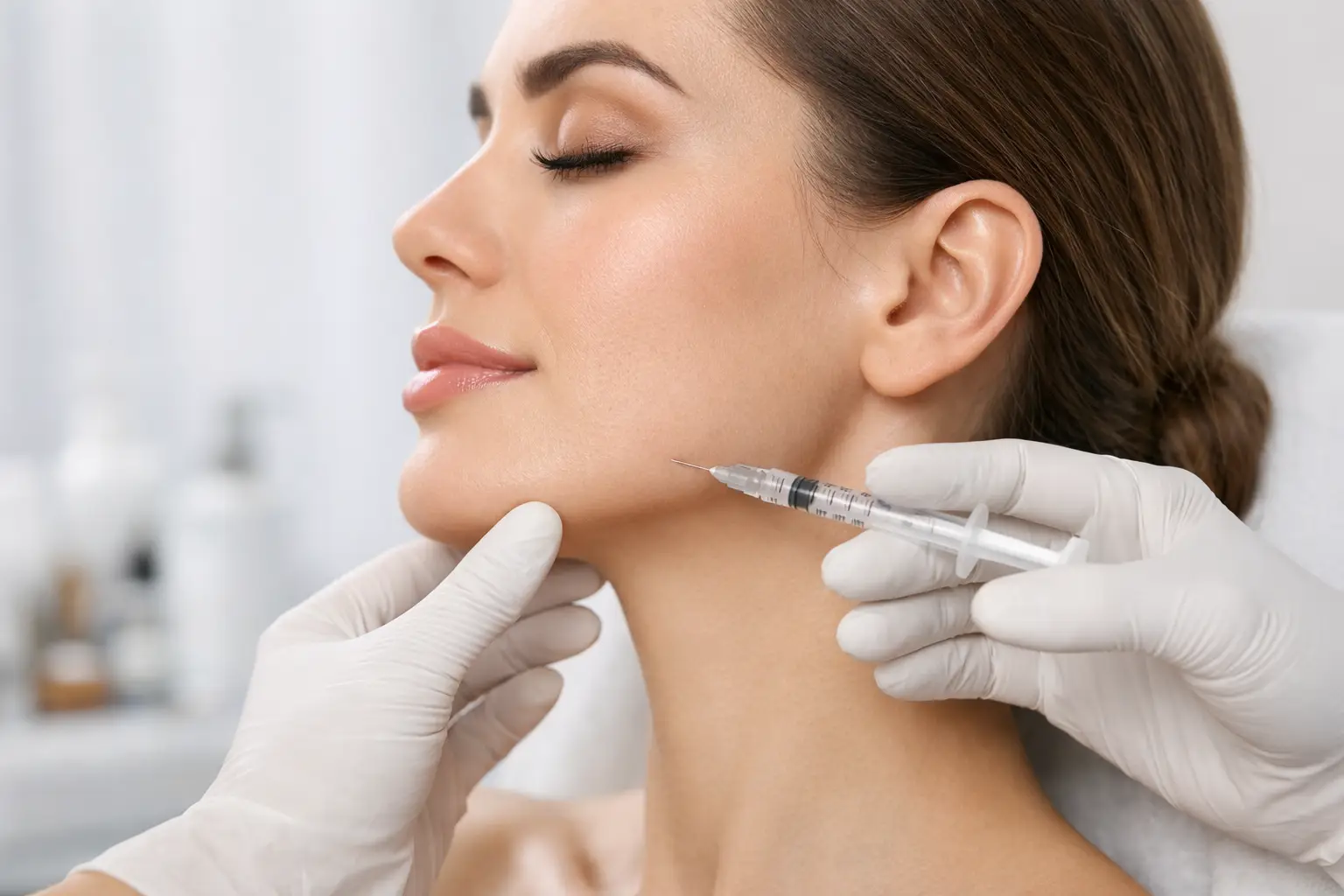
Learn how non surgical jawline enhancement defines the lower face with filler, collagen stimulators, and skin tightening, with little downtime.
A sharper jawline changes more than a profile photo. It can make the face look slimmer, the neck look tighter, and the entire lower face appear more balanced without the commitment of surgery. That is why non surgical jawline enhancement has become one of the most requested aesthetic treatments among clients who want visible definition with a refined, natural-looking result.
For many people, the goal is not to look different. It is to look more polished, rested, and structurally balanced. A well-designed jawline can support the chin, improve facial proportions, soften early jowling, and create cleaner contours from the cheek to the neck. The key is choosing the right treatment plan for your anatomy rather than chasing a one-size-fits-all trend.
What non surgical jawline enhancement really means
Non surgical jawline enhancement is not a single treatment. It is a category of advanced aesthetic techniques used to improve the shape, definition, and support of the lower face without incisions or general anesthesia. Depending on the concern, this may involve dermal filler, collagen-stimulating injectables, energy-based skin tightening, or a combination approach.
The ideal candidate is often someone who feels their jawline looks soft, undefined, uneven, or slightly heavy with age. Some clients have always had a less structured lower face and want stronger definition. Others notice that skin laxity, volume loss, or mild jowling has blurred the contour over time. In both cases, the best results come from understanding what is causing the issue. A jawline can look weak because of bone structure, soft tissue volume, skin looseness, chin projection, or fullness under the chin. These are very different concerns, and they are not corrected in the same way.
Why the jawline loses definition
Aging in the lower face tends to be gradual, which is why many people notice “something looks different” before they can identify exactly what changed. The skin begins to lose collagen and elasticity. Supportive fat pads shift downward. Bone resorption can reduce structure along the chin and jaw. In some cases, genetics also play a major role, especially in clients with a naturally softer mandibular angle or a smaller chin.
Lifestyle factors matter too. Weight fluctuations, sun exposure, and overall skin quality can all affect how crisp the jawline appears. Even posture and facial muscle habits can influence the way the lower face photographs. The most elegant treatment plans address the real source of the concern rather than simply adding volume everywhere.
The main treatment options for non surgical jawline enhancement
Dermal filler is often the first treatment people think of, and for good reason. Strategic filler placement can add structure along the jawline, improve symmetry, and create stronger transitions between the face and neck. It is especially useful for clients who need more projection at the angle of the jaw or better continuity from the chin to the back of the jaw. When performed well, filler can make the lower face look cleaner and more sculpted without looking puffy.
That said, filler is not always the full answer. If the skin is loose or there is visible heaviness from early jowling, skin-tightening treatments may be a better place to start. Technologies that stimulate collagen can gradually firm the tissue and improve definition over time. This approach tends to suit clients who want subtle refinement and better skin support rather than immediate structural change.
Biostimulatory injectables such as Sculptra can also play a role. Instead of creating instant volume in the way traditional filler does, they encourage collagen production over a series of weeks and months. This can be an excellent option when the lower face needs support and tissue quality improvement, particularly in mature clients who want a softer, less “done” result.
For some people, the issue is not lack of definition alone but fullness beneath the chin. In those cases, improving the jawline may involve treating submental fullness, tightening the skin, or combining contouring treatments with injectables. This is where personalized planning becomes essential. A stronger jawline cannot be created convincingly if the neck and chin area are ignored.
Jawline filler versus skin tightening
Clients often ask which option is better, and the honest answer is that it depends on the anatomy. Filler is best when there is a need for structure, projection, and sharper contour. Skin tightening is more effective when laxity is the main problem. If someone already has enough volume in the lower face, adding more filler can actually make the jawline look heavier rather than more defined.
This is why medical assessment matters. A polished result depends on restraint as much as technique. In a premium clinical setting, the goal is not to overbuild the jaw. It is to create proportion, lift the lower face visually, and preserve natural movement and expression.
What makes a jawline look natural
Natural-looking non surgical jawline enhancement is about facial harmony. The jawline should suit the chin, cheeks, lips, and overall face shape. A beautifully defined jaw on one person may look too angular or artificial on another. Men and women also tend to have different aesthetic goals. Many male clients want a broader, stronger angle, while many female clients prefer a sleeker, more tapered contour. Neither approach is better. It simply comes down to the desired look and the underlying anatomy.
The injector’s technique matters enormously here. Product choice, placement depth, and injection pattern all influence the final effect. So does knowing when not to treat. In experienced hands, enhancement should refine your features, not distract from them.
What to expect from treatment and recovery
Most non-surgical jawline treatments are performed in clinic and require little to no downtime. Injectable appointments are typically straightforward, although the exact treatment time depends on the plan. You may experience mild swelling, tenderness, or bruising afterward, especially with filler. These effects are usually temporary and manageable.
Results vary by treatment type. Filler can be seen immediately, though the final result settles as swelling resolves. Collagen-stimulating treatments develop gradually and often improve over several weeks. Skin-tightening procedures also require patience, since collagen remodeling takes time. For clients used to immediate gratification, this can feel slow, but the trade-off is often a very elegant, progressive improvement.
Longevity depends on the product used, the treatment area, and the individual’s metabolism. Some clients return for maintenance sooner because they want to preserve a crisp result at all times. Others prefer a lighter touch and refresh only when needed. There is no single right schedule. The best plan is the one that matches your anatomy, your goals, and how polished you want to look year-round.
Who is a strong candidate for non surgical jawline enhancement?
The best candidates are healthy adults who want improved lower-face definition without surgery or extended recovery. This includes clients with a weak jawline, mild jowling, facial asymmetry, volume loss, or age-related softening in the lower face. It can also be a strong option for people preparing for major events, professional visibility, or simply wanting to feel more confident in photos and in person.
Still, not every jawline concern is best treated non-surgically. If there is significant skin laxity or a large amount of excess tissue, surgery may deliver a more meaningful result. A trustworthy provider should be clear about that. Luxury care is not about saying yes to everything. It is about recommending the treatment that will genuinely serve the patient well.
Choosing the right provider for jawline contouring
With a treatment as technique-dependent as this, provider selection is part of the result. Non surgical jawline enhancement requires a detailed understanding of facial anatomy, product behavior, proportion, and safety. The lower face contains important vascular structures, and treatment should always be performed in a medically supervised setting.
Clients should look for a clinic that combines clinical credentials with a highly personalized approach. The strongest outcomes come from tailored planning, conservative execution, and a clear eye for balance. At Dubai’s Premier Aesthetic Clinic, Fit4You Polyclinic approaches facial contouring with exactly that philosophy - advanced technology, certified specialists, and treatment plans designed around refined, visible results.
A stronger jawline is never just about sharp angles. It is about creating a face that looks more supported, more balanced, and more confidently you. When the treatment plan is chosen well, subtle changes in the lower face can elevate the entire way you carry yourself.
Interested in this treatment?
Book a free consultation with our specialists at Fit4You Polyclinic Dubai.
Book Free Consultation