

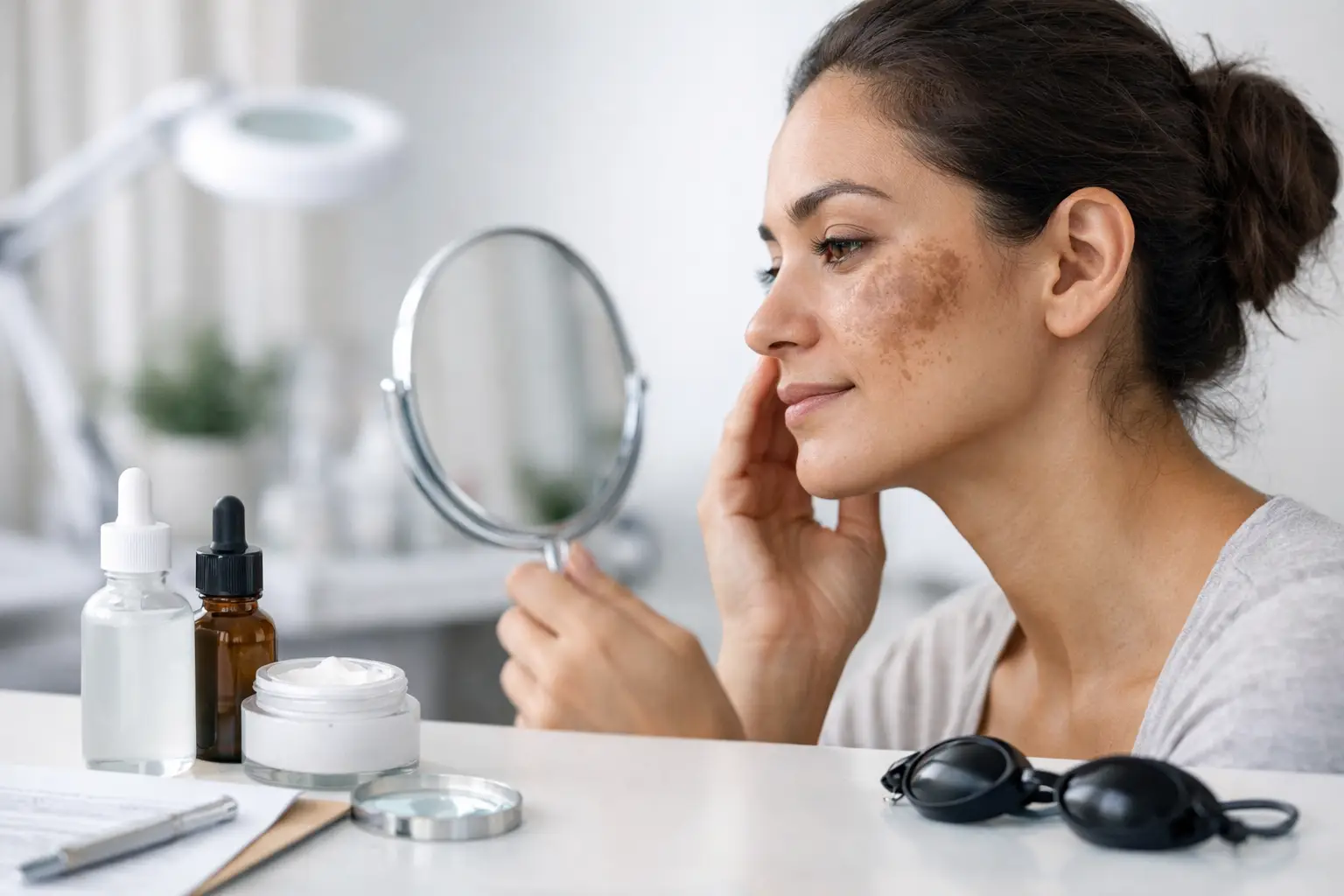
Use this melasma treatment planning guide to build a personalized routine with sun protection, dermatologist-led options, and realistic maintenance goals.
Melasma rarely responds to a single appointment or one new skincare product. The most beautiful, lasting improvements come from a thoughtful strategy that respects how easily this form of pigmentation can be triggered. This melasma treatment planning guide explains how to build that strategy with realistic expectations, professional guidance, and a plan designed around your skin.
Why Melasma Needs a Personalized Plan
Melasma appears as symmetrical brown, gray-brown, or sometimes blue-gray patches, most often across the cheeks, forehead, upper lip, nose, and jawline. It is common in women, but men can develop it too. Sun exposure is a major contributor, yet heat, visible light, hormones, pregnancy, certain medications, genetics, and irritation can all play a role.
That combination is why a one-size-fits-all solution can disappoint. Two people may have similar-looking patches but very different triggers, skin sensitivity, pigment depth, and lifestyle demands. One person may need a conservative home regimen and strict sun habits; another may benefit from dermatologist-directed prescription care and carefully selected in-clinic procedures.
A premium treatment plan is not about doing the most. It is about choosing the right sequence, protecting the progress you make, and avoiding unnecessary inflammation that may deepen pigmentation.
Start Your Melasma Treatment Planning Guide With a Diagnosis
Before treating any discoloration, a qualified dermatology professional should confirm that it is melasma. Post-inflammatory hyperpigmentation, sun spots, medication-related pigmentation, and other skin conditions can resemble it, but may require a different approach.
Your consultation should go beyond identifying where pigment is visible. A detailed assessment considers your skin tone and Fitzpatrick skin type, how long the patches have been present, prior treatments, sensitivity, current products, hormonal factors, and daily sun exposure. In a sunny, high-heat environment such as Dubai, time spent outdoors, driving, dining on terraces, and even working near bright windows can all influence the plan.
Your provider may also evaluate whether the pigment is primarily epidermal, meaning closer to the skin’s surface, or dermal, meaning deeper. Surface pigment often responds more readily. Deeper or mixed melasma can improve, but it typically calls for more patience and an ongoing maintenance approach.
Questions Worth Asking During Your Consultation
Ask what is most likely triggering your melasma, what level of improvement is realistic, and how quickly your skin can safely progress. It is also reasonable to ask which treatments could create irritation or rebound pigmentation in your skin type. An expert plan should make room for these answers rather than promising an instant, permanent cure.
If you are pregnant, breastfeeding, trying to conceive, using hormonal medication, or taking prescription drugs, mention it before beginning treatment. Some ingredients and procedures may need to be postponed or adjusted.
Make Photoprotection the Center of Your Strategy
No melasma plan performs at its best without daily, consistent light protection. This is not a supporting detail. It is the foundation that helps prevent existing patches from becoming darker and helps preserve the results of professional care.
Choose a broad-spectrum sunscreen with SPF 30 or higher every morning, even on indoor days. For many people with melasma, tinted formulas containing iron oxides are particularly valuable because they can help defend against visible light as well as UV exposure. Apply generously across the face, neck, ears, and any exposed areas prone to pigmentation.
Reapplication matters, especially after outdoor time, perspiration, swimming, or long days in direct and reflected light. A wide-brim hat, sunglasses, shade, and thoughtful timing around intense midday sun provide another protective layer. Heat itself may aggravate melasma for some people, so reducing prolonged overheating can be useful as well.
This does not mean living cautiously or avoiding the outdoors. It means making protection part of a polished daily routine, much like skincare, hydration, or wardrobe planning.
Build a Skin Routine That Corrects Without Overcorrecting
At-home care often includes pigment-regulating ingredients selected for your tolerance and treatment history. Depending on your skin, a clinician may recommend options such as hydroquinone, azelaic acid, tranexamic acid, vitamin C, retinoids, kojic acid, cysteamine, niacinamide, or carefully formulated exfoliating acids.
The best ingredient is not automatically the strongest one. Melasma-prone skin can react to over-exfoliation, aggressive scrubs, fragranced products, or introducing several active ingredients at once. When the skin barrier becomes inflamed, pigmentation can become more noticeable. A measured routine often delivers a more refined result than a crowded shelf of products.
A practical routine may include gentle cleansing, a targeted treatment product, moisturizer, and sun protection in the morning. Evening care can include a clinician-recommended corrective active followed by barrier-supportive hydration. The exact order and frequency depend on the products prescribed and how your skin responds.
Give your routine time. Early brightness may be noticeable within several weeks, but meaningful pigment improvement commonly takes two to three months or longer. Take clear photos in the same lighting every four to six weeks. This gives you a more accurate view than examining your skin closely every morning.
When In-Clinic Treatments May Be Appropriate
Professional treatments can elevate results, particularly when melasma is persistent, uneven, or not responding sufficiently to a well-managed home routine. However, procedure selection is where expertise matters most. Melasma is not simply a dark spot to be removed. Overly aggressive energy, heat, or exfoliation can trigger inflammation and worsen discoloration.
Chemical Peels and Skin Renewal
Superficial, professionally selected chemical peels may help encourage more even surface renewal and support topical treatment plans. They are generally introduced gradually, with formula strength, preparation, and timing tailored to the individual. Deeper peels are not automatically better, particularly for patients who are prone to post-inflammatory hyperpigmentation.
Laser and Light-Based Care
Laser and energy-based approaches may have a role in select cases, but they require careful evaluation. Some devices can improve visible pigment when used conservatively and as part of a broader program. Others may bring a higher risk of rebound pigmentation, especially when treatment is too aggressive or aftercare is inconsistent.
For this reason, a responsible provider will not present laser as a universal first step. The decision depends on skin tone, melasma pattern, pigment depth, prior response, and your ability to maintain strict sun protection afterward. At Fit4You Polyclinic, a personalized consultation helps determine whether advanced technology should complement your skin program or whether a more conservative approach is the better choice.
Plan for Maintenance, Not a Finish Line
Melasma can fade significantly, but it has a tendency to return when triggers reappear or maintenance stops. Framing treatment as long-term skin management is more empowering than expecting a one-time correction to last forever.
After an initial corrective phase, your provider may simplify your regimen, reduce the frequency of stronger actives, and keep protective and pigment-supporting products in place. Follow-up visits create an opportunity to assess progress, address seasonal changes, and refine the plan before a minor flare becomes more established.
Travel, summer weather, weddings, hormonal changes, or a new medication can all call for adjustments. If you notice patches becoming darker, do not respond by using every active product more often. Return to gentle care, increase light protection, and seek professional advice early.
Choose Results That Respect Your Skin
The most successful melasma plans combine clinical precision with restraint. They protect the skin barrier, treat pigment consistently, and use advanced procedures only when their benefit outweighs the risk. That balance is what allows your complexion to look clearer, calmer, and naturally luminous rather than simply overtreated.
Begin with an expert assessment, commit to daily protection, and allow your treatment plan the time to work. Clearer-looking skin is built through informed choices repeated well, and that kind of confidence is always worth planning for.
Interested in this treatment?
Book a free consultation with our specialists at Fit4You Polyclinic Dubai.
Book Free Consultation