

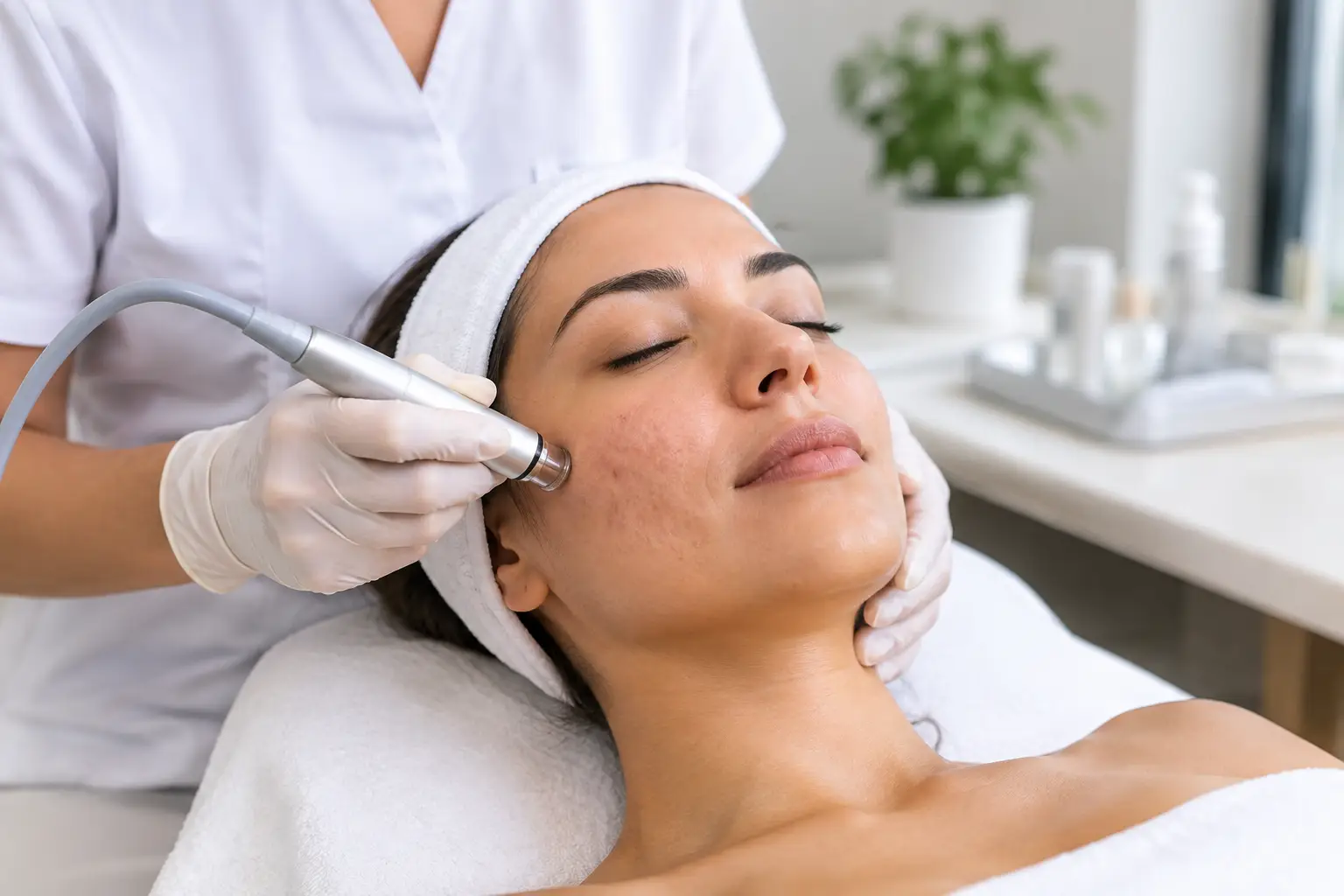
Medical facials for acne scars can improve tone, texture, and clarity. Learn which treatments suit your skin, scars, recovery goals, and lifestyle needs.
A smooth makeup application, a clearer complexion under Dubai sunlight, and the confidence to skip a filter can feel out of reach when acne leaves marks behind. Medical facials for acne scars can be a valuable part of a personalized skin plan, but they are not a one-size-fits-all answer. The right approach depends on whether you are dealing with lingering discoloration, uneven texture, active breakouts, or true indented scars.
At a medically supervised aesthetic clinic, facial treatments are selected to support skin renewal without compromising its barrier. That distinction matters. A relaxing facial may refresh the surface of the skin, while a targeted medical facial uses professional-grade techniques and active ingredients to address the processes that make post-acne skin look uneven.
What Medical Facials Can and Cannot Do for Acne Scars
The phrase “acne scars” is often used for several different concerns. Red or brown marks left after a blemish are not always scars in the clinical sense. They are usually post-inflammatory erythema or hyperpigmentation, and they can respond well to carefully selected exfoliation, brightening ingredients, hydration, and sun protection.
Indented scars are different. Ice-pick, boxcar, and rolling scars form when inflammation damages collagen deeper in the skin. A medical facial can improve overall radiance, reduce congestion, soften superficial roughness, and help supportive products perform better. It will not completely lift a deep, tethered scar in one appointment.
This is where honest treatment planning creates better results. For mild textural irregularity and discoloration, a series of medical facials may make a visible difference. For deeper scarring, facials are often best used alongside or between more advanced options such as microneedling, chemical peels, fractional laser treatments, or dermatologist-led scar procedures. The goal is not to sell a single treatment as a cure. It is to choose the right sequence for healthier-looking, more refined skin.
Which Medical Facials for Acne Scars May Be Suitable?
A consultation should begin with a close assessment of scar type, skin tone, current acne activity, sensitivity, and your comfort with downtime. The treatment that suits a client with oily, acne-prone skin may not be appropriate for someone whose skin is dry, reactive, or recently treated with prescription retinoids.
Deep-cleansing and clarifying facials
When clogged pores and active congestion are still part of the picture, a clarifying medical facial can be an intelligent first step. Professional cleansing, gentle exfoliation, and carefully performed extractions may reduce the buildup that contributes to future breakouts. Calming and hydrating steps are equally essential, because overly aggressive treatment can trigger irritation and leave marks looking more noticeable.
These facials help create a cleaner foundation for scar correction, but they should never involve harsh scrubbing or picking. Attempting to force out inflamed lesions can increase the risk of further inflammation and scarring.
Hydration-focused facials
It may seem counterintuitive to focus on hydration when acne is involved, but a compromised skin barrier can lead to sensitivity, excess oil production, and poor tolerance of corrective treatments. Hydration-focused medical facials replenish moisture while clearing away surface debris in a controlled way.
For clients with dullness, visible pores, and mild post-acne marks, treatments such as a customized Hydrafacial-style protocol can offer an immediate polished glow with minimal interruption to a busy schedule. The results are typically most noticeable in clarity and smoothness, rather than dramatic correction of deep scars.
Chemical exfoliation and peel-based treatments
Professional chemical exfoliation can encourage more even shedding of surface skin cells, helping fade post-acne discoloration and improve a rough, uneven finish. The ideal formulation and strength depend on your skin type, pigment history, and whether acne is active. Salicylic acid is often considered for oil and congestion, while other acids may be chosen for brightness, texture, or hydration.
More intensity is not automatically better. In skin that is prone to hyperpigmentation, an overly strong peel or poorly timed procedure can cause prolonged irritation and darker marks. A measured treatment plan, with the option to build intensity over several visits, is usually the more elegant and effective choice.
Collagen-supporting facial protocols
Some medical facial plans incorporate professional treatments designed to support collagen renewal and improve skin texture over time. This category may include superficial resurfacing methods or carefully chosen energy-based treatments where appropriate. These approaches can be valuable for early, shallow scars, but deeper acne scarring often requires a dedicated collagen-induction or laser treatment plan beyond the scope of a traditional facial.
Your practitioner should be clear about that difference before treatment begins. A premium experience should come with precision, not exaggerated promises.
Why Skin Tone and Acne Activity Change the Plan
In a city as diverse as Dubai, treating acne scars safely means understanding how differently skin responds to inflammation. Deeper skin tones can be more vulnerable to post-inflammatory hyperpigmentation, especially after aggressive exfoliation, heat-based procedures, or unprotected sun exposure. This does not mean effective treatment is off-limits. It means the technique, preparation, and aftercare must be more exact.
Active acne also changes the timeline. Correcting old scars while new inflammatory breakouts continue can be frustrating and inefficient. In many cases, the first priority is to calm the acne cycle, reduce congestion, and build a consistent home routine. Scar-focused treatments can then begin when the skin is more stable.
This approach requires patience, but it protects your investment. Treating the cause and the visible aftermath together gives your complexion the best opportunity to improve over time.
What Results Should You Expect?
After one medical facial, many clients notice cleaner pores, smoother makeup application, improved hydration, and a fresher overall appearance. Pigment marks may begin to look more even after a series of treatments. Texture changes take longer because collagen remodeling is gradual.
A realistic timeline depends on the treatment selected, the severity of scarring, and the skin’s natural healing response. Some clients benefit from monthly facials as part of maintenance, while others may alternate facials with more intensive procedures spaced several weeks apart. Results should look progressive and natural, not artificial or abruptly altered.
Photography can be useful during your treatment journey. Consistent before-and-after images taken in similar lighting often reveal improvements that are easy to overlook day to day, particularly in tone and overall texture.
Preparing for a Scar-Focused Facial
Avoid arriving with skin that is irritated from at-home scrubs, strong acids, waxing, or excessive sun exposure. Tell your provider about prescription medications, including oral acne treatments and topical retinoids, as these can affect whether exfoliation or resurfacing is appropriate.
After treatment, keep the routine simple. Use a gentle cleanser, nourishing moisturizer, and broad-spectrum sunscreen every day. Sun protection is one of the most meaningful steps you can take for preventing post-acne marks from becoming more pronounced. Avoid picking at healing blemishes and pause strong active ingredients until your practitioner advises that your skin is ready.
If you have an important event, schedule thoughtfully. Many facials involve little to no downtime, but even gentle treatments can leave temporary redness in sensitive skin. Give yourself several days rather than booking a first-time treatment the evening before a major occasion.
The Value of a Personalized Treatment Plan
The most effective plan for acne scars is rarely the most aggressive one. It is the plan that respects your skin’s history, matches the biology of your scars, and fits your schedule and tolerance for downtime. For one person, that may mean a sequence of clarifying facials and light peels. For another, it may mean combining skin-preparing facials with targeted collagen-stimulating procedures.
At Fit4You Polyclinic, a professional consultation can help distinguish between discoloration, textural scarring, and ongoing acne so each treatment serves a clear purpose. Medical oversight, advanced technology, and tailored aftercare help turn a facial appointment into a considered strategy for lasting skin confidence.
Beautiful skin does not need to be perfectly poreless to look refined. With the right medical guidance and consistent care, acne-scarred skin can become clearer, calmer, and noticeably more luminous - one thoughtful treatment at a time.
Interested in this treatment?
Book a free consultation with our specialists at Fit4You Polyclinic Dubai.
Book Free Consultation