

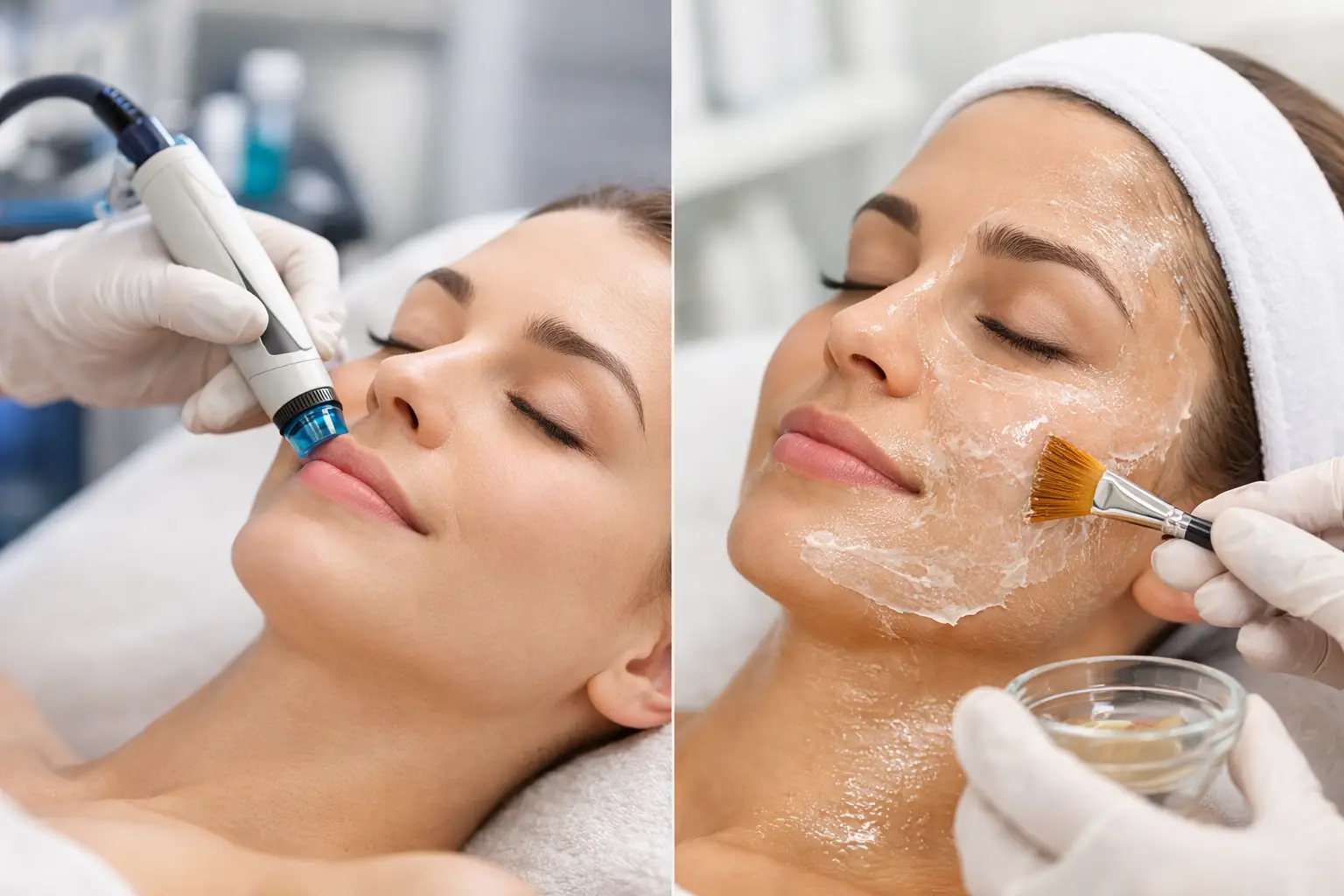
Hydrafacial vs chemical peel: compare glow, exfoliation, downtime, acne, and pigment concerns to choose the right treatment for your skin.
A last-minute event, a breakout that will not settle, lingering sun damage, early fine lines - most skin decisions are not abstract. They are personal, visible, and often time-sensitive. That is exactly why the hydrafacial vs chemical peel question comes up so often in clinic consultations. Both treatments improve skin tone and texture, but they do it in very different ways, and the better choice depends on what your skin needs now, how much downtime you can tolerate, and how aggressive you want the treatment plan to be.
For clients who want polished, healthy-looking skin without guessing, the real answer is rarely about which treatment is "better." It is about which treatment is better for your skin condition, your lifestyle, and your long-term goals.
Hydrafacial vs chemical peel: the core difference
A Hydrafacial is a multi-step, device-based facial that cleanses, exfoliates, extracts impurities, and infuses the skin with hydrating serums. It is designed to refresh the skin while supporting barrier health, which is why it is often chosen before social events or as part of ongoing skin maintenance. Skin usually looks smoother, brighter, and more hydrated almost immediately.
A chemical peel uses carefully selected acids to loosen and remove damaged outer layers of skin. Depending on the formula and strength, a peel can target dullness, acne, uneven pigment, fine lines, and rough texture with more intensity than a standard facial. That extra power can deliver meaningful correction, but it may also come with peeling, redness, and a recovery period.
In simple terms, Hydrafacial is typically gentler and more instantly radiant. Chemical peels are often more corrective and can go deeper.
What a Hydrafacial does best
Hydrafacial is ideal when the skin looks tired, congested, dehydrated, or uneven in a way that does not necessarily require aggressive resurfacing. It suits clients who want their skin to feel clean and refined without the visible shedding that can follow a peel.
One of its biggest strengths is that it combines exfoliation with hydration rather than stripping the skin. That matters for busy professionals and frequent aesthetic clients who want improvement without disrupting their routine. Makeup tends to sit better afterward, skin reflects light more evenly, and pores can appear less noticeable because congestion has been cleared.
Hydrafacial can be especially appealing for:
- dull or dehydrated skin
- mild congestion and blackheads
- maintenance between more intensive treatments
- clients with events, travel, or work commitments
- those new to professional skincare
That said, a Hydrafacial has limits. If your concern is deeper pigmentation, acne scarring, or more established signs of sun damage, it may improve the surface appearance but not create the level of correction you want on its own.
What a chemical peel does best
Chemical peels are stronger resurfacing treatments. They encourage controlled exfoliation so fresh, newer skin can come forward. For the right candidate, this can produce a more serious reset in texture and clarity.
If you are dealing with persistent acne, post-inflammatory marks, uneven tone, or skin that has become rough and lackluster over time, a peel may offer more visible correction than a Hydrafacial. Certain peels can also help soften fine lines and improve the look of enlarged pores by accelerating cell turnover.
The trade-off is recovery. Even lighter peels can leave the skin tight, flaky, or pink for several days. Medium-depth options can involve more noticeable peeling and stricter aftercare. That does not make peels less desirable - only more purposeful. They work well when correction matters more than immediate glow.
Which treatment is better for acne?
This depends on the type of acne and the condition of your skin barrier.
A Hydrafacial can be excellent for oily, congested skin with clogged pores, blackheads, and mild breakouts. The extraction step helps clear buildup, while the hydrating elements can keep the skin from feeling overly stressed. For clients whose acne worsens when the skin becomes irritated, this gentler approach can be very useful.
A chemical peel may be the stronger option for active acne, acne-related discoloration, and texture concerns left behind after breakouts. Ingredients such as salicylic acid are often chosen because they penetrate oily pores effectively. If acne is more persistent or inflammatory, a peel-based plan may create better long-term improvement.
The key is precision. Over-treating acne-prone skin can lead to irritation, while under-treating it can prolong the cycle. A medically guided treatment plan matters here.
Which is better for pigmentation and sun damage?
When comparing hydrafacial vs chemical peel for pigmentation, chemical peels usually have the advantage. Because they promote more intensive exfoliation, they can be particularly effective for sun damage, post-acne marks, and uneven tone.
Hydrafacial can brighten the complexion and improve overall radiance, which helps the skin look fresher and more even. But if you are trying to address stubborn discoloration, melasma tendencies, or visible photodamage, a peel is often the more targeted option.
Still, stronger is not always smarter. In skin that is reactive or prone to post-inflammatory pigmentation, especially in warmer climates with high UV exposure, treatment selection should be cautious and customized. Sometimes a series of gentler sessions is the wiser path.
Downtime, comfort, and social calendars
For many clients, this is where the decision becomes clear.
Hydrafacial is known for minimal downtime. Most people leave the clinic looking refreshed rather than treated. There may be mild pinkness for a short period, but it usually settles quickly. If you have meetings, dinners, events, or travel plans, Hydrafacial fits more easily into a full calendar.
Chemical peels vary. A superficial peel may involve light flaking and manageable redness, while a stronger peel can mean several days of visible shedding. You also need to be disciplined with sun protection and skincare after treatment.
If your priority is immediate polish with little interruption, Hydrafacial often wins. If you can plan around recovery and want more correction, a peel may be worth it.
Sensitive skin: which is safer?
Sensitive skin is not one-size-fits-all. Some clients react to friction, some to acids, some to fragrance, and some simply have a compromised barrier from overuse of active products at home.
In many cases, Hydrafacial is the more approachable starting point because it can be customized and tends to feel gentler. It offers exfoliation without the same degree of controlled injury associated with a peel.
But that does not mean chemical peels are off the table for sensitive skin. It means the peel must be chosen carefully. The wrong acid, strength, or timing can aggravate redness and inflammation. The right protocol, supervised properly, can still be effective.
This is why consultation matters more than trends. A treatment that looked transformative on someone else may not suit your skin history.
Can you do both?
Yes - and for many clients, that is where the best results happen.
Hydrafacial and chemical peels do not have to compete. They can play different roles in a broader aesthetic plan. A Hydrafacial can maintain clarity, hydration, and glow between more corrective treatments. A chemical peel can be introduced strategically when texture, acne, or pigmentation need deeper attention.
At a premium clinic such as Fit4You Polyclinic, this is often how treatment planning becomes more sophisticated. Rather than forcing every concern into one solution, the skin is assessed properly and treated in phases, with the goal of visible improvement that still looks refined and natural.
How to choose the right one for your skin
If your skin looks dull, dehydrated, mildly congested, or event-prep is the priority, Hydrafacial is often the better fit. It is also a strong choice if you want ongoing maintenance and very little downtime.
If your main concern is acne, sun damage, pigmentation, rough texture, or early lines that need more than a glow boost, a chemical peel may deliver more meaningful correction.
And if you are torn between the two, that usually means your skin needs a plan, not a guess. The right provider will consider your skin type, sensitivity, schedule, goals, and history with active ingredients before recommending anything.
Luxury skincare is not about choosing the most aggressive option. It is about choosing the smartest one. The best treatment is the one that respects your skin, suits your lifestyle, and moves you closer to the version of yourself that looks as polished as you feel.
Interested in this treatment?
Book a free consultation with our specialists at Fit4You Polyclinic Dubai.
Book Free Consultation