

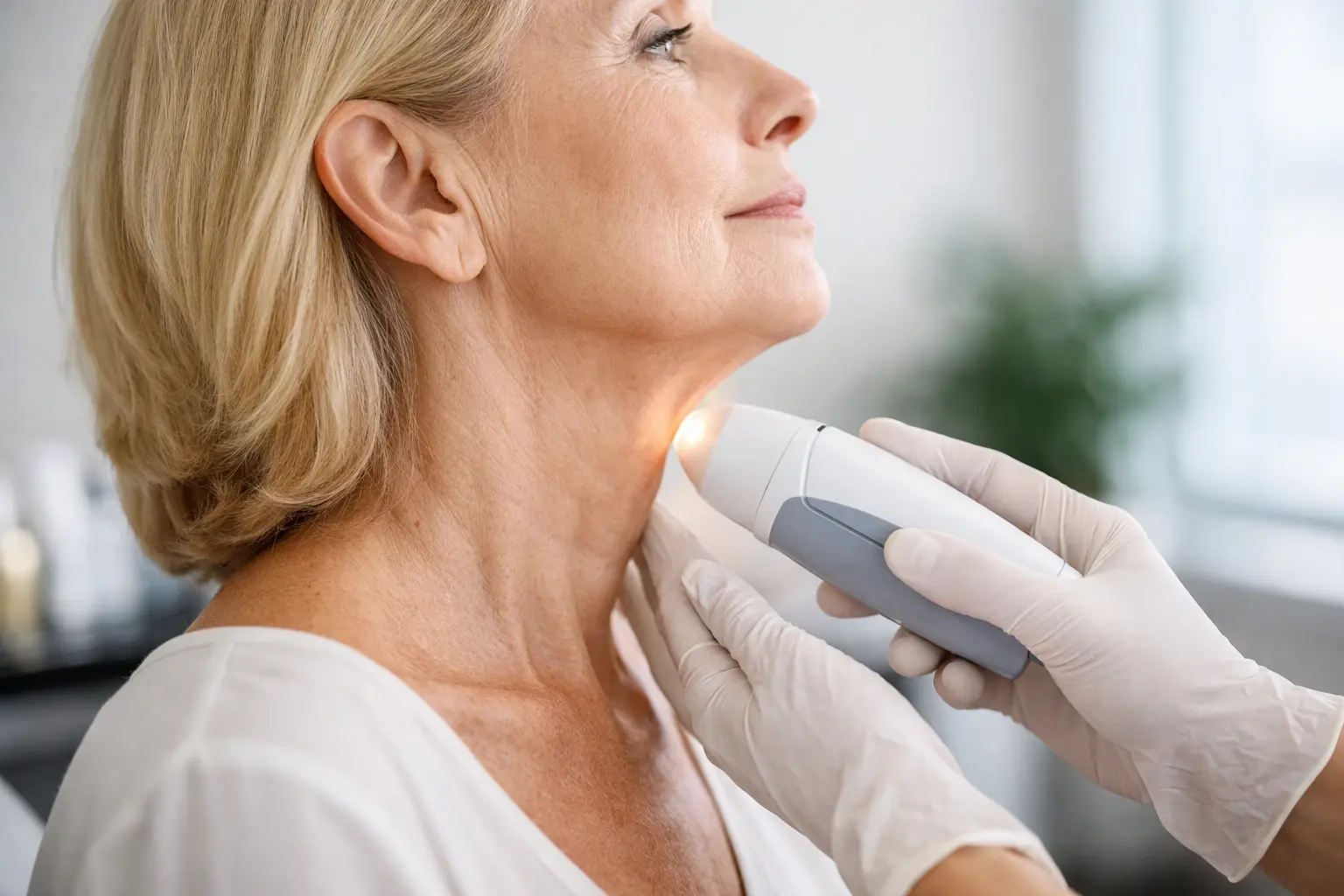
Learn how to treat turkey neck with tailored non-surgical options that firm loose neck skin, refine contours, and preserve natural expression beautifully.
A beautifully maintained face can still feel disconnected from the mirror when the neck begins to show laxity, creasing, or vertical bands. If you are researching how to treat turkey neck, the most effective answer is rarely a single treatment. It is a personalized plan that addresses the specific changes causing the concern - whether that is loose skin, weakened collagen, prominent platysma bands, under-chin fullness, or a combination of all four.
For many patients, modern non-surgical aesthetic medicine can create a more refined neck profile with little to no disruption to a busy schedule. The right approach depends on your anatomy, skin quality, age, and the degree of laxity present.
What Causes a Turkey Neck?
“Turkey neck” is an informal term for loose, wrinkled skin and visible vertical bands in the neck area. It often develops as collagen and elastin decline with age, leaving skin less able to spring back into place. Sun exposure, weight fluctuations, genetics, and natural changes in facial fat distribution can make the concern appear sooner or more prominently.
The neck also has thinner skin and fewer oil glands than much of the face, which makes it particularly vulnerable to dehydration and creasing. At the same time, the platysma muscle - a broad, thin muscle extending from the chest toward the lower face - may become more visible as it contracts and separates into bands.
This is why treating the neck as though it were only a skin issue can lead to underwhelming results. A sophisticated assessment considers skin laxity, muscle movement, volume balance, and jawline definition together.
How to Treat Turkey Neck Without Surgery
Non-surgical treatment is often an excellent option for mild to moderate laxity, early jowling, fine neck lines, and muscle banding. It is especially appealing for patients who want visible refinement without incisions, scars, or a lengthy recovery period.
Skin tightening with ultrasound technology
For loose or crepey skin, ultrasound-based treatments such as Sofwave can be a strong option. The technology delivers controlled ultrasound energy into the skin at a targeted depth, stimulating the body’s natural collagen-building response while protecting the surface.
Collagen remodeling takes time, so improvements develop gradually rather than overnight. Many patients begin to notice a firmer, smoother look over the following weeks, with results continuing to evolve for several months. This makes ultrasound skin tightening a thoughtful choice for someone seeking a natural-looking refresh rather than an abrupt change.
The trade-off is that non-surgical tightening has limits. It can improve skin quality and modest laxity, but it cannot remove a significant amount of excess skin in the way a surgical neck lift can. A consultation should be honest about that distinction.
Injectable treatment for neck bands
If vertical cords appear when you speak, smile, or tense your neck, they may be platysma bands. Carefully placed neuromodulator injections can relax this excessive muscle activity, softening the pull that creates a banded appearance.
This technique can also support a cleaner jawline in selected patients by reducing downward tension from the platysma. Results are temporary and typically require maintenance, but treatment is quick and requires minimal downtime. Precise dosing matters because the neck is a complex area, and natural movement should always be preserved.
Biostimulators for improved skin quality
When the skin is becoming thin, finely wrinkled, or less resilient, collagen-stimulating injectable treatments may be considered. Biostimulators such as Sculptra work progressively, encouraging the skin to rebuild supportive collagen over time. Skin boosters and hydration-focused injectables may also help improve texture and luminosity when dehydration and fine lines are part of the picture.
These treatments do not “lift” the neck in the surgical sense. Their value lies in improving the quality, density, and appearance of the tissue, which can make the area look smoother and better supported. The best result usually comes from strategic placement and a treatment schedule tailored to your skin rather than a one-size-fits-all formula.
Jawline and chin balancing
Sometimes the neck looks heavier not because the neck has changed dramatically, but because the chin and jawline have lost definition. Restoring appropriate structure with dermal filler can create a clearer transition between the face and neck, improving profile balance.
This option is not right for everyone. Overfilling the jawline can look artificial, particularly when skin laxity is pronounced. A refined result depends on respecting facial proportions and determining whether structural support, tightening, muscle relaxation, or a combination will deliver the most elegant outcome.
Addressing under-chin fullness
A soft or full area below the chin can blur the jawline and make neck laxity appear more pronounced. Depending on the cause, a provider may discuss fat-reduction treatments, body contouring technology, or other targeted options. If fullness is caused primarily by skin laxity rather than fat, reducing volume alone may not give the desired result and can occasionally make loose skin more noticeable.
This is one reason an in-person assessment is essential. The goal is not simply to make the area smaller. It is to create a harmonious, defined contour that suits your features.
Choosing the Right Treatment Plan
The most natural results typically come from combining treatments in the right sequence. For example, someone with early laxity and visible bands may benefit from ultrasound skin tightening followed by a neuromodulator treatment. Someone with crepey texture, a softened jawline, and volume loss may need collagen stimulation and carefully considered structural support instead.
At Fit4You Polyclinic, a personalized consultation begins with the details that make your concern unique: how your neck looks at rest and in motion, the quality of your skin, your profile, and the amount of downtime you can realistically accommodate. This medical-aesthetic approach prevents the common mistake of treating a single symptom while overlooking the architecture of the lower face and neck.
Your provider should also discuss your medical history, current medications, prior aesthetic treatments, and expectations. Patients who are pregnant, breastfeeding, have active skin infections, or have certain medical conditions may need to postpone or avoid specific procedures.
What Results and Downtime Can You Expect?
Injectable treatment for platysma bands generally has minimal downtime. Small injection marks or temporary redness may occur, while the visible muscle-softening effect develops over several days to two weeks. Collagen-stimulating injectables can involve mild swelling or bruising, and their improvements tend to appear gradually over a series of appointments.
Energy-based skin tightening treatments may leave the skin briefly pink or tender, but most patients return to regular activities quickly. Results develop as new collagen forms, usually over several weeks to months. Your skin’s baseline condition, lifestyle, sun exposure, and smoking status can all influence how long improvements last.
Maintaining results is part of the process. Daily broad-spectrum sunscreen on the neck and chest, consistent hydration, a targeted skincare routine, and stable weight can help protect your investment. The neck deserves the same thoughtful care you give the face - not an afterthought once visible changes have already progressed.
When Is Surgery the Better Choice?
Non-surgical treatments are powerful, but they are not a substitute for surgery in every case. If there is substantial hanging skin, significant fat beneath the chin, or pronounced muscle separation, a surgical neck lift may offer the most dramatic and durable correction.
Choosing surgery does not mean non-surgical care has failed. It simply reflects the level of correction needed. For patients who are not ready for surgery, or whose concerns are mild to moderate, advanced non-surgical treatments can still create meaningful improvement with a more comfortable recovery experience.
The most flattering neck treatment is the one that respects your anatomy and your goals. Rather than chasing a dramatically altered profile, choose a plan that restores smoother skin, a cleaner contour, and the quiet confidence of looking as refreshed as you feel.
Interested in this treatment?
Book a free consultation with our specialists at Fit4You Polyclinic Dubai.
Book Free Consultation