

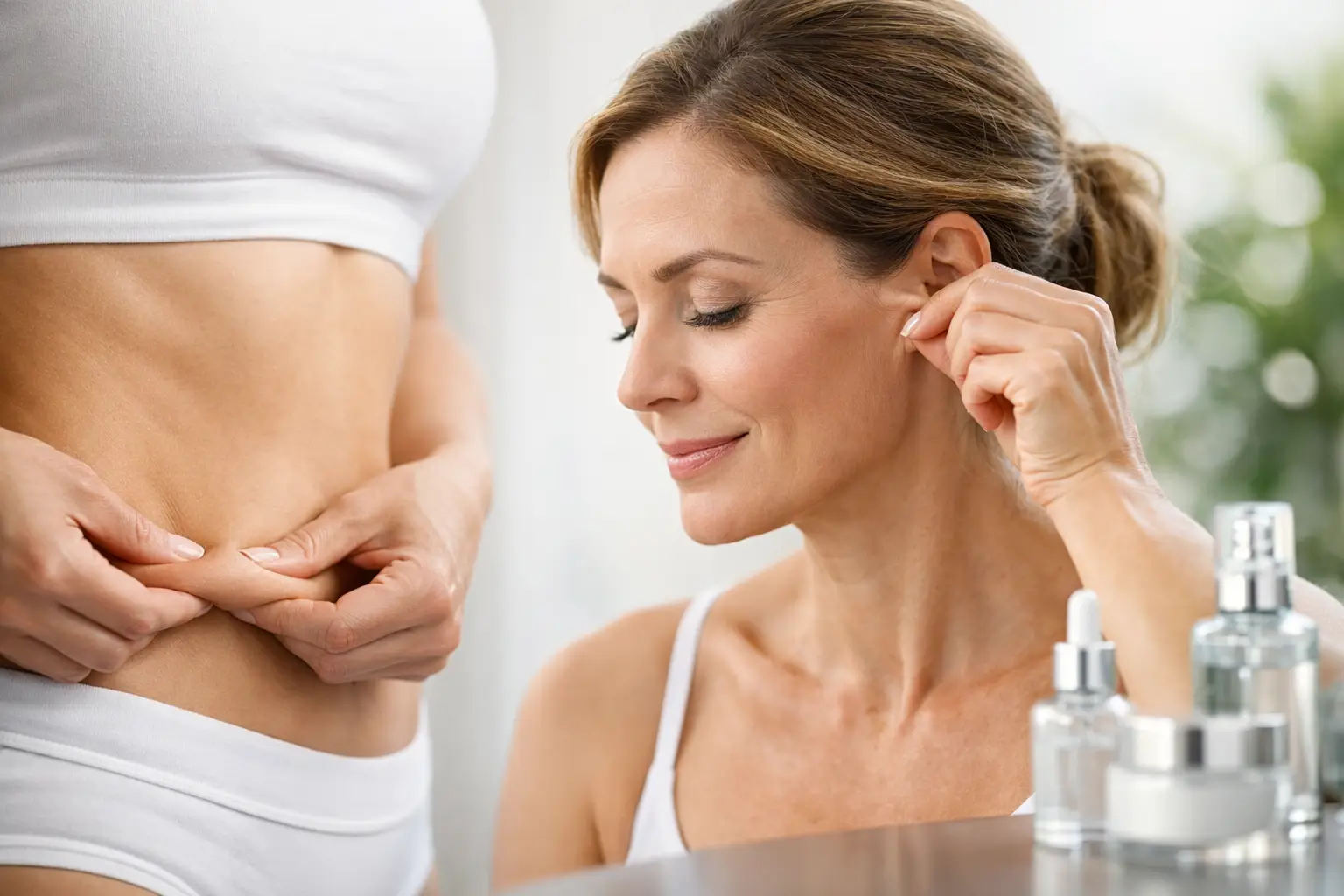
Learn how to tighten loose skin with proven options, from collagen support to non-surgical treatments that improve firmness and texture.
Loose skin rarely appears all at once. More often, it shows up in the details - the jawline that looks softer in photos, the skin above the knees that no longer feels as firm, the abdomen that changed after weight loss or pregnancy. If you are asking how to tighten loose skin, the real answer starts with understanding why it happens and which solutions can actually improve it.
Skin loses firmness for several reasons, and not all of them respond to the same treatment. Age is the most obvious factor because collagen and elastin naturally decline over time. Rapid weight loss can leave behind stretched skin that does not fully rebound. Pregnancy, sun exposure, genetics, and lifestyle habits also affect how well skin holds its structure. That is why some people see meaningful improvement with non-surgical treatments, while others need a combination approach and realistic expectations.
How to tighten loose skin starts with the cause
There is a major difference between mildly crepey skin and significant laxity. Mild looseness often responds well to collagen-stimulating treatments, especially when the issue is texture, early sagging, or skin that simply looks less toned. More advanced laxity, especially after major weight loss, can be harder to correct without surgery. Non-surgical options can still improve skin quality and contour, but they may not remove excess skin.
This distinction matters because the best results come from matching the treatment to the level of laxity. If the skin still has some elasticity and the concern is early to moderate sagging, non-invasive or minimally invasive treatments can make a visible difference. If there is a large amount of hanging skin, the goal often shifts from full tightening to noticeable improvement.
What actually helps tighten loose skin
Topical skincare can support the skin, but it has limits. Creams and serums may improve hydration, texture, and the appearance of fine lines. Ingredients such as retinoids, peptides, antioxidants, and hyaluronic acid can help the skin look smoother and healthier. That said, skincare alone will not meaningfully tighten moderate or severe loose skin on the face or body.
Lifestyle also plays a supporting role. Strength training can improve the appearance of loose skin by building muscle underneath it, especially in the arms, thighs, and glutes. Steady hydration, a protein-rich diet, and avoiding smoking can support collagen health. Sun protection matters more than many people realize because UV exposure breaks down collagen and accelerates laxity.
These habits are valuable, but when patients want visible lifting or firmer contours, energy-based treatments are usually where results become more noticeable.
Non-surgical treatments for loose skin
The most effective non-surgical options work by heating deeper layers of tissue in a controlled way. This stimulates collagen remodeling, which gradually improves firmness over the following weeks and months. The exact technology matters, as does the treatment area.
Ultrasound skin tightening
Ultrasound-based treatments target deeper structural layers beneath the skin without damaging the surface. This makes them especially appealing for areas like the jawline, lower face, neck, and brows. Sofwave is one example of a modern ultrasound treatment designed to stimulate collagen with minimal downtime. It is often chosen by patients who want a more lifted, refined look without injectables or surgery.
Results are not instant in the way fillers are. The skin gradually becomes firmer as collagen production increases. For the right patient, that subtle progression is part of the appeal because the outcome looks natural rather than obvious.
Radiofrequency for skin laxity
Radiofrequency treatments are widely used to improve loose skin on both the face and body. They deliver controlled heat to encourage collagen contraction and new collagen formation. Depending on the device, radiofrequency can also help improve cellulite and skin texture.
For body concerns such as the abdomen, thighs, buttocks, or upper arms, radiofrequency-based platforms can be particularly useful because they address larger areas and can improve both firmness and contour. Viora V-Form and Emtone are often selected for patients dealing with mild to moderate laxity, especially when the concern overlaps with cellulite or post-weight-loss texture changes.
Advanced body contouring platforms
Some patients do not have purely loose skin. They have a mix of mild laxity, stubborn fat, and uneven texture. In those cases, combination platforms can be more effective than a single treatment focused only on tightening. Devices such as Alma PrimeX are designed to approach contour and skin quality together, which can be a smart option for areas like the abdomen or thighs where multiple concerns tend to overlap.
This is where treatment planning becomes more sophisticated. Tightening skin without considering volume, fat distribution, and tissue quality can leave results looking incomplete. A personalized plan often produces a more polished outcome.
Biostimulatory injectables and skin boosters
When loose skin is linked to thinning skin quality rather than excess skin alone, injectable treatments can complement device-based tightening. Biostimulatory treatments such as Sculptra help stimulate collagen over time, while skin boosters like Profhilo can improve hydration and skin quality in a way that supports a firmer, fresher appearance.
These are not interchangeable with energy devices. They work differently and tend to be especially useful in the face, neck, and other areas where the skin has become thinner, less elastic, or more crepey. For some patients, the best answer to how to tighten loose skin is not one treatment, but a layered plan.
Which areas respond best?
The face and neck often respond very well to non-surgical tightening because the tissue is thinner and the early signs of laxity are easier to address. Jawline softening, mild jowling, and loose skin under the chin are common concerns that can improve with the right technology.
On the body, results depend more heavily on the degree of laxity. Mild looseness on the upper arms, abdomen, above the knees, and inner thighs may improve nicely with radiofrequency or ultrasound-based treatments. If there is substantial excess skin, especially after major weight loss, improvement is possible but usually more modest.
This is where honest consultation matters. Premium aesthetic care should never promise a surgical result from a non-surgical treatment. It should show you where visible improvement is realistic and where expectations need to be calibrated.
How long does it take to see results?
Most collagen-stimulating treatments work gradually. You may notice some early tightening within days or weeks, but the more meaningful result usually develops over two to three months as collagen remodels. Some treatments continue improving beyond that point.
Maintenance is often part of the process. Skin continues to age, and collagen production does not stay elevated forever. Depending on the technology used, your age, and the severity of laxity, repeat sessions may be recommended to maintain results. For many patients, this is a worthwhile trade-off because they can improve firmness without surgery, scars, or extended recovery.
What to look for in a treatment plan
If you want a result that looks refined rather than overdone, personalization is everything. The most effective approach considers where the laxity is, how severe it is, the quality of your skin, and whether volume loss, cellulite, or localized fat are also contributing to the concern.
A medically guided consultation should also review the technology being used, not just the treatment name. FDA-cleared devices, experienced practitioners, and a tailored protocol matter. In a market where aesthetic treatments are widely available, expertise is often the difference between a treatment that sounds impressive and one that actually delivers visible change.
At a clinic such as Fit4You Polyclinic, this is typically where advanced technology and individualized planning come together. For patients who value both clinical credibility and elegant, natural-looking results, that level of customization is not a luxury. It is the standard that protects your outcome.
When surgery may still be the better option
Non-surgical tightening has come a long way, but it is not the answer to every case. If you have a large amount of hanging skin after major weight loss or pregnancy, surgery may still be the most effective route. There is no shame in that. The right treatment is the one that matches your anatomy, goals, and tolerance for downtime.
What many patients appreciate, though, is that they do not need to jump straight to surgery for every concern. Mild to moderate laxity often has room for meaningful improvement with modern aesthetic treatments, especially when intervention happens early.
If your skin no longer reflects how vibrant and well cared for you feel, the next step is not to chase trends or guess your way through treatments. It is to choose a plan that respects both the science of skin and the standard you want to see in the mirror.
Interested in this treatment?
Book a free consultation with our specialists at Fit4You Polyclinic Dubai.
Book Free Consultation