

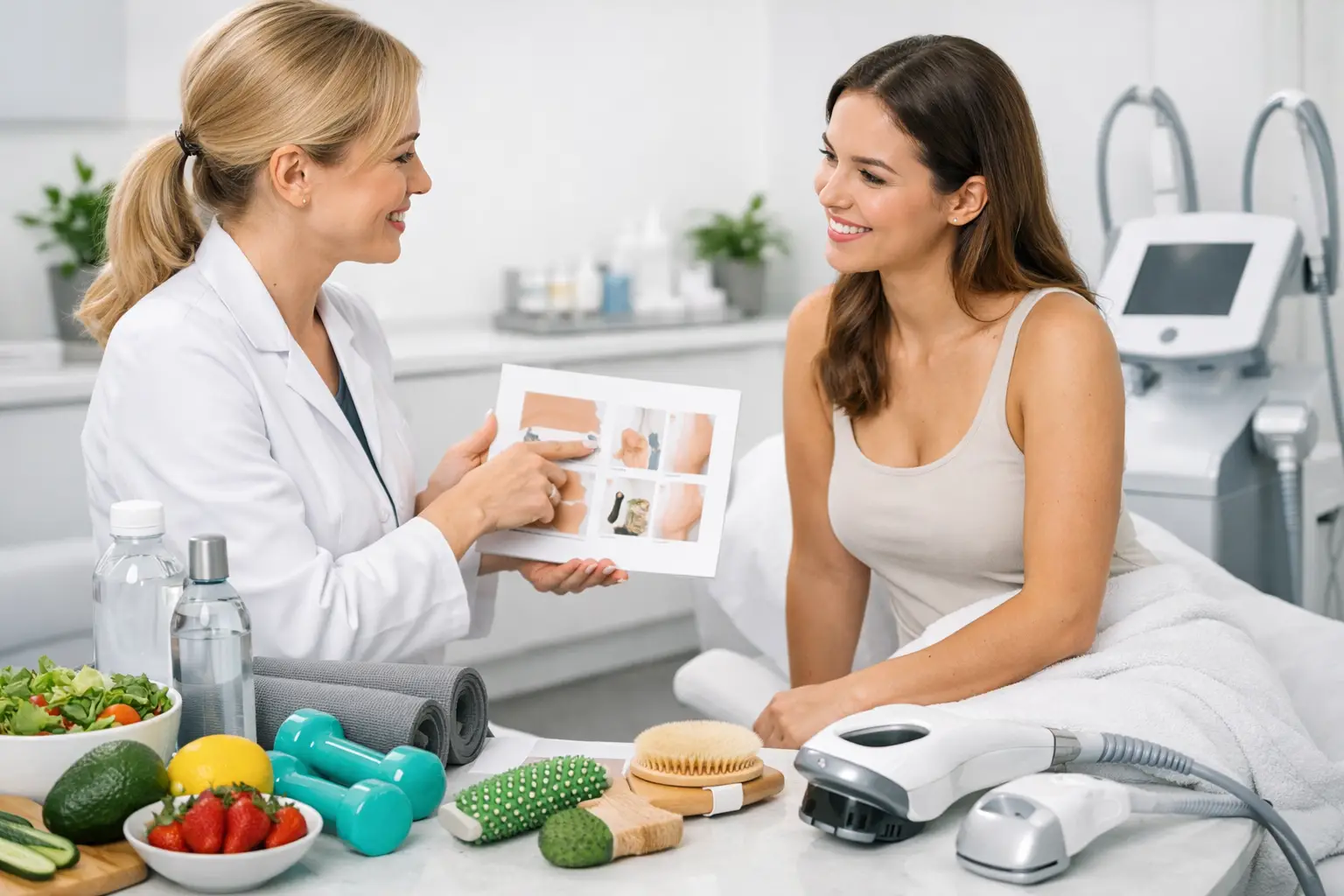
Learn how to reduce cellulite naturally with smart habits, circulation support, exercise, and skin care that help improve texture over time.
Cellulite tends to show up exactly where people notice it most - thighs, hips, buttocks, and sometimes the stomach or arms. If you are searching for how to reduce cellulite naturally, the first thing to know is that cellulite is common, normal, and not a sign that you are doing anything wrong. Even people who exercise consistently, eat well, and maintain a healthy weight can still have it.
That is because cellulite is not simply “fat under the skin.” It is more closely tied to the structure beneath the skin, including connective tissue, circulation, skin thickness, hormones, and genetics. Natural strategies can absolutely help improve the look and feel of cellulite, but the results are usually gradual rather than dramatic. The best approach is realistic, consistent, and tailored to your body.
Why cellulite happens in the first place
Cellulite develops when fat cells push up against the skin while fibrous bands beneath the skin pull downward. That uneven tension can create the dimpled, rippled appearance many people describe as orange-peel skin. Women experience cellulite more often than men, largely because connective tissue is arranged differently and hormones such as estrogen play a role.
Genetics also matter more than most people want to hear. Some people are simply more prone to cellulite regardless of their fitness level. Age can make it more visible as well, since skin naturally loses collagen and elasticity over time. When skin becomes thinner and less firm, underlying texture tends to show more clearly.
This is why quick fixes often disappoint. Creams, dry brushing, or detox claims may sound appealing, but cellulite is a structural issue as much as a surface one. Natural improvement comes from supporting the body in several ways at once.
How to reduce cellulite naturally with daily habits
If your goal is smoother-looking skin, think in layers. You want to support circulation, muscle tone, hydration, inflammation control, and skin quality all at the same time.
Focus on strength, not just weight loss
Losing body fat can help reduce the appearance of cellulite in some people, but it is not a guaranteed solution. In fact, becoming thinner without building muscle can sometimes leave skin looking less supported. A stronger lower body often creates a firmer, smoother appearance than weight loss alone.
Prioritize resistance training two to four times per week. Squats, lunges, step-ups, deadlifts, glute bridges, and leg presses are especially useful for the thighs and buttocks. If cellulite appears on the arms, include rows, presses, and triceps work.
Muscle does not erase cellulite, but it can improve the contour underneath the skin. Over time, that usually helps the area look tighter and more toned.
Keep circulation moving
Poor circulation does not directly cause cellulite, but sluggish blood flow and prolonged sitting can make tissue look more congested and puffy. If you spend most of the day at a desk, regular movement matters more than one intense workout at the end of the week.
Walking daily, taking stretch breaks, swimming, cycling, and low-impact cardio can all support blood flow and lymphatic movement. Some people notice their skin looks smoother when they stay consistently active, especially when they combine cardio with strength training.
You do not need an extreme routine. What matters is consistency and avoiding long periods of inactivity.
Eat in a way that supports skin and connective tissue
There is no single cellulite diet, and any plan that promises to melt it away is oversimplifying the issue. That said, food choices can influence inflammation, fluid retention, collagen production, and body composition.
A practical approach includes lean protein, vegetables, fruit, healthy fats, and high-fiber carbohydrates. Protein is especially important because the body needs amino acids to maintain muscle and support tissue repair. Vitamin C-rich foods can help support collagen production, while potassium-rich foods may help with water balance.
Highly processed foods, excess sodium, and frequent sugar-heavy meals may contribute to bloating and fluid retention in some people, which can make texture look more noticeable. This does not mean you need to eat perfectly. It means your baseline habits matter more than occasional indulgences.
Hydration helps more than people think
Drinking more water will not remove cellulite, but dehydration can make skin look thinner, duller, and less supple. Well-hydrated skin often appears smoother and healthier, even if the structural cause of cellulite remains.
If you struggle to drink enough water, build it into your routine rather than relying on willpower. Start your morning with water, keep a bottle nearby during the day, and increase intake around workouts or in hot weather. In a climate like Dubai, hydration becomes even more important for overall skin quality.
Natural skin care that can improve texture
Topical care has limits, but it is not useless. Think of it as support, not a cure.
Massage and lymphatic support
Massage can temporarily improve circulation and reduce the look of fluid retention, which may soften the appearance of cellulite for a short time. Some people respond well to manual massage, foam rolling, or lymphatic-style body massage. The key is regularity.
Temporary improvement is still improvement, especially before an event or vacation. Just keep expectations grounded. Massage does not change the fibrous bands causing cellulite, but it can help tissue look less congested.
Dry brushing and body exfoliation
Dry brushing is often marketed as a cellulite solution. The reality is more modest. It can stimulate the skin surface, support exfoliation, and create a temporary plumping effect through increased circulation. That may make the area look smoother briefly.
If you enjoy it, use a soft natural-bristle brush and avoid aggressive pressure. The goal is stimulation, not irritation. Sensitive skin, eczema, or inflamed areas should be treated carefully.
Moisturizing for a smoother finish
Well-moisturized skin reflects light better and tends to look more even. Creams containing caffeine, retinol, peptides, or firming ingredients may offer modest visible improvement with regular use, especially when paired with massage during application.
Still, topical products work best as part of a broader plan. If a cream promises to eliminate cellulite entirely, it is overpromising.
Lifestyle factors people often overlook
When clients ask how to reduce cellulite naturally, they are often already exercising and eating reasonably well. At that point, smaller lifestyle details can make a difference.
Sleep and stress
Chronic stress affects hormones, inflammation, recovery, and body composition. Poor sleep does the same. Neither creates cellulite overnight, but both can work against your efforts to improve skin quality and muscle tone.
Aim for enough sleep to support training recovery, appetite regulation, and healthy skin function. If your body is constantly inflamed, overtired, or stressed, visible results tend to come more slowly.
Smoking and skin quality
Smoking can weaken collagen and impair circulation, both of which can make cellulite look more pronounced. This is one of the clearest examples of a lifestyle habit affecting skin structure over time. If reducing cellulite is part of your body-confidence goals, smoking cessation can support far more than your general health.
What natural methods can and cannot do
Natural strategies can improve the appearance of cellulite, especially mild to moderate cases. They can help your skin look firmer, your lower body look more toned, and tissue appear less puffy or uneven. What they usually cannot do is completely erase cellulite, particularly if genetics, age-related skin laxity, or deeper structural bands are involved.
That distinction matters because it keeps your expectations healthy. If your cellulite is mild, lifestyle changes may create a visible difference. If it is more established, natural methods may help, but not fully resolve it.
This is where professional guidance becomes useful. For some people, the most satisfying outcome comes from combining strong daily habits with technology-led body treatments designed to target texture, circulation, and skin tightening more directly. At a medically supervised aesthetic clinic such as Fit4You, that conversation can be personalized rather than guesswork.
When to consider more than natural remedies
If you have been consistent with exercise, nutrition, hydration, and skin care for several months and still feel unhappy with the texture, it may be time to look at options beyond home care. That does not mean surgery. It means recognizing when lifestyle support has taken you as far as it reasonably can.
Non-surgical treatments can be especially appealing for clients who want visible improvement without major downtime. They may address cellulite more effectively because they target deeper tissue layers than creams or massage ever can. The right choice depends on skin laxity, treatment area, body composition, and how dramatic a result you want.
There is no shame in wanting more than a natural approach can deliver. There is also no reason to rush into treatment if your goals are modest. The right path depends on your starting point and your expectations.
Cellulite is incredibly common, but that does not mean you have to ignore it if it bothers you. A thoughtful natural routine can improve texture, support firmer skin, and help you feel more confident in your body. Start with what is sustainable, give it time, and let your next step be guided by results rather than promises.
Interested in this treatment?
Book a free consultation with our specialists at Fit4You Polyclinic Dubai.
Book Free Consultation