

Learn how skin tightening stimulates collagen, which technologies suit your goals, and what to expect from a personalized treatment plan in Dubai today.
A sharper jawline, firmer cheeks, smoother neck, or more refined body contour is rarely about making skin look artificially tight. The most elegant results come from supporting the skin’s own architecture. Understanding how skin tightening stimulates collagen helps explain why modern non-surgical treatments can create gradual, natural-looking improvement without the recovery associated with surgery.
At Fit4You Polyclinic, treatment planning begins with more than a concern such as laxity or fine lines. Skin quality, collagen reserves, facial structure, lifestyle, and desired downtime all influence which technology and treatment schedule will deliver the most meaningful result.
Collagen is the framework beneath firm-looking skin
Collagen is a structural protein that gives skin much of its strength and support. Think of it as part of the internal framework that keeps the complexion looking smooth, lifted, and resilient. Elastin works alongside collagen, allowing skin to stretch and return to shape, while hyaluronic acid helps maintain hydration and softness.
From our mid-20s onward, the body naturally produces less collagen each year. Sun exposure, weight fluctuations, smoking, stress, hormonal changes, and the passage of time can accelerate that decline. The result may be skin that feels thinner, creases more easily, or no longer sits as closely against the contours of the face or body.
Topical skincare can support surface hydration and protect against further environmental damage, particularly when sunscreen and proven active ingredients are used consistently. However, creams cannot deliver controlled energy into the deeper layers where much of collagen remodeling occurs. That is where professionally selected skin-tightening treatments have a distinct role.
How skin tightening stimulates collagen beneath the surface
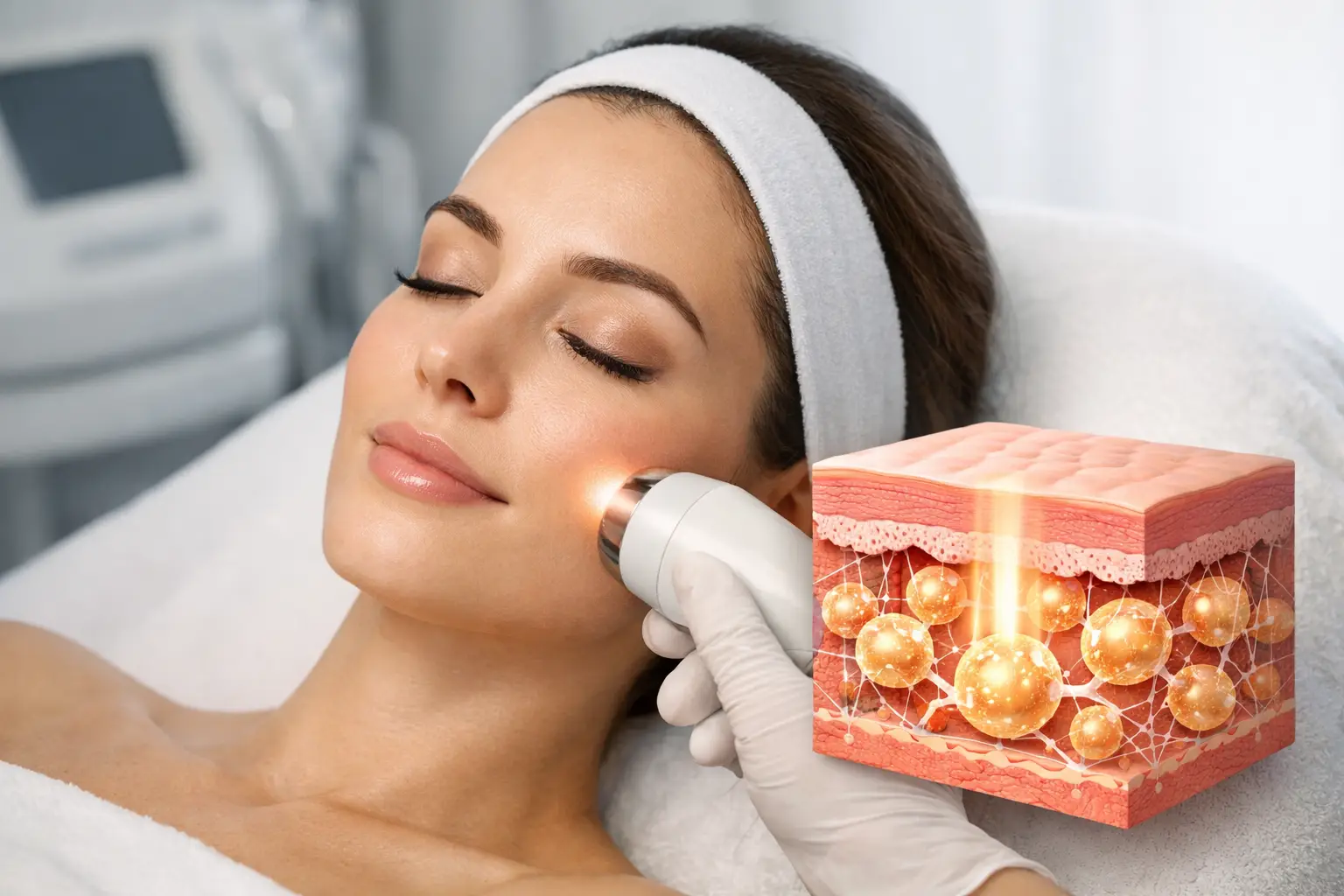
Most non-surgical tightening treatments work through carefully controlled thermal stimulation. Devices using ultrasound, radiofrequency, laser energy, or a combination of technologies deliver energy to selected depths within the skin and underlying tissue. The surface is protected while the target layers are warmed in a precise, medically guided way.
This controlled heat initiates a natural repair response. Existing collagen fibers may contract slightly, which can create an early feeling of firmness for some patients. More significantly, fibroblasts, the cells involved in producing collagen and other structural components, are prompted to begin a longer remodeling process.
Over the following weeks and months, the skin lays down fresh collagen and reorganizes existing fibers. This process is called neocollagenesis. It is gradual by design, which is one reason non-surgical results tend to look refined rather than sudden or overdone. The goal is not to force the face or body into a different shape. It is to encourage stronger support in the areas where the skin has begun to lose it.
The right depth matters
Not all laxity starts at the same level. Fine crepiness around the eyes or on the neck may require a different approach from lower-face laxity, abdominal looseness after weight change, or cellulite-related texture concerns. An effective treatment must reach the tissue depth most relevant to the concern while respecting the skin’s condition and the patient’s comfort.
Focused ultrasound treatments, such as Sofwave, are designed to create targeted thermal stimulation at a specific depth beneath the skin’s surface. Radiofrequency-based technologies can heat dermal and subdermal tissues to support collagen remodeling and, depending on the platform, may also address texture or body concerns. Certain laser treatments can improve superficial texture and pigmentation while contributing to collagen renewal.
The technology matters, but the protocol matters just as much. Energy settings, treatment coverage, number of sessions, and the interval between appointments should never be treated as one-size-fits-all decisions.
Why results take time
Collagen is not created overnight. Some patients notice a subtle immediate tightening effect, often related to temporary tissue contraction or post-treatment swelling. The more meaningful change develops as the body creates and reorganizes collagen, commonly becoming more visible over eight to 12 weeks and continuing to evolve beyond that point.
This timeline can feel slower than an injectable treatment, which may offer more immediate volume or wrinkle correction. Yet it is also the appeal of collagen-stimulating care: the skin improves through its own biological response. For clients who want a polished, rested appearance without a dramatic change, that progression is often ideal.
Which skin-tightening treatment is right for you?
The best choice depends on what you want to improve. Mild to moderate facial laxity, early jowling, softened jawline definition, neck lines, loose abdominal skin, and uneven body texture may all benefit from tightening treatments, but they do not necessarily require the same device or treatment plan.
For facial lifting concerns, focused ultrasound may be selected to support firmness in areas such as the brow, cheeks, jawline, and neck. For patients whose primary concern is crepey texture or fine lines, a treatment that places more emphasis on dermal collagen renewal may be better suited. Radiofrequency may be considered for the face or body, particularly when a tailored plan calls for progressive tightening across a broader area.
Combination care can be especially effective when aging concerns are layered. Skin tightening addresses tissue support, while treatments such as Profhilo can improve hydration and skin quality. Sculptra may be considered when gradual collagen stimulation and volume support are needed, while fillers can restore more immediate structure in carefully selected areas. These treatments do different jobs. A thoughtful plan uses them strategically rather than applying every option at once.
A consultation should also account for skin tone, medical history, previous aesthetic treatments, pregnancy status, active skin conditions, and any implanted medical devices. Not everyone is a candidate for every energy-based procedure. This is why a medically supervised evaluation is essential, especially when the goal is visible improvement with a natural finish.
What treatment feels like and what recovery involves
Comfort varies by technology, treatment area, and individual sensitivity. You may feel warmth, tingling, or brief pulses of energy during a session. Some treatments use cooling features or topical numbing to enhance comfort. Your provider should explain what sensations to expect before treatment begins and adjust the experience appropriately.
Most non-surgical skin tightening procedures involve little to no downtime. Mild redness, warmth, tenderness, or temporary swelling can occur, particularly after treatments that create stronger thermal stimulation. These effects typically settle quickly, although recovery expectations vary by device and intensity.
Aftercare is intentionally simple: protect the skin from direct sun exposure, use broad-spectrum sunscreen daily, stay well hydrated, and follow your provider’s instructions regarding active skincare ingredients, exercise, heat exposure, and makeup. Consistent sun protection is especially valuable because ultraviolet exposure breaks down collagen, working against the results you are investing in.
Results are built through consistency, not a single appointment
A single treatment may be appropriate for certain technologies and concerns, while others are designed as a series. Your age, degree of laxity, metabolism, and baseline collagen production all influence your response. Someone in their early 30s treating early skin looseness may see a different outcome and timeline than someone in their 50s with more advanced tissue descent.
Maintenance is also part of realistic planning. Collagen stimulation can improve skin quality and firmness, but it does not stop natural aging. Many patients choose periodic maintenance sessions, supported by high-quality skincare, healthy lifestyle habits, and complementary aesthetic treatments when appropriate.
The most satisfying outcomes are usually subtle enough that people notice you look refreshed, rested, and well cared for, without being able to identify exactly why. When your treatment is selected with precision, collagen stimulation becomes more than a trend. It becomes an investment in skin that looks supported, luminous, and authentically yours.
Interested in this treatment?
Book a free consultation with our specialists at Fit4You Polyclinic Dubai.
Book Free Consultation