

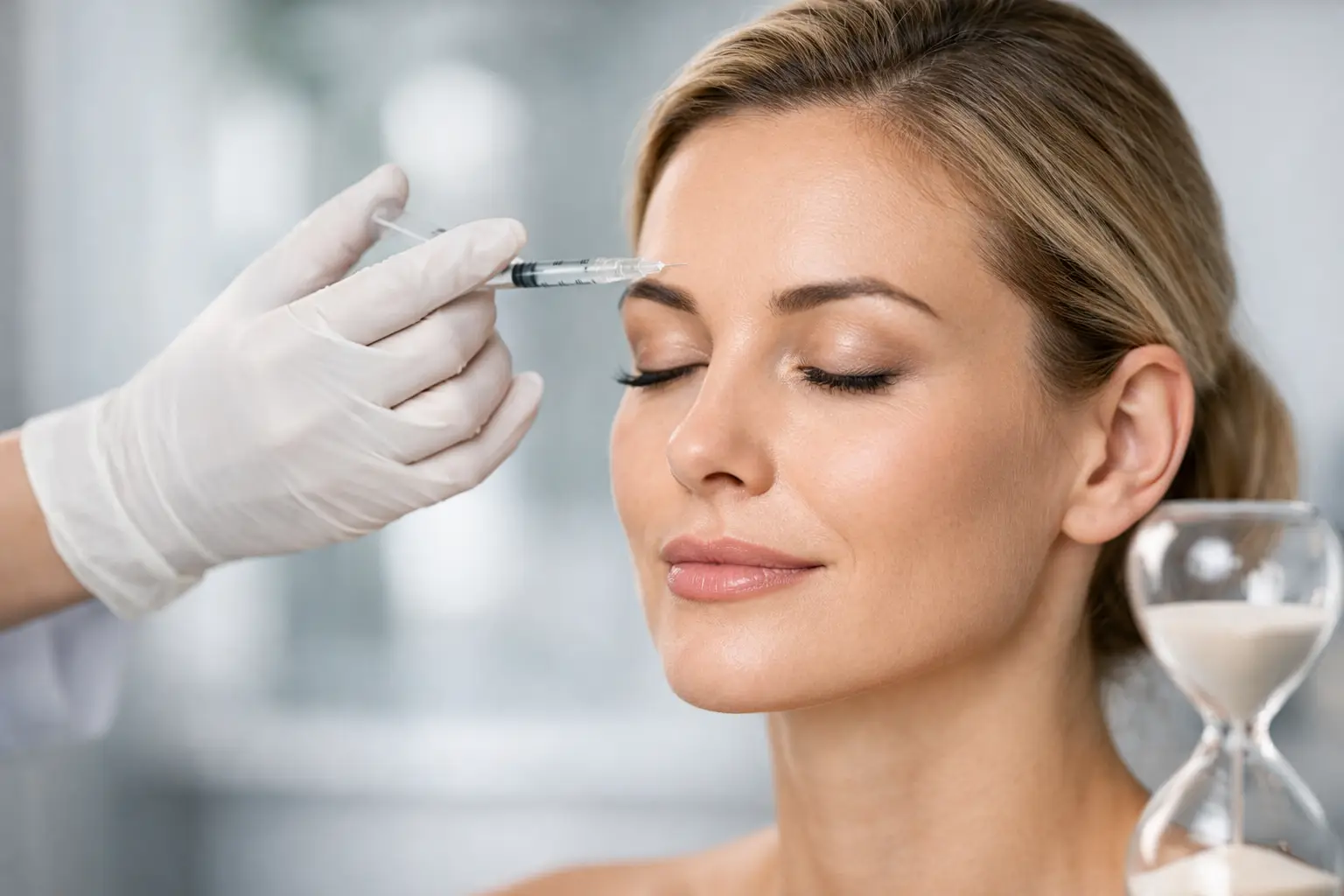
How long does botox last? Learn what affects duration, when results peak, and how to make Botox last longer with expert treatment planning.
If you are planning Botox for the first time, or trying to time your next appointment around travel, events, or a busy work season, one question matters more than almost any other: how long does botox last? The short answer is usually 3 to 4 months, but real-life results are more individual than that. Your metabolism, treatment area, dosage, muscle strength, and injector technique all play a role in how long you keep that smoother, more refreshed look.
For most patients, Botox does not disappear overnight. It follows a fairly predictable timeline. You may start noticing early changes within 3 to 5 days, with fuller results appearing around 10 to 14 days after treatment. From there, the effect gradually softens over the following months as muscle activity returns. That slow fade is exactly why Botox remains one of the most trusted non-surgical treatments for softening expression lines without making the face look overdone.
How long does Botox last in most people?
In clinical practice, Botox typically lasts about 3 to 4 months. Some people notice movement returning a little earlier, closer to 2.5 months, while others still look smooth at 5 months. Neither is unusual. Duration depends on how your body processes the product and how active the treated muscles are.
First-time patients sometimes find that their initial treatment wears off slightly faster than later sessions. With consistent maintenance, some muscles become trained to contract less forcefully, which can help results feel longer-lasting over time. That does not mean everyone will need fewer treatments forever, but it does explain why a personalized schedule often works better than a one-size-fits-all routine.
The area being treated also matters. Crow's feet may fade faster in someone who smiles strongly and frequently, while forehead lines can behave differently depending on the balance between the forehead and the muscles between the brows. Around the face, movement is not only constant but unique to you.
Why Botox duration is never exactly the same
Botox works by temporarily relaxing targeted muscles. As your body gradually rebuilds communication between the nerve and the muscle, movement returns. That process is biological, which means timing varies from person to person.
A faster metabolism can shorten how long Botox lasts. Very active individuals sometimes find they metabolize injectable treatments more quickly, although this is only one piece of the picture. Strong facial muscles can also need more strategic dosing to achieve and maintain the desired result. Men, for example, may need a different treatment plan than women because muscle mass is often greater.
Technique matters just as much as biology. Placement, dosing, and facial assessment are not minor details. Botox should never be approached as a simple unit count without considering facial anatomy, expression patterns, and aesthetic goals. A medically led treatment plan can create results that look natural and hold more predictably because the product is used with precision rather than guesswork.
How long does Botox last by treatment area?
Although 3 to 4 months is a useful average, some areas tend to follow slightly different patterns.
Forehead lines often last around 3 to 4 months, but balance is key. Treating the forehead requires care because too much relaxation can flatten natural expression, while too little may fade quickly. The best result is usually not a frozen forehead but a smoother one that still looks like you.
Frown lines, also called the glabella or the area between the brows, can sometimes last a bit longer, often around 3 to 4 months and occasionally more. These muscles are strong and repetitive, especially in people who squint, concentrate intensely, or hold tension in that area.
Crow's feet usually last about 2.5 to 4 months. Because this area is highly expressive, especially when smiling, the effect may soften a little sooner in some patients. The trade-off is that careful dosing around the eyes can preserve warmth and natural movement while still reducing etched lines.
Botox in the jaw, chin, neck, or for masseter slimming may follow a different timeline and often depends on dose and muscle size. Larger muscles typically need a more tailored approach, and maintenance schedules can be slightly different from upper-face treatments.
What the Botox timeline actually looks like
The first two weeks are where most of the visible change happens. You may notice the treated area feeling lighter or less active before it looks fully smooth. By day 14, your result is usually close to its peak.
From weeks 2 to 8, most patients enjoy the most stable phase. Lines look softened, makeup sits more smoothly, and the face appears more rested without obvious signs that anything was done. This is often the sweet spot people love.
Between months 3 and 4, subtle movement starts returning. You may first notice it in photos, during makeup application, or when making stronger expressions. The return is gradual, not abrupt. If your goal is consistent correction, this is often the point when a review appointment makes sense.
By months 4 to 5, many patients have regained much of their original movement, although sometimes with a lingering softening effect. If you wait until all movement fully returns every time, lines may re-establish more visibly between treatments. Some patients prefer that rhythm, while others want a smoother year-round appearance.
What affects how long Botox lasts?
The biggest factors are your muscle strength, the area treated, your dose, and your injector's technique. But lifestyle and treatment habits matter too.
Frequent sun exposure does not break down Botox itself, but it can make fine lines and skin aging more noticeable, which may create the impression that your treatment is fading faster. Skin quality plays a major role in how polished your final result looks. Botox relaxes muscle movement. It does not directly repair sun damage, crepey texture, or volume loss.
Stress and repetitive facial expressions can also influence how quickly dynamic lines begin to show again. If you are constantly squinting because of screen time or sunlight, for example, the treated muscles remain highly active once movement starts returning.
Consistency helps. Patients who keep up with a thoughtful maintenance plan often feel their results stay more even over time compared with those who wait long gaps between appointments.
How to make Botox last longer
The first step is choosing an experienced medical injector who understands both anatomy and aesthetics. Good Botox is not just about softening lines. It is about balancing the face, preserving expression, and using the right amount in the right place.
Timing matters too. Waiting too long between sessions can allow muscles to regain full strength, which may make each cycle feel shorter or less refined. On the other hand, treating too frequently without a real need is not the goal either. The best schedule is based on how your face moves, how quickly your results fade, and the look you want to maintain.
Protecting your skin supports the overall result. Daily sunscreen, quality skincare, and complementary treatments can make Botox look better for longer because the skin itself appears smoother and healthier. For some patients, combining Botox with skin-rejuvenation treatments or collagen-stimulating options creates a more complete anti-aging plan than injectables alone.
When should you book your next Botox appointment?
For most people, every 3 to 4 months is a sensible range. If you have an event coming up, it is smart to book treatment at least 2 weeks in advance so results have time to settle. If you are newer to Botox, your injector may also want to assess your response after the first treatment and refine your plan at future visits.
The right timing is not only about when movement returns. It is also about your preference. Some patients want a consistently smooth look with minimal fluctuation. Others are comfortable seeing a little expression come back before rebooking. Both approaches are valid when guided by expert assessment.
At a premium aesthetic clinic, Botox should feel less like a quick transaction and more like a tailored strategy. That is where experience makes the difference. A personalized plan can account for your facial anatomy, lifestyle, and long-term goals rather than treating every patient the same.
Is it normal if your Botox wears off faster than expected?
Yes, sometimes. If your Botox seems to fade in under 3 months, it does not automatically mean something went wrong. Your metabolism may be fast, your muscles may be stronger, or your first treatment may have been intentionally conservative to keep the result natural.
That said, if results consistently wear off very quickly, it is worth reviewing the treatment plan. Dose, placement, and product selection may need adjustment. In some cases, what a patient reads as Botox wearing off is actually untreated skin texture, deeper static lines, or volume loss becoming more visible once movement starts to return.
This is why expert consultation matters. Botox is excellent for dynamic wrinkles, but it is not the answer to every sign of facial aging. The most elegant results often come from combining muscle relaxation with broader skin and facial rejuvenation strategies.
If you are asking how long does botox last, you are really asking how to make the result work beautifully in real life. The answer is rarely a fixed number of days. It is a treatment plan built around your face, your goals, and the kind of natural-looking confidence you want to carry forward.
Interested in this treatment?
Book a free consultation with our specialists at Fit4You Polyclinic Dubai.
Book Free Consultation