

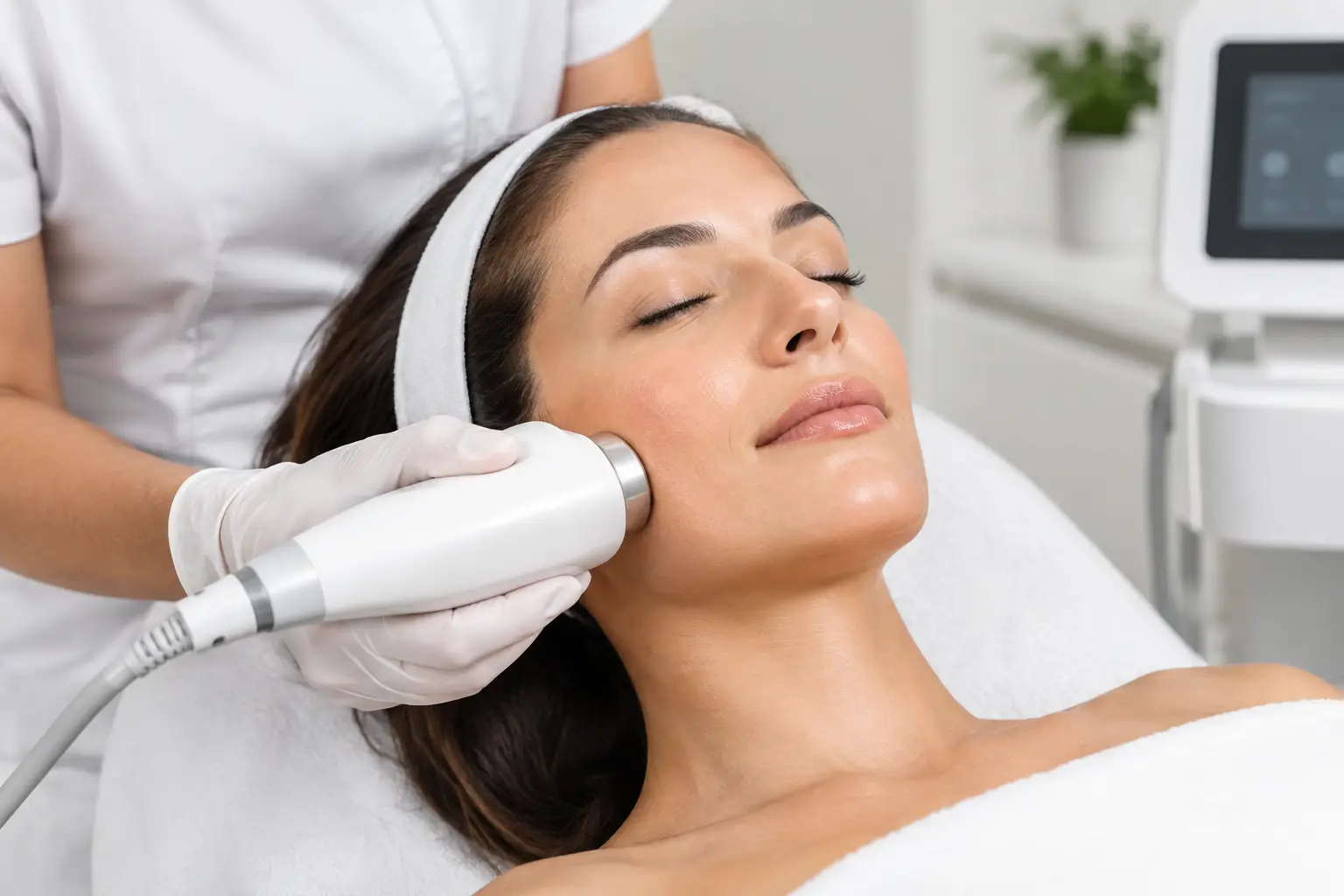
Our guide to radiofrequency skin tightening explains how this noninvasive treatment firms lax skin, what results to expect, and who may benefit in Dubai.
Loose skin rarely arrives all at once. You may first notice a softer jawline in photos, a less-defined neck, fine creasing around the eyes, or body skin that no longer feels as firm after weight changes. This guide to radiofrequency skin tightening explains how one of aesthetic medicine’s most trusted nonsurgical technologies can support firmer, smoother-looking skin with little interruption to your routine.
Radiofrequency, often called RF, is not a replacement for a surgical facelift or body lift. It is a refined option for people who want visible improvement without incisions, general anesthesia, or a lengthy recovery. The right treatment plan depends on the area being treated, the degree of laxity, your skin quality, and the results you hope to see.
How Radiofrequency Skin Tightening Works
Radiofrequency skin tightening uses controlled radiofrequency energy to gently heat targeted layers beneath the skin’s surface. That heat encourages the contraction of existing collagen fibers and signals the body to produce new collagen and elastin over time. Collagen provides structure; elastin supports skin’s ability to spring back. Both naturally decline with age, sun exposure, and lifestyle factors.
During a professionally performed treatment, the provider moves a specialized handpiece over the skin while monitoring temperature and comfort. Depending on the system and treatment area, energy may be delivered through the surface of the skin or combined with other modalities, such as microneedling, infrared energy, or vacuum-assisted tissue stimulation.
The immediate effect can be a subtle, refreshed tightness. The more meaningful change develops gradually as collagen remodeling occurs. This is why RF is ideal for clients who prefer an understated, natural-looking progression rather than an abrupt change in appearance.
What Areas Can RF Treat?
Radiofrequency technology is remarkably versatile. On the face, it is commonly selected to improve the appearance of mild skin laxity along the cheeks, jawline, under-chin area, neck, and eye contour. It can also support smoother texture and soften the look of fine lines when paired with an appropriate skin-care program.
On the body, RF may be used on concerns that are difficult to address with diet and exercise alone, including crepey upper arms, loose abdominal skin, inner thighs, knees, buttocks, and the appearance of cellulite. Treatments that combine RF with mechanical massage or other energy technologies can be especially useful when skin laxity, textural irregularity, and stubborn localized fullness appear together.
Not every concern needs the same device or protocol. A delicate eye area requires a very different approach from the abdomen, and post-pregnancy skin changes are assessed differently from age-related facial laxity. A personalized consultation is where technology becomes a treatment strategy rather than a one-size-fits-all appointment.
What a Radiofrequency Skin Tightening Appointment Feels Like
Most clients describe the sensation as deep, comfortable warmth. Your provider may apply a conductive gel, then work methodically across the treatment area to achieve consistent heating. Some systems include cooling features to protect the skin’s surface while energy reaches deeper tissue.
A facial session may take approximately 30 to 60 minutes. Larger body areas can take longer, particularly when a treatment plan addresses several zones in one visit. You can generally return to work, social plans, or daily responsibilities immediately afterward. Mild redness, warmth, or temporary swelling can occur, but these effects typically settle quickly.
Comfort should never be treated as an afterthought. The treatment should feel warm, not painfully hot. Tell your provider immediately if you experience sharp discomfort, excessive heat, or lingering tenderness. Proper technique, temperature control, and device selection are central to both safety and results.
When Will You See Results?
This is the question that deserves an honest answer: it depends. Some people notice a more toned appearance after the first session, especially when mild fluid retention or tissue puffiness is also present. Collagen renewal, however, takes time. Many clients see their best improvement gradually over several weeks to a few months.
A course of treatments is often recommended for traditional RF skin tightening. The number of sessions varies according to the technology used, the treatment area, and the level of laxity. More advanced devices or combination protocols may require fewer appointments, while body concerns may benefit from a more consistent series.
Results are not permanent because skin continues to age. Maintenance sessions, sun protection, stable weight, quality sleep, and a thoughtful skin-care routine can help preserve the improvement. Think of RF as an investment in skin quality and collagen support, not a pause button on time.
RF Skin Tightening vs. RF Microneedling
These treatments use the same category of energy but are designed for different priorities. Standard external RF delivers energy through the surface of the skin and is often chosen for gentle tightening, facial contour support, and body applications with no needles.
RF microneedling uses very fine needles to create controlled microchannels while delivering radiofrequency energy deeper into the skin. It may be more appropriate for texture concerns, acne scars, enlarged pores, fine lines, and more focused collagen remodeling. Because it involves needles, it can require a little more downtime, including temporary redness or pinpoint marks.
The best choice is not necessarily the more intensive one. If your priority is comfortable, no-needle maintenance for early laxity, external RF may be an excellent fit. If texture and scarring are part of the concern, RF microneedling may offer a more targeted path. In many aesthetic plans, the two can complement each other at different stages.
Who Is a Good Candidate for Radiofrequency Skin Tightening?
RF tends to work best for adults with mild to moderate laxity who want improvement without surgery. It is particularly appealing for clients in their late 20s through 50s who are noticing early changes in firmness and want to care for their skin proactively. It can also be valuable after weight loss, provided expectations are realistic.
Good candidates are generally healthy, understand that results develop gradually, and are prepared to follow a recommended treatment schedule. Skin tone is also an important consideration. Because radiofrequency energy does not rely on targeting pigment in the same way as many laser treatments, it can be suitable for a broad range of skin tones when performed by an experienced professional.
RF may not be appropriate for everyone. Pregnancy, certain implanted electronic devices, active skin infections, uncontrolled medical conditions, or metal in or near a treatment area can change suitability. People with significant skin excess may achieve a more predictable result with surgery. A responsible provider will discuss these boundaries clearly rather than promising an outcome that technology cannot deliver.
Choosing the Right RF Treatment Plan
The device matters, but the assessment matters more. At Dubai’s Premier Aesthetic Clinic, Fit4You Polyclinic approaches skin tightening through a medically guided consultation that considers skin thickness, tissue quality, facial proportions, lifestyle, and your desired level of change. This helps determine whether RF alone is appropriate or whether a tailored plan should include treatments that address hydration, volume loss, muscle tone, cellulite, or surface texture.
Ask who will perform your treatment, what technology will be used, and why it suits your concern. A well-designed plan should also explain how many sessions may be needed, when to schedule maintenance, what temporary effects to expect, and what realistic improvement looks like for your anatomy.
Avoid choosing solely by the lowest advertised price or the promise of an instant lift. Energy-based treatments are technique-sensitive. Certified specialists, clinically appropriate settings, and reputable equipment are worth prioritizing when your skin and comfort are involved.
How to Protect Your Results
Aftercare is usually simple. Keep the skin well hydrated, use broad-spectrum sunscreen daily, and follow any specific instructions provided for your device and treatment area. For more intensive sessions, your provider may advise avoiding excess heat, vigorous exercise, or active skin-care ingredients for a short period.
The habits that support collagen are not glamorous, but they matter: protect your skin from UV exposure, avoid smoking, maintain a stable weight where possible, and give your body adequate nutrition and rest. Your treatment creates an opportunity for renewal; your routine helps that renewal last.
The most rewarding RF results are often the ones that look effortless: a firmer contour, smoother skin, and a version of you that looks well cared for rather than treated. A consultation can clarify whether radiofrequency is the right next step for your skin, your schedule, and the confidence you want to carry forward.
Interested in this treatment?
Book a free consultation with our specialists at Fit4You Polyclinic Dubai.
Book Free Consultation