

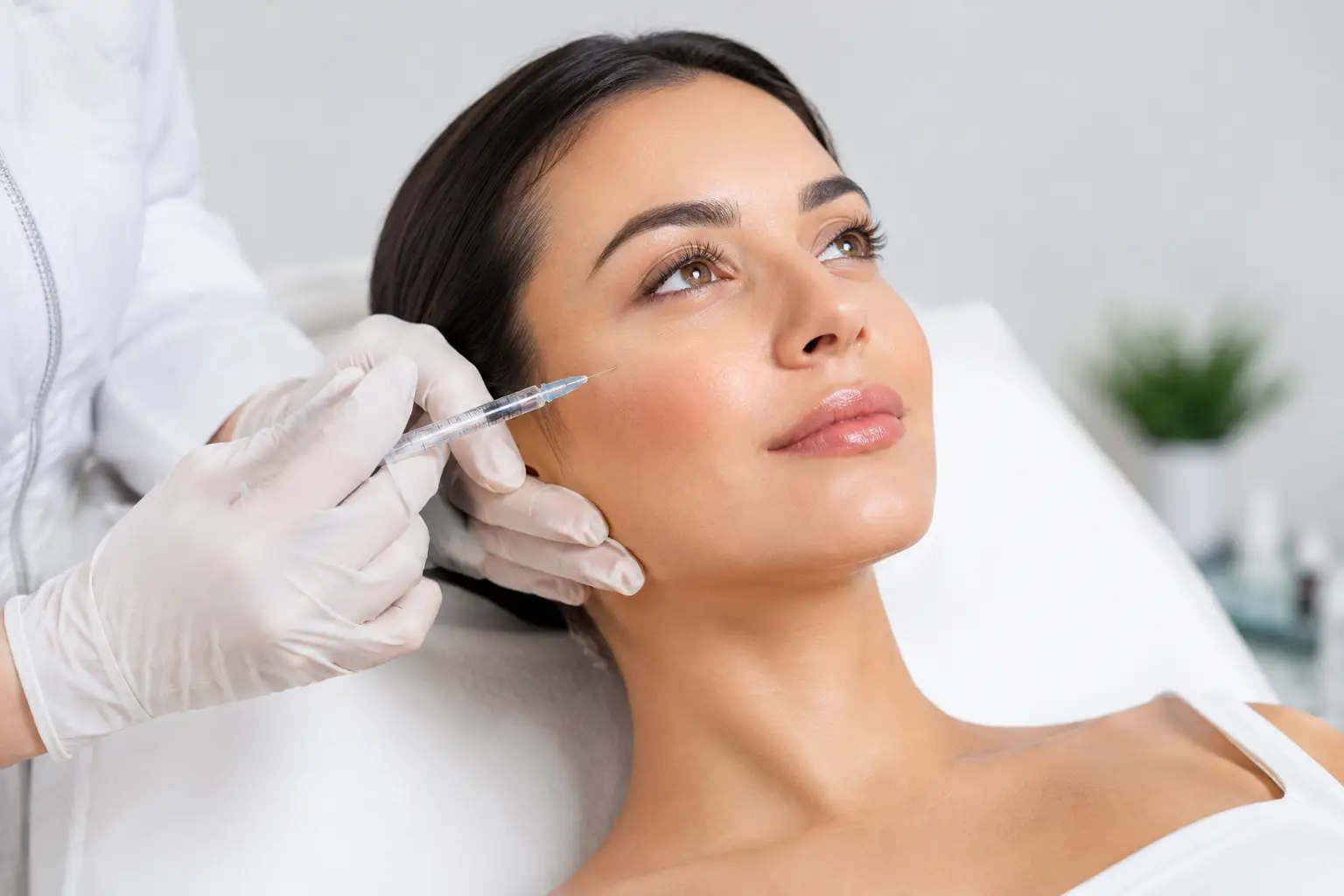
This guide to injectable facial balancing explains how strategic fillers and biostimulators can refine proportion while preserving natural expressions.
A face can be beautifully treated and still feel slightly off balance. The reason is rarely one line or one area alone. A fuller cheek may make a chin appear smaller; a refined nose may reveal a recessed midface; lip filler can look less harmonious when the lower face lacks definition. This guide to injectable facial balancing explains the art and medical judgment behind treating those relationships, not simply adding volume where a concern first appears.
For clients who want a polished, refreshed result without surgery or extended downtime, facial balancing offers a more considered approach. The aim is not to create a different face. It is to refine proportion, support natural structure, and help each feature sit in better harmony with the next.
What Injectable Facial Balancing Really Means
Injectable facial balancing is a customized treatment plan using injectable treatments to improve facial proportion from multiple angles. Depending on your anatomy, goals, skin quality, and existing volume, this may involve dermal filler, collagen-stimulating injectables, skin boosters, or a carefully staged combination.
Rather than asking, “What can we inject here?” an experienced injector asks, “What is influencing this area?” For example, a shadow beneath the eyes may be linked to midface volume loss rather than a true under-eye issue. A jawline that lacks definition may benefit more from chin projection than from extensive jaw filler. These distinctions are where natural-looking results are made.
The ideal result should still look like you. Friends may notice that you look rested, more sculpted, or subtly more confident without being able to identify exactly what changed. Facial balancing is not about chasing a single beauty standard. It is about bringing out the structural strengths already present in your face.
A Guide to Injectable Facial Balancing by Facial Zone
Every face requires its own plan, but certain areas work together closely. Treating them as connected features helps avoid the overfilled or disconnected look that many clients want to avoid.
Forehead, temples, and upper-face support
Volume loss at the temples can make the upper face look hollow or more angular, even when the cheeks are still full. Restoring this area in the right candidate can soften the transition from forehead to cheekbone and create a healthier, more rested appearance.
This is an advanced treatment area. Temple injections demand detailed anatomical knowledge and should only be performed by qualified, medically trained injectors using a safety-first technique. In some cases, skin treatments or a conservative approach are more appropriate than adding volume.
Cheeks and midface
The midface is often central to facial balance because it influences the under-eye area, nasolabial folds, and lower-face contour. Strategic cheek support can restore youthful lift and reduce the need to directly fill every line around the mouth.
More is not automatically better. High or heavy cheek filler can look unnatural if it does not match the patient’s bone structure, facial width, or tissue quality. Some clients need subtle lateral support, while others benefit from restoring volume closer to the central cheek. The right placement depends on whether the concern is age-related volume loss, naturally flat cheek structure, or asymmetry.
Chin, jawline, and profile
A well-proportioned chin can transform the way the entire lower face reads. It may bring better balance to the nose, lips, jawline, and side profile while creating a more elegant transition from face to neck. For both women and men, chin enhancement is frequently one of the most effective ways to create visible refinement without surgery.
Jawline filler may enhance definition, but it should not be treated as a one-size-fits-all solution. A softer, tapered jawline may suit one face, while a stronger angle may complement another. In clients with skin laxity, heaviness, or substantial submental fullness, filler alone may not provide the desired result. Device-based skin tightening, contouring treatments, or a different treatment sequence may be recommended first.
Lips and lower-face harmony
Lip enhancement is often requested as a standalone service, yet lips are part of a larger composition. Their ideal shape and volume depend on lip anatomy, dental support, chin projection, facial length, and the balance between the upper and lower face.
A refined result may mean restoring hydration and border definition rather than building dramatic volume. If the chin is underprojected, modest chin support can sometimes make the lips appear more proportionate without adding excessive filler. This is why a full-face assessment matters, even when your goal seems focused on one feature.
Choosing the Right Injectable Approach
Dermal fillers are commonly used when immediate structural support, contour, or volume is desired. Hyaluronic acid fillers are popular because they can be selected in different textures for different areas and may be adjusted or dissolved when medically appropriate. Firmer products are often chosen for contour and projection, while softer formulations may suit delicate areas or subtle refinement.
Biostimulators work differently. Rather than simply occupying space, they encourage the skin to produce collagen gradually. Treatments such as Sculptra may be considered for diffuse volume loss, skin quality, and facial support over time. Results develop progressively and are not designed for clients who want a highly defined change immediately before an event.
Skin boosters and treatments such as Profhilo can complement facial balancing by improving hydration, elasticity, and overall skin luminosity. They do not replace structural filler when projection is needed, but better skin quality can make a balanced result look even more natural and refined.
The choice is not about which injectable is “best.” It is about what best suits your anatomy and timeline. A client preparing for a wedding in several weeks may need a different plan than someone beginning a gradual collagen-stimulation program for long-term rejuvenation.
What Happens During a Personalized Consultation
A premium injectable plan begins with observation, not a syringe. Your practitioner should assess you at rest and in motion, from the front and profile, while considering facial symmetry, proportions, skin quality, prior treatments, and your desired level of change.
Photos may be used to assess structure and track progress. You should also discuss your medical history, allergies, medications, previous filler, and any history of complications. Be direct about prior treatments, including filler performed elsewhere. Product placement and timing matter, particularly if there is existing filler that has shifted, persisted, or created unevenness.
At Fit4You Polyclinic, this consultation-led approach supports a bespoke plan rather than a preset number of syringes. Sometimes the best recommendation is to treat one foundational area first, then review after swelling settles. Staged treatment protects the quality of the final result and gives your face time to adapt naturally.
Safety, Downtime, and Realistic Expectations
Injectables are minimally invasive, but they are still medical treatments. Temporary swelling, redness, tenderness, bruising, and minor asymmetry during the settling period are possible. Most clients return to normal activities quickly, though it is wise to plan treatment away from major events when possible.
For the first 24 to 48 hours, your practitioner may advise avoiding strenuous exercise, excessive heat, alcohol, pressure on treated areas, and facial treatments. Follow the aftercare specific to your treatment rather than relying on generic advice online.
Serious complications are uncommon when treatment is performed correctly, but they require immediate action. Choose a qualified medical professional who understands facial anatomy, uses appropriate products, and has clear protocols for managing complications. Seek urgent medical advice if you experience severe or increasing pain, unusual blanching or discoloration of the skin, visual symptoms, or marked swelling after treatment.
Results also need realistic expectations. Injectable balancing can improve proportion, contour, and visible signs of volume loss, but it cannot replicate surgical lifting or correct every concern. Significant laxity, deep structural changes, or functional concerns may require another modality or referral. The most trustworthy plan is one that recognizes those boundaries.
How to Keep Results Looking Refined
Facial balancing should evolve with you, not become a cycle of adding volume by habit. Hyaluronic acid filler longevity varies by product, treatment area, metabolism, movement, and lifestyle. Collagen stimulators develop and fade on a different schedule. A thoughtful review appointment helps determine whether maintenance is needed or whether it is better to wait.
Protecting the result also means caring for the skin around it. Daily sun protection, a well-matched skincare routine, hydration, and treatments that support collagen and skin firmness can help your face look consistently polished. If you choose injectables, consider them one part of a complete aesthetic plan, not the entire plan.
The most compelling injectable results are rarely the ones that announce themselves. They are the ones that let your features look rested, balanced, and distinctly your own - with the confidence that comes from being expertly cared for.
Interested in this treatment?
Book a free consultation with our specialists at Fit4You Polyclinic Dubai.
Book Free Consultation