

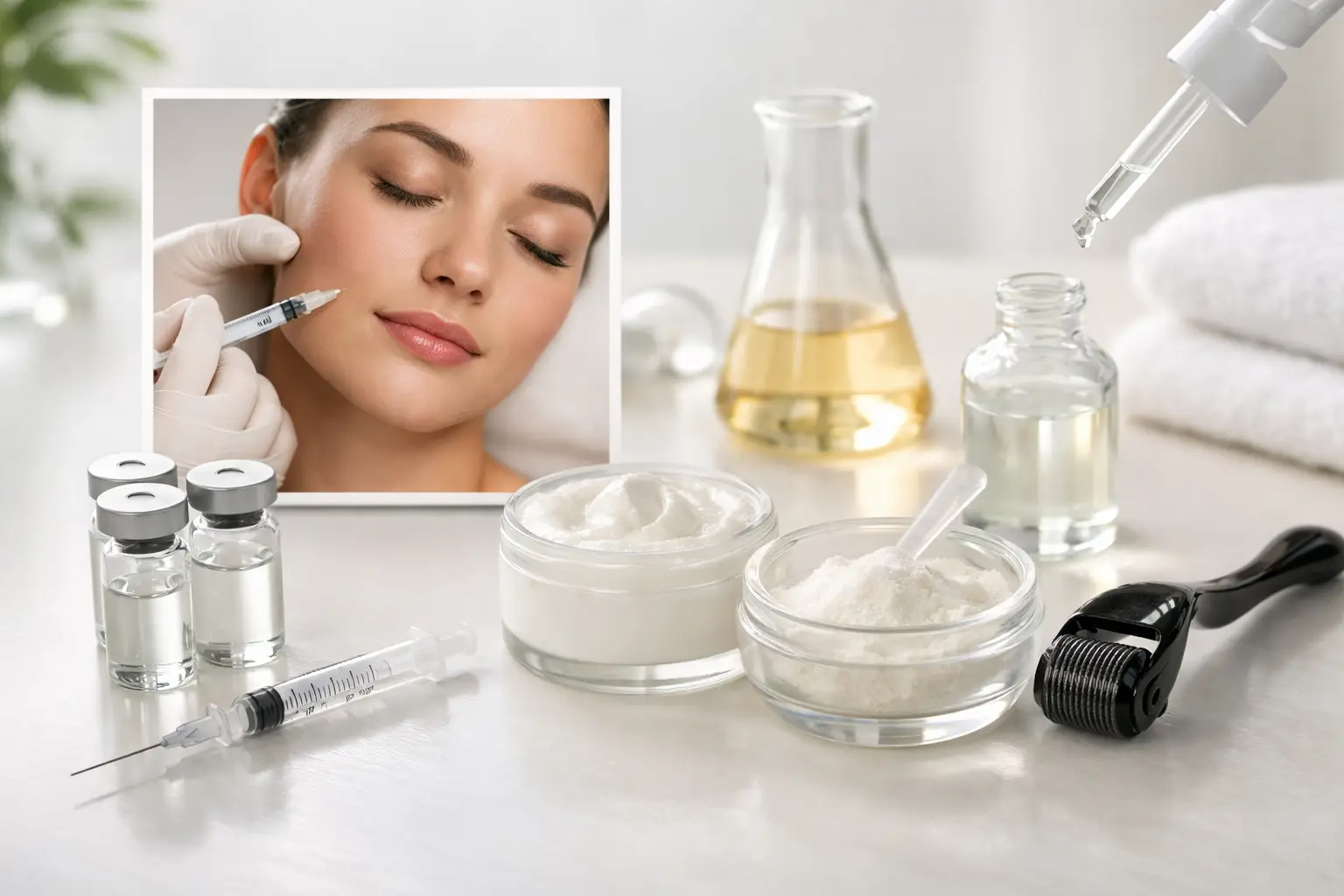
A clear guide to collagen boosting treatments, from injectables to energy devices, with benefits, downtime, and how to choose what fits your skin.
A mirror usually tells the story before a photo does. Skin that once looked naturally firm starts to feel thinner, less springy, and a little tired around the eyes, jawline, or cheeks. This guide to collagen boosting treatments is for anyone who wants visible rejuvenation without rushing into surgery - and wants to understand which options truly improve skin quality, not just mask the signs of aging.
Collagen is the structural protein that keeps skin firm, smooth, and resilient. Starting in your mid-to-late 20s, production gradually declines. Sun exposure, stress, smoking, poor sleep, hormonal shifts, and natural aging all speed that process up. The result is familiar - fine lines settle in, pores appear more noticeable, skin loses elasticity, and facial contours start to soften.
The good news is that modern aesthetic medicine offers several ways to stimulate collagen production. The better news is that there is no single “best” treatment for everyone. The right choice depends on your age, skin quality, degree of laxity, tolerance for downtime, and how quickly you want to see change.
What collagen boosting treatments actually do
When people think about anti-aging, they often think first about fillers or wrinkle relaxers. Those treatments absolutely have their place, but collagen stimulation works differently. Rather than simply adding volume or softening muscle movement, these treatments encourage the skin to rebuild some of its own support structure.
That matters because collagen-focused treatments can improve texture, firmness, elasticity, and overall skin quality over time. Results are often more gradual than instant volumizing treatments, but they can look exceptionally natural. In many cases, that is exactly what sophisticated patients want - skin that looks fresher, tighter, and healthier without looking altered.
Guide to collagen boosting treatments by category
The collagen stimulation landscape can be divided into a few main groups: injectable biostimulators, skin remodeling injectables, ultrasound and radiofrequency technologies, and resurfacing treatments. Each works through a different mechanism.
Injectable biostimulators
Biostimulatory injectables are designed to prompt the body to generate new collagen. One of the best-known options is Sculptra, which works gradually and is often chosen for facial volume loss, skin thinning, and a less defined contour. It does not behave like a traditional filler. Instead, it helps rebuild structure over time.
This makes it attractive for patients who want subtle, progressive improvement. The trade-off is patience. You will not walk out looking dramatically different the same day, and a series of sessions is often recommended. For the right candidate, though, the payoff is refined, natural-looking rejuvenation that evolves over several weeks and months.
Skin remodeling injectables
Profhilo is often grouped into the collagen conversation, though it is different from both filler and classic biostimulators. It uses stabilized hyaluronic acid to deeply hydrate the skin and stimulate tissue remodeling. Patients often choose it when their concern is crepey texture, dullness, or early laxity rather than major volume loss.
It tends to work beautifully for people who say, “I look tired, but I don’t want to look done.” The finish is more luminous and supple than sculpted. If you need stronger lifting or contour support, it may not be enough on its own. If your skin needs hydration, elasticity, and a fresher surface quality, it can be a strong option.
Ultrasound skin tightening
Ultrasound-based treatments such as Sofwave use focused energy to heat the deeper layers of skin where collagen remodeling begins. This can improve mild to moderate laxity on the face, jawline, neck, and brow area without surgery.
The appeal here is clear - no incisions, minimal downtime, and a treatment plan that fits busy schedules. The limitation is equally important to understand. Energy-based tightening is ideal for early to moderate aging changes, but it cannot replicate the results of a surgical lift when sagging is advanced. For the right patient, however, it can deliver elegant tightening and prevention in a way that feels very aligned with a modern aesthetic lifestyle.
Radiofrequency and combination technologies
Radiofrequency treatments heat the dermis in a controlled way to trigger collagen production and tissue tightening. Some technologies combine radiofrequency with other modalities to address texture, laxity, and even cellulite in select body areas.
This category can be especially useful for patients who are not yet ready for injectables, or who want to complement injectable results with device-based skin tightening. Depending on the platform and treatment area, sessions may be repeated over time for cumulative improvement. This is often where a personalized consultation matters most, because settings, skin type, and treatment goals all influence the final outcome.
Resurfacing and collagen renewal
Laser and other resurfacing treatments can also stimulate collagen while improving pigmentation, rough texture, acne scarring, and dullness. These treatments work closer to the skin surface than ultrasound or deep tissue tightening devices, which makes them particularly valuable when the concern is not only laxity, but also visible damage in the complexion itself.
If your skin feels loose and also looks uneven, tired, or sun affected, resurfacing may be part of the answer. Downtime can vary significantly. Some treatments involve only mild redness, while others require a more serious recovery window. That balance between intensity and convenience should always be part of the decision.
How to choose the right collagen boosting treatment
The best guide to collagen boosting treatments is one that starts with your actual concern, not a trend. If volume loss is the main issue, a biostimulator may be more effective than a skin hydration treatment. If your jawline is softening and you want non-surgical lift, ultrasound or radiofrequency may be more relevant. If your skin looks crepey, dehydrated, and tired, skin remodeling injectables may deliver a better match.
Age alone is not the deciding factor. A 32-year-old with significant sun exposure and early laxity may need a different plan than a 45-year-old with good structure but dehydration and texture concerns. Lifestyle matters too. If you travel often, attend events regularly, or cannot accommodate visible downtime, that changes the treatment plan.
A thoughtful provider will also consider how treatments work together. Some of the best outcomes come from combining modalities rather than relying on one approach. For example, collagen stimulation from an injectable may be paired with energy-based tightening for contour and a hydrating facial protocol for surface glow. The result tends to look more complete and more natural because multiple layers of the aging process are being addressed.
What results really look like
Collagen stimulation is rarely about overnight transformation. Most treatments work gradually because they rely on your body’s natural regenerative response. That means results often appear in stages - early improvement in skin quality, followed by better firmness, then more refined contour or texture over time.
This slower trajectory is not a drawback for everyone. In fact, many patients prefer it. Friends may notice that you look rested, polished, or refreshed without identifying a specific treatment. In premium aesthetics, that discreet improvement is often the goal.
Still, expectations matter. If you want immediate dramatic lifting, collagen treatments may feel too subtle on their own. If you want natural enhancement that builds over time and supports long-term skin quality, they can be one of the smartest investments in your appearance.
Who is a good candidate
Most healthy adults noticing early to moderate signs of aging can benefit from collagen-focused treatment. These treatments are especially appealing for patients who want non-surgical rejuvenation, preventive aging support, or maintenance between more intensive procedures.
The ideal candidate also understands consistency. Some treatments require a series. Others benefit from maintenance once or twice a year. Skin continues to age, collagen continues to decline, and aesthetic medicine works best when approached as a long-term plan rather than a one-time fix.
At a medically supervised clinic such as Fit4You Polyclinic, that planning process is where the real value begins. The technology matters, the product matters, and the provider’s expertise matters just as much.
Questions worth asking before you book
Before choosing any collagen treatment, ask what layer of the skin or tissue the treatment targets, how many sessions are typically needed, when you can expect to see results, and what maintenance looks like. You should also ask what the treatment will not do. That answer is often more useful than the sales pitch.
A refined treatment plan should feel personalized, not pushed. Your face, skin thickness, age, and goals are unique. The best recommendation will reflect that.
Beautiful results are not always about doing more. Often, they come from choosing the right treatment at the right time, with the right strategy behind it.
Interested in this treatment?
Book a free consultation with our specialists at Fit4You Polyclinic Dubai.
Book Free Consultation