

Does PRP help hair loss? Learn who may benefit, when results appear, what treatment involves, and why a personalized plan delivers the best outcome today.
A widening part, more hair left in the shower, or a hairline that no longer frames the face as it once did can feel deeply personal. So, does PRP help hair loss? For the right candidate, platelet-rich plasma treatment can help support thicker-looking, healthier hair and reduce ongoing shedding. It is not a one-size-fits-all cure, however, and the quality of the evaluation, treatment protocol, and aftercare matters.
Does PRP Help Hair Loss for Everyone?
PRP may be most helpful for people with early to moderate pattern hair loss, also known as androgenetic alopecia. This common condition affects both men and women and is typically recognized by progressive thinning at the crown, a receding hairline, or a widening part. Hair follicles are still present, but they gradually produce finer, shorter strands over time.
PRP works differently from a hair transplant. It does not move follicles from one area to another, and it cannot reliably restore follicles that have been inactive for years. Instead, it is designed to support weakened follicles that are still capable of growing hair. For this reason, beginning treatment before thinning becomes advanced often offers the most satisfying potential outcome.
It may also be considered for certain forms of diffuse shedding, provided the underlying cause has been identified and addressed. Stress, illness, rapid weight change, hormonal shifts, low iron stores, thyroid conditions, and some medications can all affect the hair cycle. Treating the visible symptom without investigating the trigger can lead to disappointing results.
What PRP Does Inside the Scalp
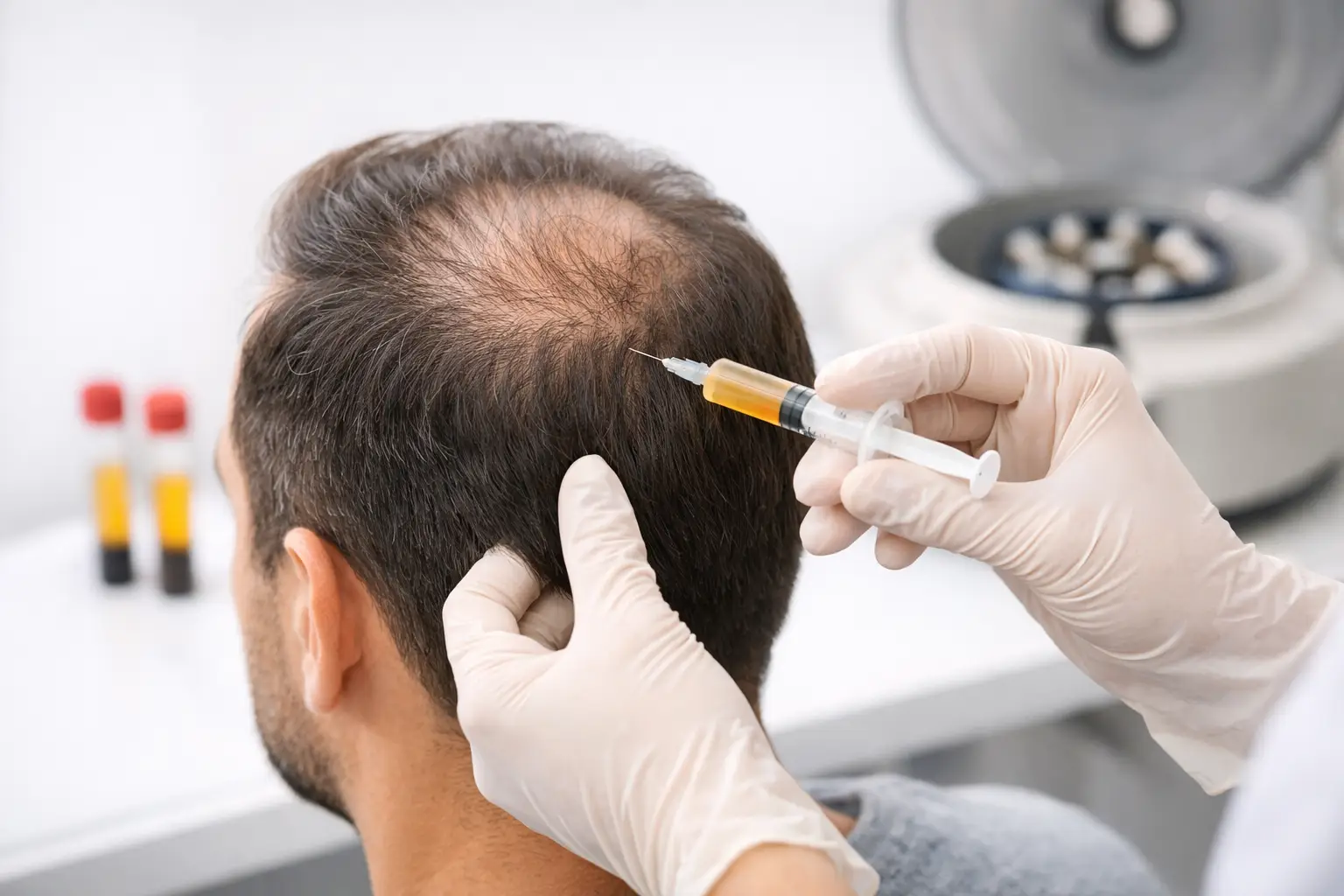
PRP is created from a small sample of your own blood. After the sample is processed in a centrifuge, it separates concentrated platelets and plasma from other blood components. Platelets contain naturally occurring growth factors that play a role in tissue repair and cell signaling.
When carefully placed into targeted areas of the scalp, platelet-rich plasma may help create a more supportive environment around vulnerable follicles. Research suggests it can encourage follicle activity, improve the transition into the active growth phase, and potentially increase hair shaft thickness in suitable patients.
The key word is potentially. Hair growth is biologically complex, and no injectable treatment can override every genetic, hormonal, nutritional, or inflammatory factor at work. PRP is best viewed as a regenerative treatment within a personalized hair restoration plan, rather than a stand-alone promise of a full head of hair.
Who Is a Strong Candidate for PRP Hair Treatment?
The ideal candidate has noticeable thinning but retains active hair follicles in the area of concern. A consultation should include a close examination of the scalp, a review of your health history, and an honest discussion of your goals. For many clients, the goal is not dramatic density overnight. It is to slow visible progression, improve coverage, and make the hair look fuller and more polished over time.
Women experiencing a widening part or reduced volume through the crown can be good candidates, particularly when the scalp is healthy and the pattern is caught early. Men with mild to moderate recession or crown thinning may also benefit. PRP can be valuable for people who want a non-surgical option, those who are not ready for transplant surgery, or those looking to support existing hair after a transplant.
There are situations where PRP may not be the first choice. Advanced bald areas with smooth, shiny skin are less likely to respond because there may be too few functioning follicles remaining. Active scalp infection, certain blood or platelet disorders, uncontrolled medical conditions, and some medications may also affect eligibility. A medically led assessment protects both your safety and your investment.
What to Expect During a PRP Session
A PRP appointment is typically straightforward and requires little downtime. First, a clinician takes a small blood sample, similar to a routine blood draw. The blood is processed to prepare the platelet-rich plasma, while the scalp is cleansed and mapped according to the areas of thinning.
The PRP is then delivered through a series of precise scalp injections. A topical numbing cream may be used to improve comfort. Most clients describe pressure or brief pinching rather than significant pain, although sensitivity varies by person and by treatment area.
Mild tenderness, pinpoint redness, or a tight sensation can occur for a day or two. Because the treatment uses your own plasma, allergic reactions are uncommon. Your provider may ask you to avoid strenuous workouts, intense heat, hair coloring, or washing your hair for a specified period after treatment. These instructions can differ by protocol, so follow the plan provided by your clinician.
When Will You See Results From PRP for Hair Loss?
Patience is part of the process. Hair grows in cycles, and PRP works gradually. Some people first notice less shedding within several weeks, while visible improvements in texture, thickness, and overall coverage usually take several months. Meaningful assessment is often most realistic after three to six months, not after a single appointment.
A common approach is an initial series of treatments spaced several weeks apart, followed by maintenance sessions tailored to your response and hair-loss pattern. The exact number of sessions should never be presented as a guarantee. Your age, genetics, degree of thinning, scalp health, lifestyle, and consistency with the recommended plan can all influence the outcome.
Photographs taken under the same lighting and angle are useful. Hair can look different from one day to the next based on styling, humidity, length, and product use. Consistent clinical images allow you and your provider to judge subtle changes with greater clarity.
PRP Works Best as Part of a Personalized Plan
The most refined hair restoration plans do not rely on a single treatment. Depending on the diagnosis, PRP may be paired with physician-guided topical therapies, oral medications when appropriate, nutritional support, scalp care, or other advanced modalities. The right combination is personal, and a plan that works beautifully for one person may be unsuitable for another.
For example, someone with hereditary thinning may benefit from PRP alongside a medically appropriate treatment that addresses the hormonal pathway driving follicle miniaturization. Someone with shedding after a stressful period may need support for the underlying trigger before expecting a sustained improvement in density. If inflammation, dandruff, or scalp irritation is present, scalp health should be addressed rather than overlooked.
At Fit4You Polyclinic, a personalized consultation is designed to look beyond the strand of hair itself. A premium treatment experience should still be rooted in clinical judgment, clear expectations, and a plan that respects your natural features.
The Trade-Offs to Consider Before Choosing PRP
PRP has clear appeal: it is non-surgical, uses your own blood components, and generally involves minimal recovery time. Yet it also requires commitment. Results are gradual, maintenance may be needed, and response varies. It is not a replacement for a comprehensive medical evaluation when hair loss is sudden, patchy, painful, or accompanied by other symptoms.
Cost is another consideration. Because PRP is typically performed as a series and may involve maintenance appointments, it is best approached as an ongoing aesthetic and wellness investment. Choosing a qualified medical provider, appropriate processing methods, and a protocol based on your actual pattern of loss matters more than choosing treatment based on price alone.
Be cautious of claims that promise a guaranteed regrowth percentage or permanent reversal of baldness. Ethical hair restoration is measured, personalized, and transparent. The most desirable result is hair that looks naturally denser and healthier while still fitting you.
Questions Worth Asking at Your Consultation
Ask what type of hair loss you have and whether your follicles appear likely to respond. Ask how many initial sessions are recommended, when progress will be evaluated, and what maintenance could involve. It is also reasonable to ask whether there are medical conditions, supplements, or medications that may affect treatment.
You should leave the consultation knowing what PRP can realistically improve, what it cannot change, and whether another option should be considered first. A thoughtful plan replaces guesswork with a clear path forward.
Hair loss can change the way you style your hair, appear in photographs, and feel when you look in the mirror. The most helpful next step is not chasing a miracle solution. It is choosing expert evaluation early, so your treatment plan can be as individual as the results you want to see.
Interested in this treatment?
Book a free consultation with our specialists at Fit4You Polyclinic Dubai.
Book Free Consultation