

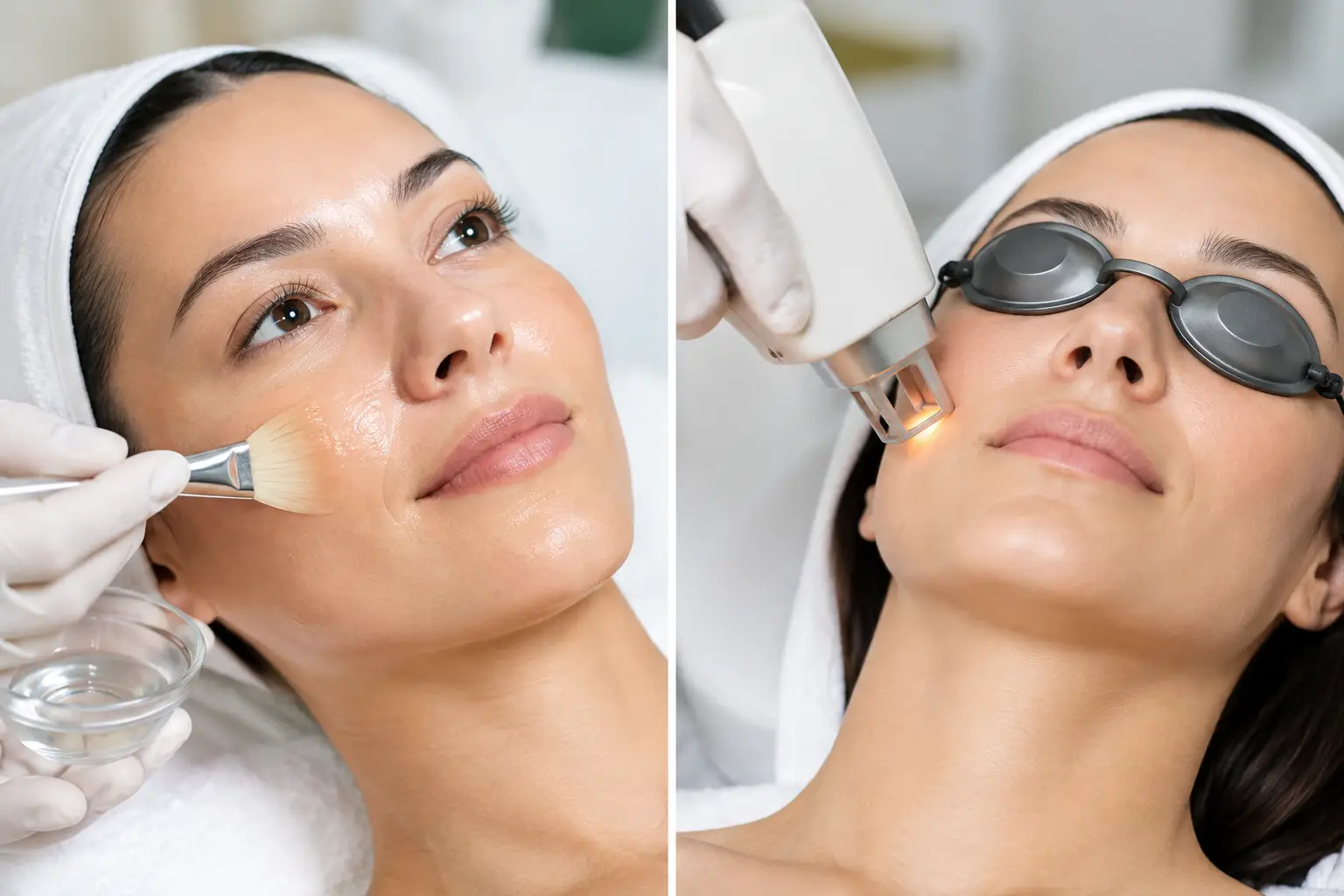
Chemical peel versus laser resurfacing: compare results, downtime, skin concerns, and safety to choose a tailored renewal plan for your skin goals today.
A brighter complexion can look effortless, but the treatment choice behind it should never be casual. In the conversation around chemical peel versus laser resurfacing, the best option is not automatically the most intensive one. It is the treatment that respects your skin tone, concern, lifestyle, and comfort with downtime while delivering a result that still looks beautifully like you.
Both treatments can improve texture, discoloration, fine lines, and visible sun damage. Yet they work in distinctly different ways. A personalized consultation is where the real decision happens - with your skin examined closely, your goals clarified, and a plan created around the level of renewal you truly need.
Chemical Peel Versus Laser Resurfacing: The Core Difference
A chemical peel uses a carefully selected solution to exfoliate the outer layers of skin. Depending on its formula and strength, it may work primarily at the surface or reach deeper to encourage more substantial cellular renewal. As the skin sheds and regenerates, it can appear smoother, clearer, and more luminous.
Laser resurfacing uses focused light energy to create controlled thermal effects in the skin. Some lasers remove tiny columns of tissue to stimulate more intensive renewal, while others heat the deeper skin without removing the surface. This energy-based approach can encourage collagen production and target concerns with a high degree of precision.
The distinction matters because each treatment creates a different recovery experience. A peel often offers a more gradual, flexible route to skin improvement. Laser resurfacing can provide more dramatic correction for certain concerns, but it may involve greater redness, more aftercare, and a longer period before your skin is ready for social events.
When a Chemical Peel May Be the Better Choice
Chemical peels are highly versatile. They can be tailored from a light, refreshing treatment with minimal visible peeling to a medium-depth peel intended for more noticeable correction. For many clients, this makes peels an excellent starting point for professional skin renewal.
A superficial peel may suit dullness, congested pores, uneven tone, mild acne, and early textural changes. It can also be an appealing choice before a special occasion when scheduled with enough time for the skin to settle. Results tend to build with a series, making this option ideal for clients who prefer regular maintenance over a single intensive treatment.
Medium-depth peels can address more established discoloration, fine lines, acne marks, and rough texture. They also require more planning. Peeling, tightness, redness, and sensitivity are expected parts of recovery, and the skin must be protected carefully from heat and sun exposure.
For clients prone to post-inflammatory hyperpigmentation, especially those with deeper skin tones, peel selection requires expert judgment. The right formula, concentration, preparation, and aftercare can make a meaningful difference. An overly aggressive peel is not a shortcut to better skin. It can create inflammation that worsens the very pigmentation concern you hoped to treat.
When Laser Resurfacing May Be Worth the Downtime
Laser resurfacing is often considered when texture is the main concern. It can be particularly effective for acne scarring, etched lines around the mouth or eyes, uneven skin texture, enlarged pores, and sun-related damage that feels more advanced than surface-level dullness.
Ablative laser resurfacing removes a controlled amount of skin tissue. It usually produces stronger visible correction but also involves more downtime. Redness, swelling, oozing, crusting, and several days of focused healing may be part of the process, depending on the treatment intensity. The pinkness can last longer than the initial recovery period, so timing matters if you have an upcoming trip, wedding, camera-facing event, or demanding work schedule.
Non-ablative and fractional laser treatments are generally less intensive. They can heat targeted areas of skin and stimulate collagen with a shorter recovery period, though several sessions may be recommended to achieve the desired level of improvement. This approach may be a better match for clients who want a technology-led treatment plan without the commitment of full ablative resurfacing.
Laser is not automatically the right answer for every complexion or concern. Heat-based treatments must be selected and calibrated with particular care for melanin-rich skin because inflammation can trigger uneven pigmentation. Device choice, settings, skin preparation, and the provider's clinical experience all influence safety and outcome.
Results: What Each Treatment Can Realistically Improve
Neither treatment should be viewed as a filter in real life. Skin quality improves over time, and the most refined results come from appropriate treatment selection, consistent aftercare, and a home routine that protects the investment.
Chemical peels often excel at restoring radiance, refining superficial texture, supporting clearer pores, and improving the appearance of uneven tone. Their results can be noticeable after one session, but a curated series is often the more strategic choice for acne-prone skin, recurrent pigmentation, or ongoing dullness.
Laser resurfacing may deliver a greater change in deeper wrinkles, acne scars, and pronounced textural irregularities. Collagen remodeling continues after treatment, so results can evolve for several weeks or months. This is one reason laser treatment is frequently approached as a planned skin investment rather than a last-minute refresh.
For melasma, caution is essential. Both peels and lasers can help selected patients, but both can also aggravate pigmentation if chosen poorly or performed when the skin is irritated. Melasma usually responds best to a broader strategy that may include medical-grade skincare, pigment control, strict sun protection, and carefully spaced in-clinic treatments.
Downtime Is More Than Time Away From Work
When comparing chemical peel versus laser resurfacing, downtime is often the deciding factor. But downtime is not simply the number of days before you return to the office. Consider when you can wear makeup comfortably, exercise without excess heat, travel, sit in the sun, attend events, and feel confident in close conversation.
A light peel may involve mild flaking or temporary dryness for a few days. A stronger peel can create more obvious peeling and redness for roughly a week or longer. Picking at shedding skin is never advisable, even when the urge is strong.
Laser recovery varies widely by device and intensity. Some fractional treatments leave the skin looking sunburned for a few days, while ablative resurfacing requires dedicated healing time and more structured post-treatment care. In Dubai, where sun exposure and heat are part of daily life for much of the year, planning becomes even more important. Sun avoidance, broad-spectrum sunscreen, hats, and a calm skincare routine are essential after either procedure.
Safety Starts With the Right Assessment
The most luxurious result is healthy, even, comfortable skin - not simply a stronger treatment. Before a peel or laser procedure, your provider should review your skin type, pigmentation history, active acne or dermatitis, cold sore history, current skincare, medication use, and recent aesthetic treatments.
Retinoids, exfoliating acids, certain acne medications, and recent waxing or hair removal may need to be paused before treatment. If you have active infection, open lesions, severely irritated skin, or a history of abnormal scarring, treatment may need to be delayed or adjusted. Pregnancy and breastfeeding can also affect what is appropriate, particularly for chemical ingredients and prescription-grade prep.
At Fit4You Polyclinic, treatment planning is designed around this level of detail. A medically guided assessment helps determine whether a peel, fractional laser approach, combination plan, or a gentler skin-strengthening protocol will best serve your goals.
Choosing the Treatment That Fits Your Skin Story
Choose a chemical peel when your priority is glow, clearer pores, mild pigmentation, surface texture, or a customizable treatment with manageable downtime. Consider laser resurfacing when scars, deeper wrinkles, or significant textural change are your central concern and you can commit to more intensive recovery when needed.
There is also room for a thoughtful combination approach. A professional may use peels at different points in a long-term plan, then introduce laser treatment when the skin is prepared and the indication is clear. The sequence matters. Strong treatments layered too closely can compromise the skin barrier rather than improve it.
Your skin does not need the most aggressive option to look refreshed, refined, and confident. It needs an expert plan, realistic timing, and aftercare that gives every new layer of skin the protection it deserves.
Interested in this treatment?
Book a free consultation with our specialists at Fit4You Polyclinic Dubai.
Book Free Consultation