

Can laser remove pigmentation safely? Learn which dark spots respond, what results to expect, and how expert care supports clear, even-looking skin tone.
A patch of sun damage across the cheeks, post-acne marks that linger long after a breakout, or uneven tone around the mouth can make otherwise healthy skin look tired. Can laser remove pigmentation? In many cases, yes. The right laser treatment can significantly fade unwanted dark spots and restore a clearer, more even-looking complexion. The key is identifying exactly what type of pigmentation you have before choosing a device or treatment plan.
At a premium aesthetic clinic, laser pigmentation treatment should never be a one-size-fits-all appointment. Your skin tone, the depth of the pigment, your lifestyle, and even whether you are prone to post-inflammatory hyperpigmentation all shape the safest path to visible results.
Can Laser Remove Pigmentation Permanently?
Laser treatment can break down excess melanin, the pigment responsible for dark spots, so the body can gradually clear it through its natural processes. For many clients, this creates a substantial and long-lasting improvement in freckles, sun spots, age spots, and certain post-acne marks.
“Permanent” needs context. A laser can treat the pigment currently visible in the skin, but it cannot stop your skin from producing new pigment after ongoing sun exposure, hormonal changes, inflammation, or acne. Dubai’s intense year-round sun makes maintenance especially relevant. Consistent broad-spectrum sunscreen, shade, and a carefully selected skincare routine protect your investment and help maintain a brighter result.
Some concerns respond beautifully to laser technology, while others require a more considered approach. Deep dermal pigmentation, recurring melasma, and pigmentation caused by hormonal shifts can improve, but they may not disappear completely or stay away without maintenance. Honest assessment matters more than promising a perfect result after one session.
Which Types of Pigmentation Respond Best to Laser?
Lasers tend to be most effective when the pigmentation is clearly defined and driven by sun exposure or a previous inflammatory event. Common concerns include freckles, solar lentigines, often called sun or age spots, and post-inflammatory hyperpigmentation left after acne, irritation, or an injury to the skin.
Pigment that sits closer to the skin’s surface is generally easier to target. During treatment, laser energy is absorbed by melanin and converted into heat. This fragments the pigment without treating the surrounding skin in the same way. Over the following days or weeks, spots may temporarily darken before they flake, fade, or gradually become less visible.
Melasma is different. It often appears as broader, symmetrical brown or gray-brown patches on the cheeks, forehead, upper lip, or jawline. It is commonly influenced by heat, UV exposure, visible light, hormones, and genetics. Certain lasers may be appropriate for selected melasma cases, but overly aggressive treatment can trigger rebound pigmentation. A plan may instead combine carefully calibrated energy-based treatments with topical skincare and strict photoprotection.
Why skin tone changes the treatment plan
Darker skin tones have more active melanin, which is a beautiful and natural characteristic but requires greater precision when treating pigmentation. If a device is too aggressive or used without the right settings, the skin can respond with inflammation and new darkening.
This does not mean laser treatment is off limits. It means device selection, energy settings, treatment spacing, pre-treatment skin preparation, and aftercare must be personalized. A qualified practitioner should assess your Fitzpatrick skin type, history of scarring or pigmentation, current skincare products, medications, and recent sun exposure before proceeding.
What Happens During a Laser Pigmentation Treatment?
A treatment begins with a consultation and skin analysis. Your practitioner examines the location, color, pattern, and likely cause of discoloration. This step is essential because not every brown mark is a simple sun spot, and any changing, raised, unusually colored, bleeding, or suspicious lesion should be evaluated medically before cosmetic treatment.
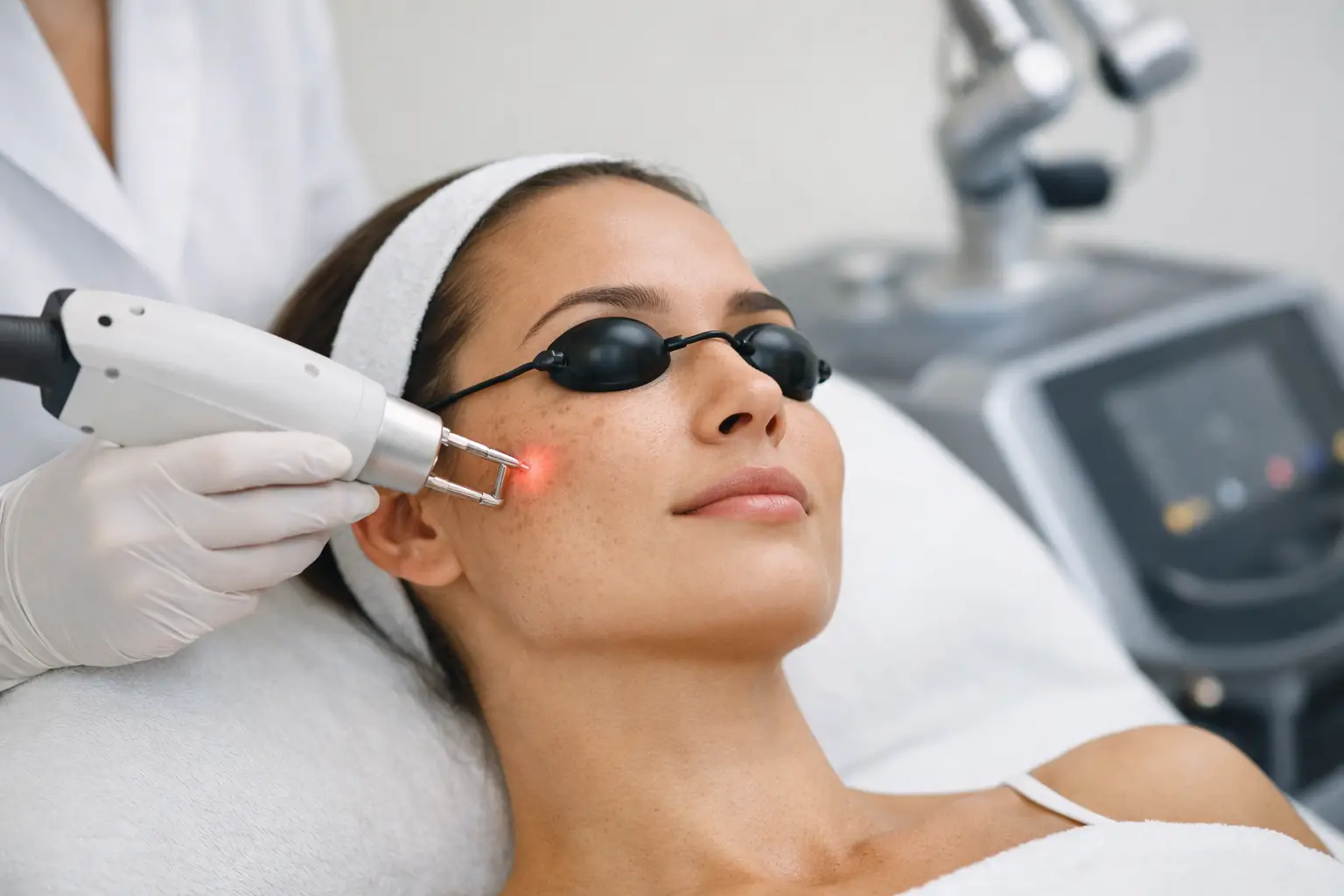
Once your treatment plan is confirmed, the skin is cleansed and protective eyewear is placed over the eyes. Depending on the laser and your comfort level, a cooling system or topical numbing cream may be used. Many clients describe the sensation as quick warmth or a light snap against the skin rather than significant pain.
The appointment itself can be relatively brief for a small area, although a full-face treatment takes longer. Mild redness, warmth, or temporary swelling may follow. Dark spots often look darker at first, which is an expected part of the pigment-clearing process for many laser modalities. Your practitioner will explain what is normal for your specific treatment and when to contact the clinic.
How Many Sessions Will You Need?
A single session can make a visible difference in isolated freckles or sun spots. More widespread pigmentation, acne marks, or deeper discoloration often needs a series of treatments. Most plans are spaced several weeks apart to give the skin time to recover and respond.
The number of sessions depends on the pigment type, its depth, your skin tone, your chosen laser technology, and your goal. A realistic consultation focuses on progressive improvement, not an artificial promise of instant perfection. Photography taken under consistent lighting can be useful because gradual changes are sometimes easier to see over time than from day to day.
For clients managing melasma or a tendency toward recurrent dark spots, maintenance may be part of the plan. This can include seasonal treatments, professional facials selected for pigment-prone skin, or medical-grade skincare recommended by a qualified provider.
The Aftercare That Protects Your Results
Laser technology can be highly effective, but the days after treatment influence both healing and outcome. Your skin may be more sensitive to heat and ultraviolet exposure, and picking at flaking spots can increase the risk of irritation or uneven healing.
Keep the routine gentle. Use the products advised by your practitioner, avoid exfoliating acids and retinoids until you are cleared to restart them, and do not use scrubs or cleansing devices on treated skin. Avoid saunas, steam rooms, intense workouts, and hot showers for the period recommended for your treatment, particularly if redness or swelling is present.
Most importantly, wear a broad-spectrum sunscreen every day and reapply it when outdoors. A tinted mineral formula can offer additional help against visible light for some pigmentation concerns. Hats, sunglasses, and seeking shade are not small details in a pigmentation plan - they are part of protecting the clarity you are working to achieve.
When Laser Is Not the Only Answer
Laser treatment is powerful, but it is not always the first or only recommendation. If pigmentation is caused by active acne, irritation from unsuitable skincare, hormonal melasma, or a medical condition, treating the trigger is equally important. Otherwise, the marks can return even after a technically successful laser session.
A personalized plan may include prescription-strength topical treatments under medical guidance, chemical peels, anti-inflammatory skincare, or acne management alongside laser sessions. The best approach is the one that respects your skin’s biology instead of chasing rapid results at the cost of its barrier health.
At Fit4You Polyclinic, a consultation is designed to bring that level of precision to your aesthetic goals. Advanced technology matters, but expert assessment and a plan tailored to your skin are what turn treatment into refined, natural-looking transformation.
Clearer skin is rarely about erasing every trace of character from your face. It is about treating the discoloration that distracts from your natural radiance, then protecting the result with the same care you bring to the rest of your wellness routine.
Interested in this treatment?
Book a free consultation with our specialists at Fit4You Polyclinic Dubai.
Book Free Consultation