

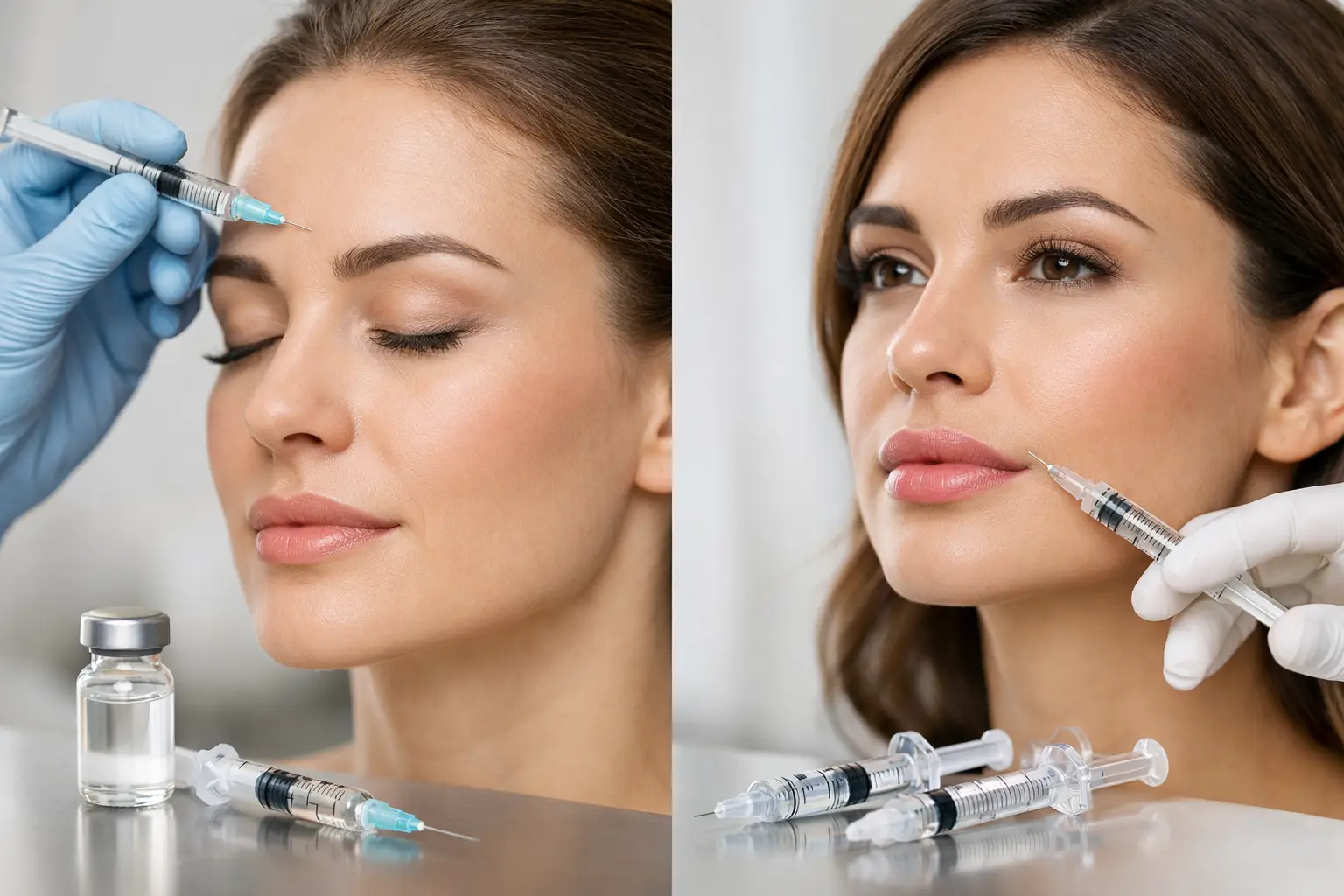
Botox vs dermal fillers explained simply - learn what each treats, how long results last, and which option suits your features and goals best.
You notice it most in certain lighting - the line between the brows that stays even when your face is relaxed, or the cheeks that look slightly flatter than they did a few years ago. This is where the Botox vs dermal fillers conversation becomes relevant. Both are injectables, both can refresh the face without surgery, and both are often misunderstood.
The difference is not subtle once you know what each one is designed to do. Botox softens movement. Dermal fillers restore or refine shape. When patients choose the right treatment for the right concern, the result looks polished, balanced, and natural rather than obviously treated.
Botox vs dermal fillers: the core difference
Botox is a neuromodulator. It works by temporarily relaxing targeted muscles that create expression lines. Think forehead lines, frown lines, and crow's feet. These wrinkles form because the same muscles contract over and over again, and over time the skin starts to crease even at rest.
Dermal fillers do something entirely different. They add volume, structure, or contour beneath the skin. They are often made with hyaluronic acid, a substance naturally found in the body. Fillers are used when the issue is not muscle movement but loss of support, hollowing, or a need for definition.
A simple way to think about it is this: if a line appears because the face moves, Botox may help. If a feature looks flat, sunken, or less defined, filler may be the better match.
What Botox is best for
Botox works best in the upper face, although experienced injectors may also use it in other areas for refined, strategic improvements. Its strength is prevention and softening. It does not fill a crease or replace lost volume, but it can stop the repeated motion that deepens lines.
The most common treatment areas include forehead lines, the glabellar lines between the brows, and crow's feet around the eyes. Some patients also choose Botox for a brow lift effect, chin dimpling, a gummy smile, or jaw slimming when the masseter muscles are overactive.
Results usually start to appear within a few days, with full effect showing around two weeks. The outcome should not make you look frozen when the treatment is properly dosed. Instead, the face appears more rested, smoother, and less tense. This is often why Botox appeals to busy professionals who want to look fresh without looking noticeably different.
What dermal fillers are best for
Dermal fillers are ideal when the goal is restoration or enhancement. As the face ages, volume shifts and decreases. Cheeks may lose lift, under-eyes can look hollow, lips may thin, and lines around the mouth can become more visible. In younger patients, filler is often used for contour rather than correction.
Common treatment areas include the cheeks, lips, jawline, chin, nasolabial folds, marionette lines, and tear troughs. In skilled hands, fillers can create subtle structure that improves overall harmony rather than drawing attention to a single area.
This is where personalization matters. Two patients may both ask for filler, but one needs support in the mid-face while the other needs chin projection or hydration-focused lip enhancement. The best result comes from treating the face as a whole, not chasing one line in isolation.
Botox vs dermal fillers for common concerns
If your main concern is forehead wrinkles, Botox is usually the more effective choice. Those lines are created by muscle activity, so relaxing that movement addresses the cause. Filler in this area is rarely the first answer.
If your cheeks look flatter or your face has started to lose youthful contour, dermal filler is usually more appropriate. Botox cannot restore that volume. The same applies to lip enhancement, chin definition, and support around the mouth.
For under-eye hollows, the answer is more nuanced. Some patients benefit from filler, while others are better suited to skin tightening, collagen stimulation, or a different treatment plan altogether. The under-eye area is delicate, and it should never be approached casually.
For deep frown lines, many patients benefit from both. Botox can reduce the muscle movement that keeps folding the area, while a small amount of filler may be considered if the line is deeply etched at rest. This combination approach is common because facial aging is rarely caused by just one factor.
How long results last
Botox is temporary and typically lasts around three to four months, although this varies depending on the area treated, the dose used, and individual metabolism. Patients who maintain treatment regularly often find that their lines stay softer over time because the muscles are not constantly creating the same creases.
Dermal fillers generally last longer. Depending on the product, the area, and how your body metabolizes it, results can last anywhere from six months to eighteen months or more. Lip filler often fades faster than cheek or jawline filler because the lips move constantly.
Longevity should never be the only factor in deciding between treatments. The better question is what you are trying to correct. A longer-lasting treatment is not better if it does not address the actual issue.
What treatment feels more natural?
This is one of the most common concerns, especially among patients trying injectables for the first time. The answer depends less on the product and more on the treatment plan.
Botox looks natural when muscle movement is softened, not erased. Dermal fillers look natural when volume is restored with restraint and precision. Overdone results usually come from poor assessment, excessive product, or treating trends instead of facial anatomy.
In a medically supervised aesthetic setting, the goal is not to make every face look the same. It is to preserve expression, improve balance, and enhance features in a way that still feels like you. For many patients, that means starting conservatively and building only if needed.
The consultation matters more than the trend
A lot of confusion around Botox vs dermal fillers comes from social media language. People often say they want Botox when they actually mean any injectable, or ask for filler because they want to look less tired when the true issue is muscle tension between the brows. Names get used interchangeably, but treatment planning should never be that casual.
A proper consultation looks at facial movement, skin quality, bone structure, volume distribution, and how the face changes at rest versus expression. Age matters, but not in a simplistic way. A patient in their early 30s may need preventative Botox, while someone in their 40s may benefit from both Botox and carefully placed filler. Another patient may not need either and would see better improvement from collagen-stimulating treatments or energy-based skin tightening.
That is why bespoke planning remains the standard in high-level aesthetic care. The best injectable strategy is rarely based on one product alone. It is based on what your face is asking for.
Is one safer than the other?
Both Botox and dermal fillers are widely used and can be very safe when performed by qualified medical professionals using approved products. That said, they are not interchangeable, and neither should be treated like a quick beauty purchase.
Botox side effects are usually mild and temporary, such as small bruises, swelling, or temporary heaviness if the product is not placed correctly. Filler carries its own risks, including swelling, asymmetry, lumps, and in rare cases vascular complications. Technique, product selection, and injector expertise matter enormously.
For patients who value refined, natural-looking results, this should be reassuring rather than intimidating. Safety and elegance tend to come from the same place: expertise, precision, and an individualized plan.
Choosing between Botox and filler
If your goal is to soften lines caused by expression, Botox is likely the better choice. If your goal is to restore lost volume, sharpen contours, or enhance facial proportions, filler is more likely to deliver the result you want. If your concern includes both movement and volume loss, the right answer may be a combination.
At a premium clinic level, the decision is never about selling more syringes or more units. It is about creating a result that fits your face, your age, your lifestyle, and your standard for how natural you want to look. At Fit4You Polyclinic, that philosophy is central to every personalized aesthetic plan.
The most flattering results usually come from respecting what each treatment does well. When the choice is guided by anatomy instead of assumption, injectables stop being confusing and start becoming very precise tools for looking refreshed, confident, and fully yourself.
Interested in this treatment?
Book a free consultation with our specialists at Fit4You Polyclinic Dubai.
Book Free Consultation