

Body sculpting targets stubborn fat, cellulite, and skin laxity with personalized non-surgical treatments designed for refined, natural-looking contours.
A flat lower abdomen that resists every workout. Cellulite that shows through even the most polished outfit. Skin that feels less firm after weight loss, pregnancy, or simply time. Body sculpting is designed for these highly personal concerns - not to change who you are, but to refine the contours that help you feel more confident in your body.
For clients who want visible improvement without surgery, the appeal is clear: advanced, non-invasive technologies can target fat, texture, and laxity with little to no interruption to daily life. The right treatment plan is never about chasing a single ideal. It is about assessing your anatomy, lifestyle, and priorities, then choosing technology that supports a natural-looking result.
What Is Body Sculpting?
Body sculpting is a category of non-surgical treatments that improves body shape by addressing localized fat, cellulite, loose skin, or a combination of these concerns. Depending on the device and treatment approach, energy may be delivered through radiofrequency, ultrasound, electromagnetic stimulation, vacuum therapy, or controlled heat to create a more defined appearance.
It is not a replacement for weight loss, nor is it a shortcut around healthy habits. Instead, it is best viewed as a precise finishing treatment for areas that remain resistant despite a balanced lifestyle. Many clients are already active and generally close to their desired weight. What they want is more definition at the waist, smoother thighs, firmer arms, or a more lifted appearance through the abdomen and glutes.
The treatment category is broad, which is why a consultation matters. A device that is excellent for cellulite may not be the best choice for deeper fat reduction. Likewise, skin tightening requires a different approach than muscle toning. The strongest results come from matching the concern to the technology rather than choosing a treatment based on a trend.
What Body Sculpting Can Treat
The most common treatment areas include the abdomen, flanks, thighs, buttocks, arms, back, and under-chin area. Each area behaves differently. Abdominal fullness may involve subcutaneous fat, reduced muscle tone, or skin laxity. Thigh concerns often combine cellulite with fluid retention and soft tissue laxity. A thoughtful assessment looks beyond the surface to identify what is actually creating the contour concern.
Stubborn Fat Pockets
Localized fat is often genetically influenced. It can remain in the lower abdomen, love-handle area, upper arms, or inner thighs even when a person maintains a consistent exercise routine. Certain body contouring technologies are designed to disrupt fat cells or encourage the body to metabolize them gradually over time.
The change is usually progressive rather than immediate. This is an advantage for clients who prefer a discreet transformation, but it also requires realistic expectations. Results may continue to develop over several weeks as the body responds to treatment.
Cellulite and Uneven Texture
Cellulite is not a sign that someone is unhealthy or out of shape. It is a structural skin concern influenced by connective tissue, fat distribution, hormones, and genetics. Because cellulite has multiple causes, it often responds best to a treatment plan that supports circulation, improves tissue quality, and stimulates collagen production.
Technologies such as radiofrequency combined with mechanical massage or targeted energy can help smooth the appearance of dimpling and improve skin texture. Results vary by severity, skin quality, and consistency with the recommended treatment schedule. For many clients, maintenance sessions help preserve the refined look they achieve.
Loose or Crepey Skin
Skin laxity can become more noticeable after weight changes, pregnancy, or natural collagen decline. Non-surgical skin tightening treatments use controlled energy to warm deeper layers of the skin, supporting collagen remodeling over time. The goal is not to create the dramatic result of surgery. It is to improve firmness, density, and contour in a way that still looks like you.
This distinction matters. Mild to moderate laxity may respond beautifully to non-invasive treatment, while significant excess skin may require a surgical conversation to achieve the desired degree of change. A medically guided consultation should make that distinction honestly.
Muscle Definition
Some body contouring systems are designed to stimulate intense muscle contractions beyond what is possible through voluntary exercise alone. These treatments can support abdominal definition, gluteal lift, or improved tone in selected areas. They work best alongside regular movement and proper nutrition, especially for clients seeking a more athletic, sculpted appearance rather than a reduction in body weight.
Choosing the Right Technology
There is no universal best treatment because there is no universal body concern. At Fit4You Polyclinic, treatment planning begins with identifying whether fat, cellulite, laxity, or muscle tone is the primary issue. Often, the answer is a combination.
For example, a client concerned about the lower abdomen may benefit from a plan that combines fat reduction with skin tightening if the skin lacks elasticity. Someone focused on the thighs may see more meaningful improvement from a cellulite-focused protocol than from fat reduction alone. Combining technologies can be especially effective because contour is shaped by multiple layers of tissue.
Advanced options such as Alma PrimeX, Emtone, and Viora V-Form may be selected according to the treatment area and desired outcome. While the technology is essential, it is only one part of the experience. Proper settings, treatment spacing, and clinical assessment influence both safety and visible results.
What a Treatment Plan Usually Looks Like
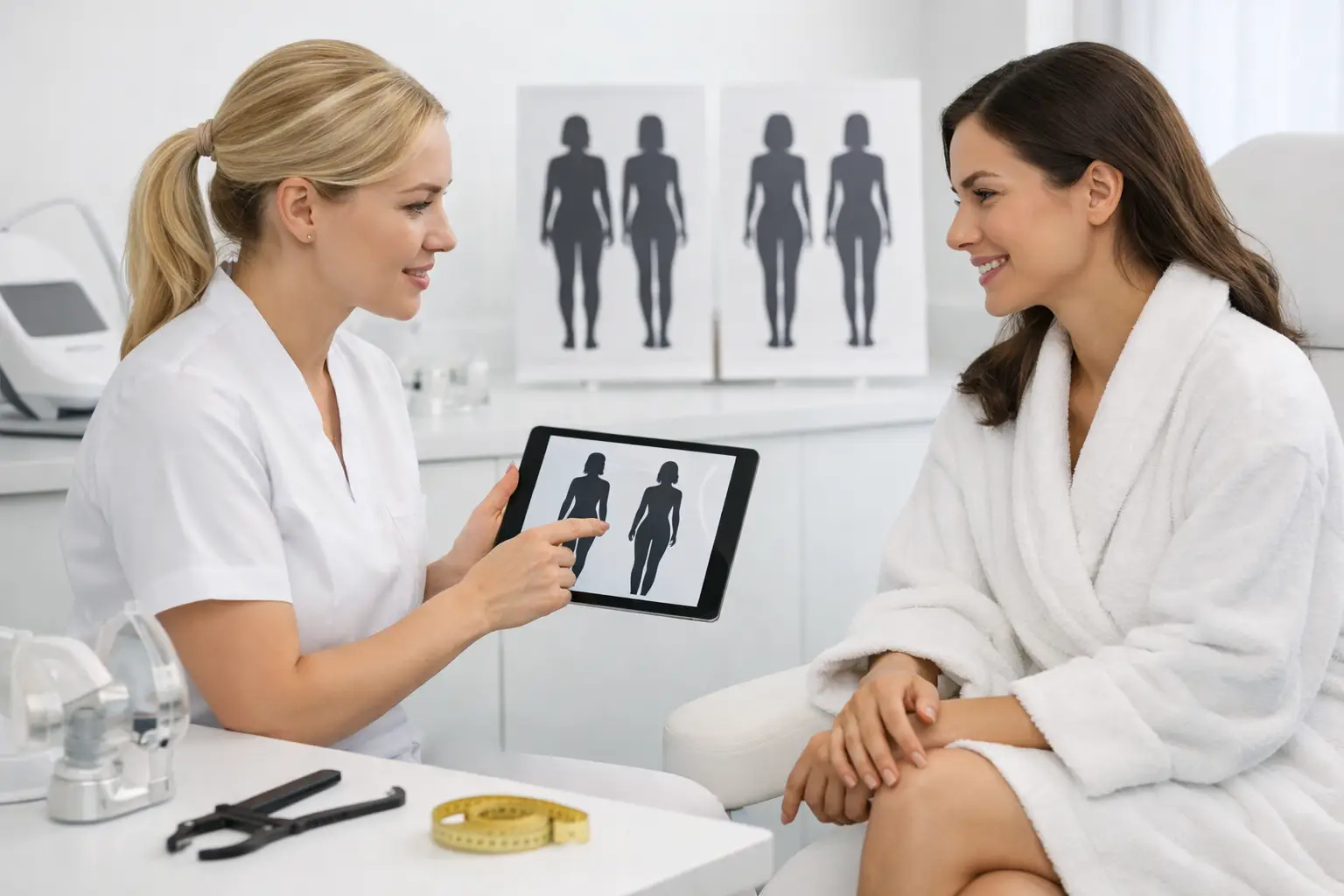
Your appointment typically begins with a detailed consultation. A qualified provider reviews your medical history, current medications, weight stability, treatment goals, and the areas you would like to improve. They should also discuss what is realistic for your body rather than promising an outcome that technology cannot deliver.
During treatment, you may feel warmth, pressure, vibration, suction, or strong but tolerable muscle contractions, depending on the modality. Most non-surgical sessions allow you to return to work, social plans, or your routine shortly afterward. Temporary redness, tenderness, swelling, or sensitivity can occur, but these effects are generally short-lived.
A course of sessions is common, particularly for cellulite and skin tightening. Fat-reduction treatments may have a different protocol and timeline. Your provider may also recommend photographs or measurements at the beginning of your plan, not because numbers define your success, but because subtle changes can be difficult to notice day by day.
Results: What to Expect and When
Body sculpting rewards patience. Some treatments create an early feeling of tightness or smoothness, while collagen remodeling and fat metabolism continue gradually. Depending on the technology, meaningful changes may become more visible between several weeks and a few months after treatment.
The most satisfying results tend to look refined, not obvious. Clothing may sit more smoothly. The waist may appear cleaner in fitted pieces. Skin may look firmer under bright light. These changes can have an outsized effect on confidence because they address the details clients often notice most.
Results also depend on what happens between appointments. Stable weight, hydration, movement, and a nutrient-conscious routine support your investment. They do not replace treatment, but they help maintain the improvements achieved. If weight fluctuates significantly, new fat deposits can develop in untreated as well as treated areas.
Safety and the Value of Expert Assessment
Non-surgical does not mean one-size-fits-all. Body contouring treatments should be performed after an appropriate medical assessment, particularly if you have a history of hernia, implanted medical devices, pregnancy, recent surgery, active skin conditions, or certain chronic health concerns.
FDA-cleared technology and a comfortable clinic setting are important, but clinical judgment is equally valuable. A skilled provider knows when to adjust a protocol, when to combine treatments, and when a client is not the right candidate for a particular procedure. That level of guidance protects both your safety and your expectations.
The best body sculpting plan should feel personal from the first consultation. It should respect your proportions, fit your schedule, and focus on improvements that make sense for your lifestyle. When expertise and advanced technology are paired with a clear vision, refinement can feel less like a dramatic change and more like returning to your most confident self.
Interested in this treatment?
Book a free consultation with our specialists at Fit4You Polyclinic Dubai.
Book Free Consultation