

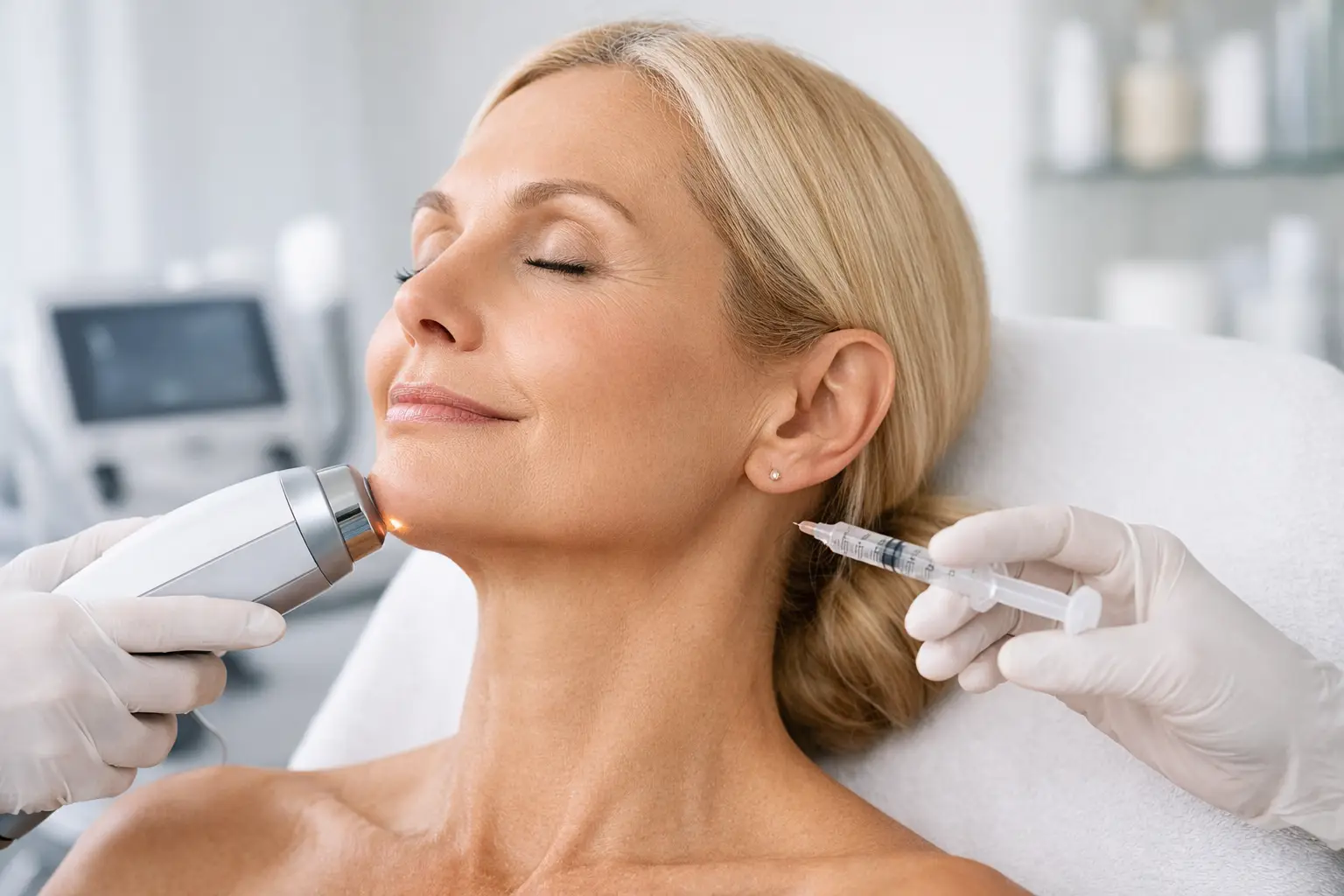
Discover the best treatments for skin laxity, from collagen-stimulating ultrasound to injectables, and find the right non-surgical plan for firmer skin.
Skin laxity rarely appears all at once. It may begin as a softer jawline in photographs, crepey skin around the eyes, looseness along the neck, or a body contour that no longer looks as defined after weight changes. The best treatments for skin laxity are not one-size-fits-all. The right choice depends on where the laxity appears, how advanced it is, your skin quality, and how much downtime you are willing to accept.
For many clients, the goal is not to look dramatically different. It is to restore the firmer, fresher-looking contours that make them feel polished and confident. Modern non-surgical treatments can stimulate collagen, improve skin density, restore strategic volume, and refine the appearance of mild to moderate laxity with little disruption to a busy schedule.
Why Skin Starts to Lose Firmness
Collagen and elastin are the structural proteins that give youthful skin its strength, bounce, and resilience. From our late 20s onward, collagen production gradually slows. Sun exposure, repeated facial movement, stress, smoking, pregnancy, weight loss, and natural hormonal changes can accelerate the process.
Skin laxity is also not simply a skin-deep concern. A face can look less lifted because of weakened skin structure, loss of facial fat, changes in bone support, or a combination of all three. On the body, stretched skin, reduced muscle tone, cellulite, and localized fat can create a looser appearance. This is why a thoughtful consultation matters more than choosing a treatment based on a trend.
The Best Treatments for Skin Laxity
The most effective plans often combine technologies and injectables rather than relying on a single procedure. Each option addresses a different part of the aging process.
Sofwave for Face and Neck Tightening
Sofwave uses advanced ultrasound energy to target the mid-dermis, where new collagen is formed. The treatment is particularly suited to mild to moderate laxity around the brow, cheeks, jawline, neck, and under-chin area. It is a strong option for people who want visible refinement without surgery, needles, or a prolonged recovery period.
During treatment, controlled ultrasound energy creates precise heating at the appropriate depth while protecting the surface of the skin. Over the following weeks and months, the body builds new collagen, gradually improving skin firmness and texture. Results develop naturally rather than appearing overnight, which suits clients who want a refreshed look that still feels like them.
Sofwave is not designed to replace a surgical facelift for significant sagging or excess skin. It is most rewarding when skin still has enough natural elasticity to respond to collagen stimulation.
Radiofrequency Treatments for Face and Body
Radiofrequency treatments use heat to encourage collagen remodeling and improve the appearance of loose, textured, or crepey skin. Depending on the device and treatment area, radiofrequency can be used for the lower face, neck, abdomen, arms, thighs, buttocks, and knees.
For body concerns, radiofrequency is especially valuable when laxity is accompanied by cellulite or uneven texture. Emtone, for example, combines radiofrequency with targeted mechanical energy to address the factors behind cellulite, including fibrous bands, reduced circulation, and weakened skin structure. A course of treatments can help the skin appear smoother, firmer, and more even.
Viora V-Form and other body-contouring technologies may also be considered when the concern includes both mild looseness and stubborn localized fullness. The best device depends on the area, skin thickness, and whether contouring, tightening, or cellulite improvement is the priority.
Biostimulators for Collagen Support
Injectable biostimulators can be an elegant answer when laxity is linked to a loss of facial structure. Rather than simply filling a line, treatments such as Sculptra work gradually to stimulate the skin's own collagen production. Over a series of sessions, this can improve the appearance of hollowing in the temples, cheeks, lower face, and jawline while supporting firmer-looking skin.
This approach requires patience. Results emerge progressively over several months, and the ideal treatment plan is tailored to your facial anatomy and desired level of correction. For clients who prefer subtle, long-lasting improvement rather than an immediately filled appearance, biostimulation can be particularly appealing.
Profhilo for Crepey, Dehydrated Skin
When skin looks thin, crinkled, or less luminous, hydration and tissue quality may be as important as lifting. Profhilo is an injectable hyaluronic acid treatment designed to improve skin hydration, elasticity, and overall quality. It is often used on the face, neck, décolletage, hands, and other areas where fine lines and crepiness are becoming more noticeable.
Profhilo does not create the same volume as a traditional filler and should not be presented as a substitute for a lifting treatment. Its strength lies in improving the quality of the skin itself. It can complement ultrasound, radiofrequency, or biostimulating treatments when the goal is a smoother, more radiant, better-hydrated finish.
Dermal Fillers for Structural Balance
Strategically placed dermal filler can restore support where volume loss has changed facial proportions. In the right hands, small amounts of filler in the cheeks, chin, or jawline may improve the appearance of laxity by rebuilding structural balance. This is not about overfilling the face. It is about using precise placement to create a rested, naturally supported look.
Fillers are best for selected clients with volume depletion, not for every form of loose skin. Too much filler in an attempt to lift significant sagging can make features appear heavy. A medically led assessment should distinguish between volume loss, skin laxity, and the situations where surgery may offer a more appropriate result.
Choosing the Right Treatment Area by Area
The face and neck respond differently than the body. Fine laxity around the eyes or mouth may benefit from skin-quality treatments, while a soft jawline may need ultrasound tightening, biostimulation, or subtle structural support. The neck often responds well to collagen-stimulating technology paired with hydration-focused injectables for crepey texture.
For the abdomen, arms, thighs, and buttocks, treatment planning should account for the degree of skin looseness, cellulite, and fat distribution. A client after pregnancy or weight loss may need a staged body plan, while someone with early texture changes may see meaningful improvement from a series of radiofrequency-based sessions.
Age alone does not determine candidacy. A person in their 30s with extensive sun damage may have more collagen depletion than someone in their 50s with consistently protected skin. The most useful question is not, “What is the strongest treatment?” It is, “What is causing the change I see?”
What Results and Downtime Should You Expect?
Non-surgical skin tightening is a gradual investment in collagen. Some treatments create an immediate tightening effect, but the more meaningful change often develops over 8 to 12 weeks as collagen remodels. Biostimulators may take several months to reach their full effect, while fillers can provide visible structural refinement immediately.
Most non-invasive treatments involve minimal downtime. You may experience temporary redness, tenderness, swelling, or bruising after certain injectable procedures. Treatment providers will advise you on exercise, heat exposure, skincare, and sun protection based on your specific procedure.
Results also require realistic expectations. Non-surgical treatments can produce impressive improvement in skin quality and mild to moderate laxity, but they cannot remove substantial excess skin or replicate surgical results. Honest planning protects both your safety and your satisfaction.
Why a Personalized Plan Delivers Better Results
The most refined outcomes come from treating skin laxity as a layered concern. A plan might begin with Sofwave to stimulate collagen in the lower face and neck, then include Profhilo to improve hydration and texture. For facial volume loss, Sculptra or carefully selected dermal filler may add the structural support that energy-based treatments alone cannot provide.
At Fit4You Polyclinic, treatment planning is guided by certified specialists who assess skin quality, facial balance, lifestyle, and the level of correction you want to achieve. The aim is never to chase a generic before-and-after. It is to select advanced, medically supervised treatments that respect your features and fit naturally into your routine.
Can You Prevent Skin Laxity From Progressing?
You cannot stop natural collagen loss entirely, but daily habits have a visible influence over time. Consistent broad-spectrum sunscreen use, a skincare routine that supports collagen, adequate protein intake, stable weight management, and avoiding smoking all help preserve skin quality. Early maintenance treatments may also help clients address subtle changes before laxity becomes more pronounced.
The best time to seek advice is when you first notice a change that bothers you, not when it becomes impossible to ignore. With the right diagnosis and a plan built around your skin, non-surgical treatment can help you look as energized and composed as you feel.
Interested in this treatment?
Book a free consultation with our specialists at Fit4You Polyclinic Dubai.
Book Free Consultation