

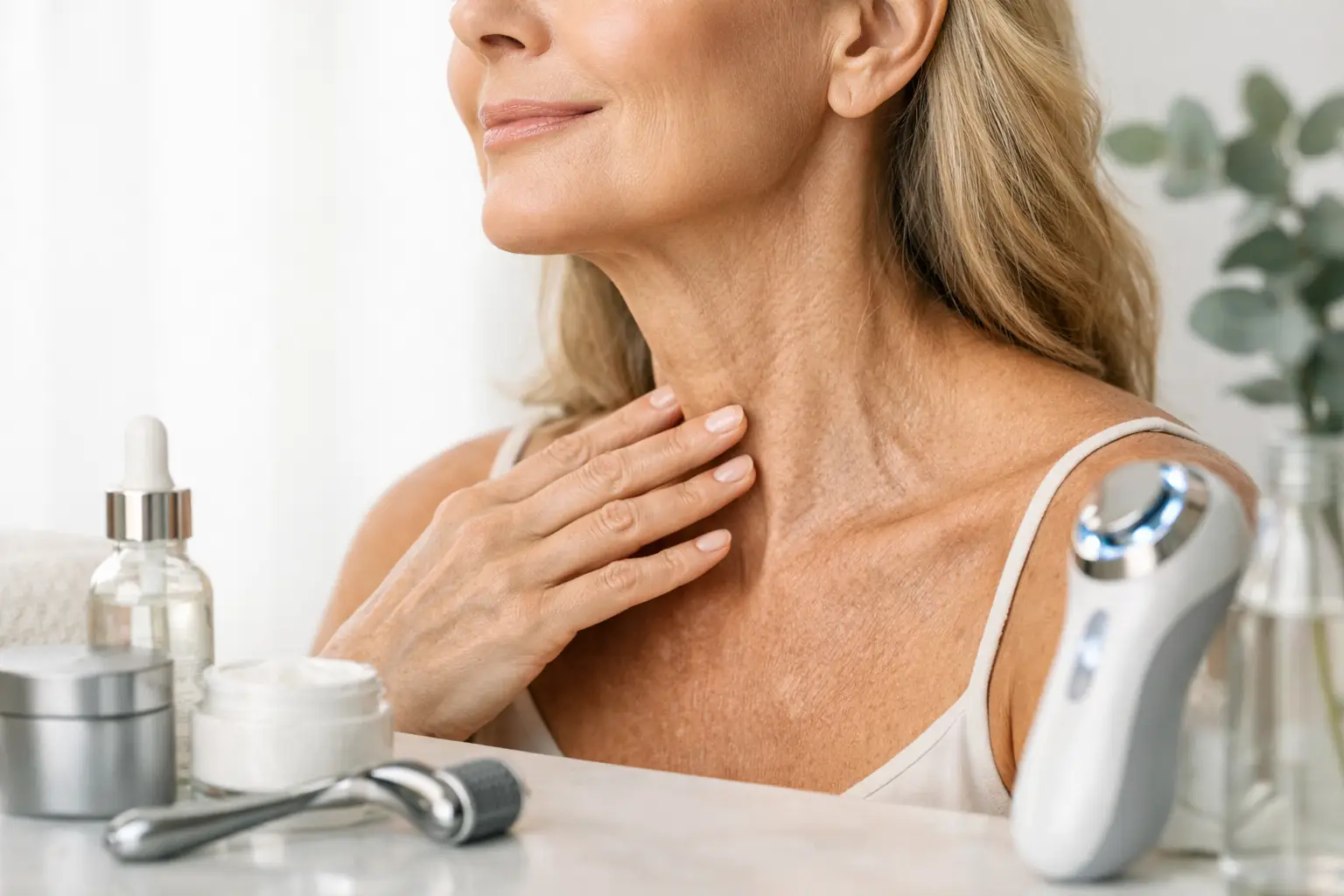
Discover the best treatments for crepey skin, from biostimulators to energy-based tightening and skincare that visibly improves texture.
Crepey skin rarely arrives all at once. It shows up in the places people notice in certain lighting - under the eyes, above the knees, along the arms, on the neck, or across the chest - and suddenly skin looks thinner, finer, and less resilient than it used to. When patients ask about the best treatments for crepey skin, they are usually not looking for a temporary glow. They want smoother texture, firmer support, and a treatment plan that actually makes skin look stronger.
That distinction matters, because crepey skin is not the same as simple dryness. It is usually tied to a mix of collagen loss, elastin breakdown, sun damage, dehydration, and natural thinning that comes with age. Weight changes, genetics, and lifestyle habits can accelerate it too. The most effective approach is rarely a single product or one-size-fits-all procedure. It is a personalized combination of in-clinic treatment and disciplined home care.
What causes crepey skin in the first place?
Crepey skin develops when the skin's structural support starts to weaken. Collagen gives skin firmness, elastin helps it bounce back, and hyaluronic acid supports hydration. As these decline, the surface can begin to look paper-thin, wrinkled, and lax.
Sun exposure is one of the biggest reasons this happens earlier and more visibly. UV damage gradually breaks down collagen and speeds up texture changes, especially on the chest, neck, hands, and arms. Hormonal shifts, rapid weight loss, smoking, and chronically dry skin can also make crepiness more pronounced.
This is why the right treatment depends on what is driving the concern. If the skin is dehydrated, improving moisture can help. If the issue is laxity, collagen stimulation becomes more important. If there is both thinning and volume loss, injectables may play a role alongside device-based treatments.
Best treatments for crepey skin in clinic settings
For visible improvement, professional treatments usually outperform creams alone. The strongest options work by stimulating collagen, tightening tissue, improving dermal quality, or combining several of those effects.
Biostimulators for stronger, thicker-looking skin
Biostimulatory injectables are often one of the most rewarding options for crepey skin because they do more than fill. Rather than simply adding volume, they encourage the skin to produce more of its own collagen over time.
Sculptra is a standout choice when crepey skin is linked to thinning, laxity, and age-related collagen loss. It is especially useful in areas where the skin looks fragile or deflated, such as the temples, cheeks, jawline, or even selected body areas in expert hands. Results build gradually, which appeals to patients who want a natural-looking improvement rather than an obvious overnight change.
Profhilo is another excellent option, particularly when the skin looks dull, lax, and dehydrated at the same time. It spreads within the tissue to improve hydration and skin quality while supporting firmness. For the face, neck, and sometimes the hands, it can create a fresher, more refined look without adding heaviness.
The trade-off is timing. These treatments are not instant in the way a traditional filler can be. They usually require a course of sessions and some patience, but the payoff is often a more elegant and believable result.
Energy-based skin tightening
When crepiness is driven by laxity, energy-based treatments can be highly effective. These technologies deliver controlled heat to stimulate collagen remodeling beneath the surface, helping skin feel firmer and look smoother over time.
Sofwave is especially appealing for patients who want non-surgical lifting and tightening with minimal downtime. It uses ultrasound energy to target the mid-dermis, where collagen stimulation can create visible tightening in the face and neck. This makes it a strong option for early to moderate crepiness, especially when patients are not ready for invasive procedures.
Radiofrequency-based technologies can also improve loose, crepey skin on the face and body. In the right treatment plan, they can help refine texture while addressing mild skin laxity. These treatments are often well suited to the abdomen, thighs, upper arms, and other areas where skin has become softer and less toned.
The key point is that energy devices are not all interchangeable. Depth of treatment, comfort level, number of sessions, and expected results vary. A medically guided assessment is essential if you want a treatment matched to your skin thickness, treatment area, and tolerance for downtime.
Skin boosters and injectable hydration
Some crepey skin looks worse because it is dehydrated and lacking in dermal support. In these cases, skin boosters can make a meaningful difference. They are designed to improve skin quality, elasticity, and hydration from within rather than just sitting on the surface like a moisturizer.
This approach works particularly well for the lower face, neck, décolletage, and hands. Patients often notice that the skin looks less crinkled, more luminous, and more supple. If your crepey skin is still mild, this may be enough to soften the issue significantly. If it is more advanced, it is often best used alongside collagen-stimulating or tightening treatments.
Lasers and resurfacing for texture change
When sun damage is a major part of the picture, resurfacing treatments can help. Certain laser and skin renewal procedures improve the outer texture of the skin while also encouraging collagen production below the surface.
This category is useful for patients whose crepey skin is paired with uneven tone, fine lines, rough texture, or photodamage. The face, chest, and hands often respond well. However, not every skin type is best served by every laser, and downtime can range from minimal to more noticeable depending on the intensity of the treatment.
For many patients, resurfacing is not the whole answer on its own. It improves the skin's surface beautifully, but if deeper laxity is present, combining it with tightening or biostimulation often delivers a better result.
The best treatments for crepey skin at home
Home care will not replicate what injectable or energy-based treatments can do, but it absolutely affects the outcome. In fact, a strong regimen can help maintain professional results and prevent progression.
Retinoids remain one of the most credible skincare options for crepey skin because they support cell turnover and collagen production. Used consistently, they can improve fine lines and texture. The caveat is that they need to be introduced carefully, especially on delicate areas like the neck, where overuse can trigger irritation.
A moisturizer rich in humectants and barrier-supporting ingredients also matters more than many people think. Hyaluronic acid, glycerin, ceramides, and peptides can temporarily plump and smooth the appearance of crepey skin while supporting overall skin health. This is not the same as true lifting, but it makes the skin look healthier and feel more comfortable.
Daily sunscreen is non-negotiable. Without UV protection, even the most advanced treatment plan is working against ongoing collagen loss. Broad-spectrum SPF on the face, neck, chest, and hands is one of the simplest ways to preserve your investment in skin quality.
How to choose the right treatment plan
The best answer depends on where the crepey skin is, how advanced it is, and what kind of result you want. Mild crepiness on the neck may respond beautifully to injectable hydration and a collagen-stimulating device. More advanced crepey skin on the arms or above the knees may require a longer treatment strategy and realistic expectations.
Age is only one factor. Skin thickness, sun history, body area, and current routine all influence what will work best. So does your timeline. If you want gradual improvement with minimal interruption to your routine, collagen-stimulating injectables or ultrasound tightening may be ideal. If you want stronger textural correction and you can accept some recovery time, resurfacing treatments may be worth considering.
At a clinic level, the most successful results usually come from combination planning rather than chasing a single hero treatment. That is where a premium aesthetic practice such as Fit4You Polyclinic can add real value - not by offering more options for the sake of it, but by selecting the right technologies and injectables for your skin's exact pattern of aging.
When expectations need to be realistic
Crepey skin can improve significantly, but treatment does not make skin behave like it did at 25. The goal is better quality, better firmness, and a more refined surface texture. Patients who do best are usually the ones who treat skin rejuvenation as a process, not a one-time fix.
Maintenance often matters as much as the first round of treatment. Collagen stimulation takes time, and skin continues to age. Thoughtful follow-up sessions, seasonal skincare adjustments, and sun protection all help extend results.
If your skin has started to look thinner, looser, or finely wrinkled, that does not mean surgery is your only option. The best treatments for crepey skin can be remarkably effective when chosen well, layered intelligently, and tailored to the way your skin is aging now - not the way someone else's is.
Interested in this treatment?
Book a free consultation with our specialists at Fit4You Polyclinic Dubai.
Book Free Consultation