

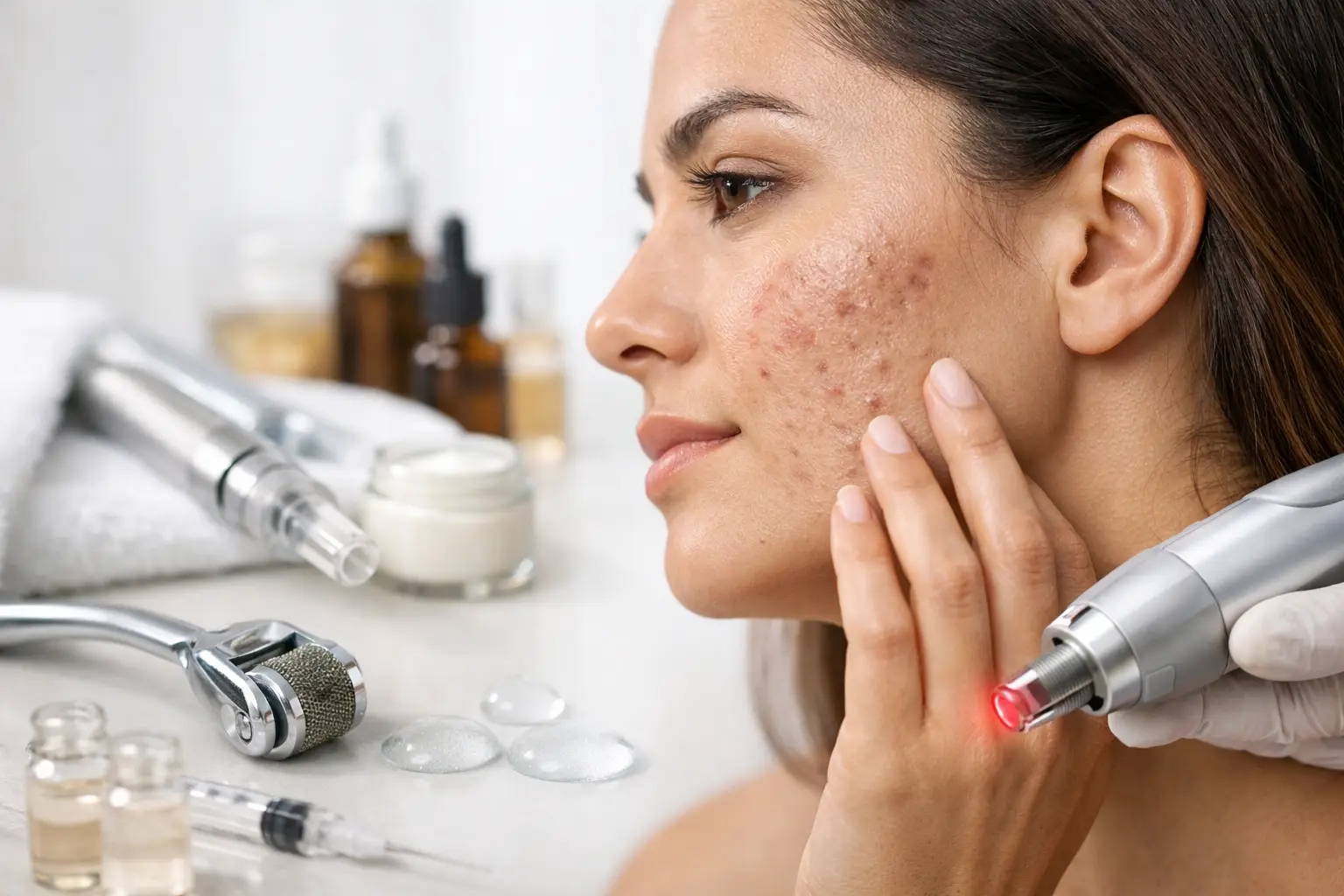
Discover the best treatments for acne scars, from lasers to microneedling and peels, with expert guidance on what works for each scar type.
Acne may be temporary, but the marks it leaves behind can change how your skin looks in certain light, under makeup, and in photos. When patients ask about the best treatments for acne scars, the real answer starts with one detail many people miss - not all acne scars are the same, so the most effective treatment depends on the type of scarring, your skin tone, and how much downtime you can realistically accept.
For image-conscious adults who want polished, visible improvement without guessing their way through trendy fixes, acne scar treatment should feel precise. A thoughtful plan can soften texture, improve tone, and restore smoother-looking skin in a way that still feels natural.
Why acne scars need a customized plan
Acne scars usually fall into a few categories. Atrophic scars are the indented scars most people notice after moderate to severe breakouts. These include ice pick scars, which are narrow and deep, boxcar scars, which have defined edges, and rolling scars, which create uneven texture under the skin. Then there is post-inflammatory hyperpigmentation, which is technically not a scar but can linger as dark marks long after acne has healed.
This distinction matters because a treatment that works beautifully for rolling scars may do very little for deep ice pick scars. In the same way, a strong resurfacing approach may suit one patient but create unnecessary risk for another, especially in deeper skin tones that are more prone to pigment changes. The best results usually come from combining methods rather than expecting one treatment to solve every concern.
Best treatments for acne scars by scar type
If your goal is smoother texture, less visible pitting, and a more refined overall finish, these are the treatments dermatology professionals most often rely on.
Fractional laser resurfacing
Laser resurfacing remains one of the best treatments for acne scars when texture is the main issue. Fractional lasers create controlled micro-injuries in the skin to stimulate collagen remodeling, which helps soften indented scars over time. This can be especially effective for boxcar scars and some rolling scars.
The advantage of laser treatment is precision and visible improvement in skin texture. The trade-off is downtime, redness, and the need for careful aftercare. Not every laser is appropriate for every skin tone, so device selection and practitioner experience matter just as much as the treatment itself.
For patients who want stronger correction and are comfortable with a recovery period, laser resurfacing can deliver meaningful change. For those seeking a gentler approach, other collagen-stimulating options may be more suitable.
Microneedling and RF microneedling
Microneedling is a favorite for good reason. It works by creating tiny channels in the skin that trigger collagen production, gradually improving shallow to moderate acne scars. Standard microneedling can be effective for overall texture, while radiofrequency microneedling adds heat energy to reach deeper layers and enhance remodeling.
This option appeals to many patients because it offers a balance of results and downtime. Skin usually looks pink for a short period, but recovery is generally easier than with aggressive resurfacing. It is often a strong choice for rolling scars and mild boxcar scars, and it can also improve pore appearance and skin quality.
Results are not instant. Most patients need a series of sessions, and improvement builds progressively. That slower pace can actually be an advantage for patients who want refinement without obvious signs of treatment.
Chemical peels
Chemical peels can improve discoloration, mild textural irregularity, and dull, post-acne skin. Superficial and medium-depth peels help accelerate cell turnover, brighten lingering marks, and support a more even complexion. They are generally more effective for post-inflammatory hyperpigmentation and very shallow scarring than for deep pitted scars.
The key with peels is choosing the right strength. Too mild, and you may not see enough change. Too aggressive, and you increase the risk of irritation or pigmentation, especially in melanin-rich skin. In a medically guided setting, peels can become an excellent part of a broader scar-correction plan rather than a standalone fix.
Subcision
Subcision is one of the most underrated treatments for rolling acne scars. During this procedure, a specialist uses a fine instrument to release the fibrous bands pulling the skin downward. Once those bands are broken, the skin can lift and appear smoother.
This is often the missing step when rolling scars do not respond fully to surface treatments alone. A laser can improve the top layer, but if the scar is tethered below, subcision may be what creates the real change. Some bruising and swelling are expected, so timing matters if you have social events or work commitments.
Dermal fillers and biostimulators
For select indented scars, dermal fillers can offer a fast cosmetic improvement by lifting depressed areas. This is especially useful when scars create shadowing that becomes more noticeable under makeup or in overhead lighting. The result is often immediate, though not always permanent depending on the product used.
Biostimulators may also play a role by encouraging collagen production over time. These are best viewed as part of a strategic plan, not a universal answer. They can be valuable for patients who want both correction and skin support, particularly when volume loss makes scars look more pronounced.
TCA CROSS for ice pick scars
Deep, narrow ice pick scars are among the hardest to treat. TCA CROSS is a technique where a high concentration of trichloroacetic acid is placed directly into the scar to stimulate collagen and raise the depressed area over time.
It sounds simple, but it is highly technique-dependent. Done properly, it can be one of the most effective options for this scar type. Done poorly, it can irritate surrounding skin or worsen pigment issues. Ice pick scars rarely improve with facials or gentle resurfacing alone, which is why targeted treatment matters.
What about acne marks versus true scars?
Many patients say they have acne scars when they are really dealing with post-acne marks. Brown, red, or purple discoloration is often easier to treat than textural scarring. In these cases, chemical peels, medical-grade skincare, certain laser settings, and strict sun protection may bring significant improvement.
This is actually encouraging. If the skin looks uneven but does not feel deeply indented, you may not need an aggressive treatment plan. A professional assessment can quickly separate pigmentation from structural scarring and save you from treatments that are stronger than necessary.
Can one treatment do it all?
Usually not. The most elegant outcomes tend to come from combination treatment. A patient might start with subcision for rolling scars, continue with RF microneedling for collagen stimulation, and use peels or targeted skincare to improve residual discoloration. Another patient with boxcar scars and pigmentation might benefit more from fractional laser paired with a pigment-safe maintenance plan.
This layered approach is often what makes premium acne scar treatment feel worth the investment. It is not just about choosing a popular device. It is about sequencing the right treatments in the right order for your skin.
How to choose the right clinic for acne scar treatment
Technology matters, but expertise matters more. Acne scar correction is not a one-size-fits-all service, and strong results depend on accurate diagnosis, safe energy settings, and realistic planning. The best clinics take time to assess scar type, skin behavior, and lifestyle factors before recommending a protocol.
For patients in a luxury aesthetic setting, experience should also feel tailored. That means a treatment plan built around your concerns, your schedule, and the level of correction you want to achieve. At a medically supervised clinic such as Fit4You Polyclinic, this personalized approach is where advanced technology becomes genuinely valuable.
What results should you realistically expect?
This is where honest guidance matters. Acne scars can improve dramatically, but they are rarely erased completely. Most patients see the best outcome as softening rather than total disappearance. Skin looks smoother, makeup applies better, shadows are reduced, and the overall complexion appears more even and refined.
That is still a meaningful transformation. In aesthetic medicine, the most beautiful results are often the ones that make your skin look healthier, fresher, and less distracting, not unnaturally perfect.
If you are deciding among the best treatments for acne scars, look for a plan that respects both science and subtlety. The right treatment should not simply chase the deepest scar. It should elevate the way your entire skin quality looks and feels, so you can move through daily life with more confidence and less need to cover, correct, or second-guess your reflection.
Interested in this treatment?
Book a free consultation with our specialists at Fit4You Polyclinic Dubai.
Book Free Consultation