

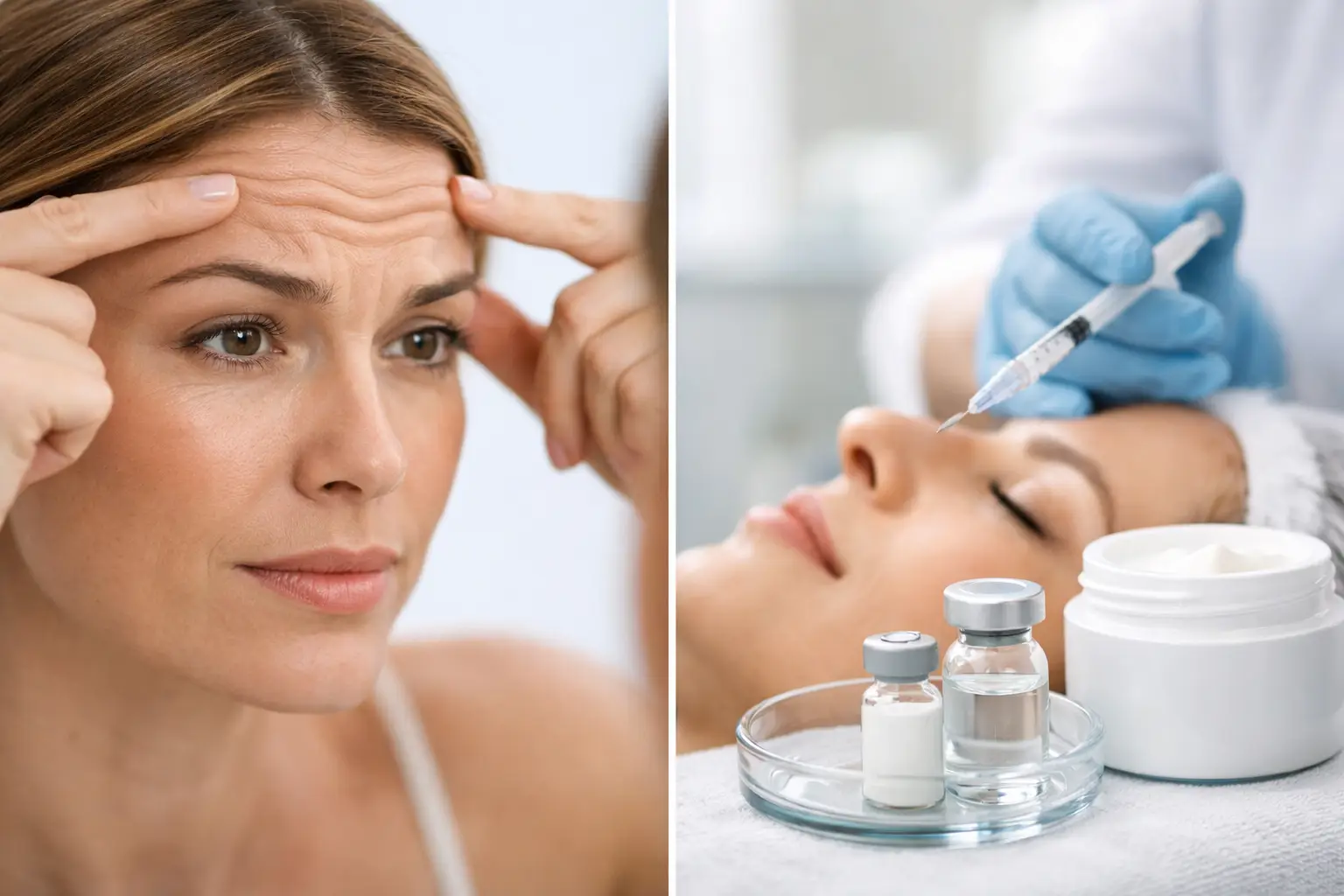
Discover the best treatment for forehead lines, from Botox to skin tightening, with expert insight on results, downtime, and what suits your skin.
Forehead lines rarely appear all at once. They usually start as faint expression marks that show up when you raise your brows, then gradually linger after your face relaxes. That shift is when many patients begin asking the same question: what is the best treatment for forehead lines if you want smoother skin without looking frozen, overfilled, or overtreated?
The answer depends on why your lines formed in the first place. Some are driven mainly by repeated muscle movement. Others are linked to collagen loss, sun exposure, dehydration, thinning skin, or a combination of all four. In a premium aesthetic setting, the goal is not simply to erase lines. It is to choose the right treatment plan for your anatomy, skin quality, age, and desired level of maintenance so the result looks refined and natural.
What causes forehead lines to deepen
The forehead is one of the most expressive parts of the face. Every time you lift your eyebrows, the frontalis muscle contracts and folds the skin horizontally. In your late 20s or 30s, these lines may disappear as soon as the movement stops. Over time, collagen and elastin decline, skin becomes less resilient, and those same expression lines begin to set in.
Lifestyle also matters. Sun damage accelerates collagen breakdown, stress can increase facial tension, and inconsistent skincare often leaves the skin less hydrated and more creased. Genetics play a role as well. Some patients develop visible forehead lines earlier simply because they are more expressive or have thinner skin.
This is why there is no single answer that suits everyone. The best treatment is the one that targets the actual cause of the lines, not just the appearance of them.
Best treatment for forehead lines: the leading options
For most patients, wrinkle relaxers are the first and most effective treatment to consider. If your forehead lines are caused primarily by repeated muscle movement, injectables such as Botox work by softening the activity of the frontalis muscle. This reduces the folding that creates the lines and helps prevent them from becoming deeper.
This option is popular for a reason. It is fast, non-surgical, and highly effective when performed by an experienced medical injector. Results usually begin to appear within a few days, with full effect visible around two weeks. The outcome can look very elegant when dosing is tailored carefully. The objective is not a heavy forehead. It is a smoother, fresher upper face that still feels like you.
That said, Botox is not always the complete answer. If lines are deeply etched into the skin even when your face is at rest, muscle relaxation alone may not fully smooth them. In those cases, a combination approach often delivers the best cosmetic result.
When Botox is the best first step
Botox tends to be the best treatment for forehead lines when the lines worsen with facial movement, you want visible improvement with minimal downtime, and you prefer a predictable maintenance schedule. It is especially effective for dynamic lines and early static lines.
The trade-off is upkeep. Results are temporary, so most patients return every three to four months. Precision also matters. Over-treatment can flatten expression or alter brow position, while under-treatment may leave uneven movement. That is why technique, anatomy knowledge, and personalized dosing are far more important than simply booking the treatment itself.
When skin quality is the bigger issue
Some foreheads do not just need less movement. They need better skin support. If the area looks crepey, sun-damaged, or lax, collagen-stimulating and resurfacing treatments may be more valuable than injectables alone.
Energy-based skin tightening treatments can be an excellent option here. Ultrasound and radiofrequency technologies are designed to stimulate collagen remodeling, helping the skin appear firmer and smoother over time. These treatments do not freeze movement, so they suit patients who want a more subtle change or want to improve skin quality alongside injectables.
The main trade-off is speed. Unlike Botox, which works relatively quickly, collagen stimulation takes time. Results build gradually over weeks or months, and multiple sessions may be recommended depending on the device and the degree of skin aging.
Best treatment for forehead lines with thinning or crepey skin
If the forehead lines are paired with textural aging, skin boosters and biostimulators may also be considered. Treatments such as Profhilo or collagen-supportive injectables can improve hydration, elasticity, and overall skin quality. These are not direct substitutes for wrinkle relaxers, but they can elevate the final result when the skin itself needs rejuvenation.
For some patients, gentle laser resurfacing or advanced medical facials may also help refine superficial lines and improve brightness. These options work best for early lines, dullness, and uneven texture rather than strong expression-driven creases.
Are fillers a good idea for forehead lines?
Patients often ask whether dermal filler is the best treatment for forehead lines. In most cases, filler is not the first choice for the horizontal forehead itself. That area requires caution because of its anatomy and blood vessel pattern, and many experienced aesthetic providers prefer to avoid placing filler there unless there is a very specific indication.
In the right hands, filler may occasionally be used strategically in surrounding areas to balance facial proportions or support brow position, but it is not typically the default solution for forehead wrinkles. For the forehead, Botox and collagen-focused treatments usually make more sense and carry a more natural logic.
This is one of the clearest examples of why expert assessment matters. A treatment can be technically available and still not be the best aesthetic decision.
The best results often come from combination treatment
A refined forehead rarely comes from a one-size-fits-all plan. Many patients benefit most from combining treatments that address both movement and skin quality. Botox may relax the muscle, while a skin-tightening treatment improves firmness and a skin booster enhances hydration.
This layered approach is particularly effective in patients in their late 30s, 40s, and 50s, when forehead lines are usually no longer caused by muscle movement alone. It also suits patients who want natural-looking rejuvenation rather than an obvious "done" appearance.
At a medically led aesthetic clinic, combination planning should feel bespoke, not excessive. The right provider will consider your facial dynamics, brow shape, skin thickness, previous treatments, and tolerance for downtime before recommending anything.
How to choose the right treatment plan
The most practical way to think about forehead line treatment is to match the solution to the pattern.
If your lines show mainly when you raise your brows, Botox is usually the strongest option. If the lines remain visible at rest and the skin looks sun-damaged or thin, you may need Botox plus resurfacing, collagen stimulation, or skin boosters. If your concern is early fine lines with dehydration and dullness, advanced facials and medical skincare may help delay the need for injectables.
Age alone should not decide your treatment, though it often influences the mix. A very expressive 29-year-old may be an ideal Botox candidate, while a 45-year-old with etched lines may need a more comprehensive plan. The best treatment for forehead lines is rarely about chasing the strongest intervention. It is about choosing the smartest one.
What to expect from treatment and maintenance
Most non-surgical forehead line treatments involve little to no downtime, which is one reason they fit so well into busy professional lifestyles. Botox appointments are typically brief, and many patients return to work the same day. Skin tightening and skin booster treatments may cause mild redness or swelling, but this is usually short-lived.
Maintenance is where expectations need to be clear. Forehead lines can be softened beautifully, but they are not treated once and forgotten forever. Muscle movement returns. Collagen continues to change with age. Sun exposure and lifestyle still influence the skin.
The advantage of a personalized maintenance plan is that it keeps results polished rather than corrective. Smaller, well-timed treatments often look better than waiting until lines deepen and then trying to reverse them all at once.
Why consultation matters more than trends
The aesthetics market is full of quick answers, but forehead treatment is more nuanced than social media makes it seem. The forehead affects brow position, upper-face balance, and overall expression. A treatment that looks impressive on one person may feel wrong on another.
That is why medically guided consultation remains the most valuable step. A skilled provider should explain not only what can be done, but what should be done, what can wait, and what combination is most likely to deliver elegant, visible results. At Dubai's Premier Aesthetic Clinic, that level of personalization is what turns a routine anti-aging treatment into a confident, elevated outcome.
If you are deciding on the best treatment for forehead lines, think beyond the fastest fix. The most beautiful results come from respecting facial movement, improving skin quality, and choosing a plan that still looks like you when you walk out the door.
Interested in this treatment?
Book a free consultation with our specialists at Fit4You Polyclinic Dubai.
Book Free Consultation