

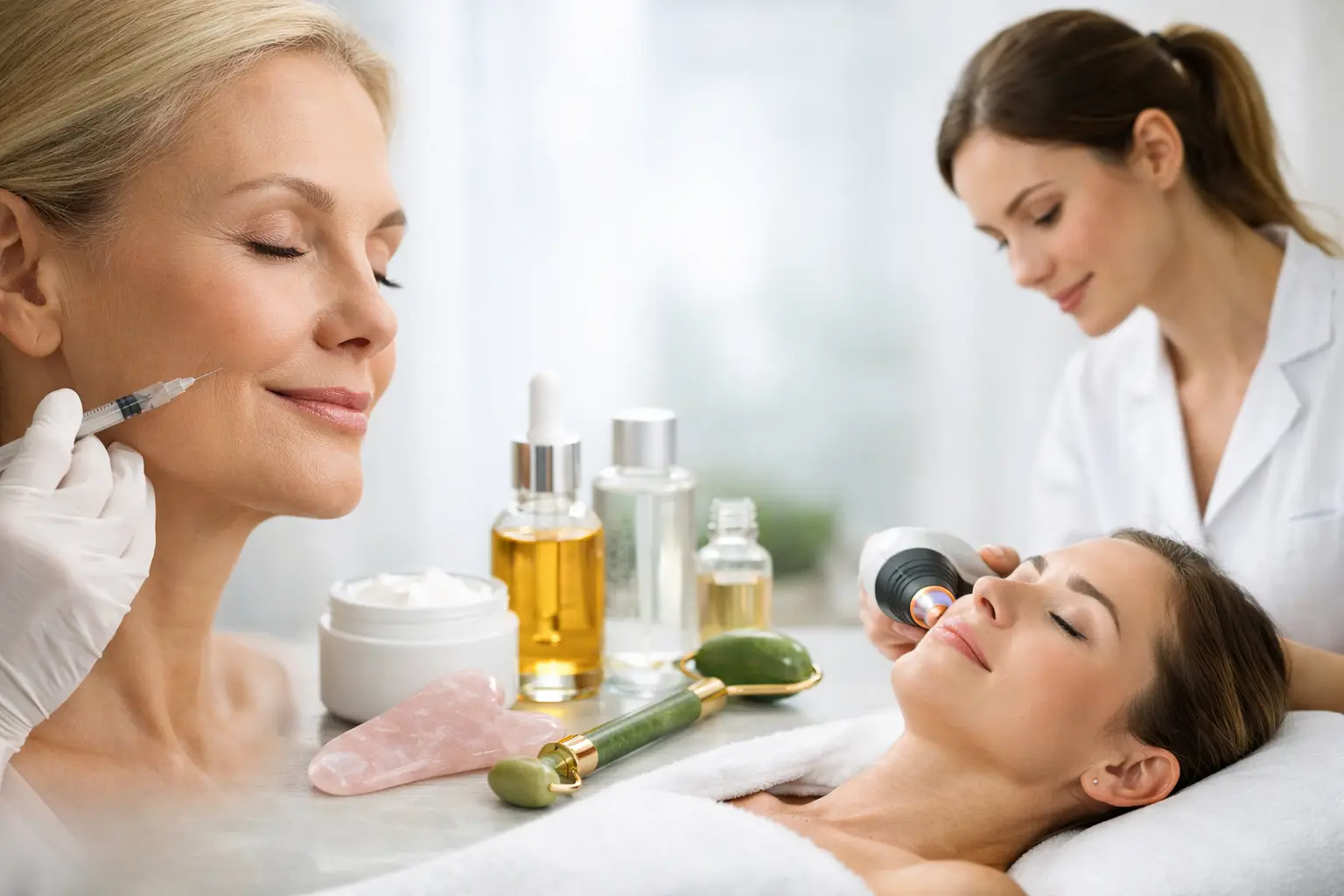
Learn which anti aging treatments deliver real results, how to choose the right option, and what to expect from modern non-surgical care.
You usually notice facial aging in small ways first - makeup settling differently, jawline definition softening in photos, skin looking more tired even after a good night’s sleep. That is exactly why anti aging treatments have shifted so dramatically in recent years. The goal is no longer to change how you look. It is to keep your features looking fresh, firm, and well-rested with precision, subtlety, and as little downtime as possible.
For most patients, the best results do not come from one dramatic procedure. They come from a personalized treatment plan that addresses the specific reasons the face or body is changing. Fine lines develop differently than skin laxity. Volume loss needs a different approach than dullness or texture. And collagen decline rarely responds to the same solution as pigmentation or dehydration. When treatment is chosen well, the result looks natural because it is built around your anatomy, your skin quality, and your timeline.
What anti aging treatments really treat
Aging is often discussed as though it is one concern, but clinically it is a combination of several changes happening at once. Collagen production slows. Skin becomes thinner and less elastic. Fat pads shift. Expression lines become more visible. Sun exposure can leave uneven tone, rough texture, and discoloration that make skin appear older than it is.
This is why a thoughtful anti-aging strategy starts with diagnosis, not trend-chasing. Someone in their early 30s may mainly need prevention and hydration support. Someone in their 40s may be dealing with early laxity, dynamic wrinkles, and mild volume loss. By the 50s and beyond, it is common to need a broader plan that includes lifting, skin quality improvement, and structural support.
The most effective approach is usually layered. One treatment may relax movement-related lines, another may stimulate collagen, and another may restore softness and glow. The art is knowing when to combine treatments and when to keep things simple.
The most effective anti aging treatments today
Non-surgical aesthetics has advanced quickly, and that matters because patients want visible improvement without the commitment, recovery, or risk profile of surgery. The strongest modern options tend to fall into a few categories.
Injectables for lines and volume loss
Wrinkle-relaxing injections remain one of the most reliable options for expression lines on the forehead, between the brows, and around the eyes. When expertly placed, they soften harsh movement without freezing the face. The difference is technique. Over-treatment can flatten expression, while refined dosing preserves natural character.
Dermal fillers serve a different purpose. They restore support where age has reduced volume, often in the cheeks, lips, jawline, chin, or under-eye area. Good filler work should not announce itself. It should make the face look balanced, lifted, and less tired. In many cases, less product placed strategically creates a better long-term result than chasing fullness.
Biostimulatory injectables such as collagen-stimulating treatments offer another path. Rather than simply filling space, they encourage the body to rebuild support gradually. This is especially appealing for patients who want a more subtle evolution and longer-term skin quality improvement.
Skin boosters and regenerative hydration
Some faces do not need more volume. They need better skin. That is where injectable skin boosters come in. These treatments are designed to improve hydration, elasticity, and radiance from within, helping skin look smoother and more refined without changing facial shape.
This category works particularly well for crepey texture, early aging, and skin that appears tired or depleted. It is often ideal for patients who want to look fresher but are not ready for traditional filler, or who want to complement other treatments with a more luminous finish.
Energy-based skin tightening
For mild to moderate laxity, energy-based treatments are often the most exciting area in anti aging care. Technologies that use ultrasound, radiofrequency, or other heat-based mechanisms stimulate collagen remodeling deep within the tissue. The aim is firmer, tighter skin over time.
These treatments are attractive because they can target the lower face, jawline, neck, and even body areas where looseness begins to show. Results are not usually instant, and that is an important trade-off to understand. Collagen stimulation takes time. Patients who expect a surgical-level lift in one session may be disappointed, but those seeking gradual, elegant tightening often find these technologies extremely worthwhile.
Advanced facials and resurfacing
Not every aging concern requires needles or device-based lifting. Skin that looks older can sometimes be suffering more from congestion, dryness, uneven tone, and surface damage than from structural aging. In these cases, advanced facials and resurfacing treatments can make a visible difference.
A treatment such as Hydrafacial can improve clarity, hydration, and glow immediately, making it excellent for maintenance or event preparation. More intensive resurfacing options address pigmentation, rough texture, enlarged pores, and fine lines. The right treatment depends on skin sensitivity, downtime tolerance, and whether the priority is radiance, correction, or both.
How to choose the right anti aging treatments
The best treatment is not the most popular one. It is the one that matches the actual cause of your concern.
If your face looks tired because cheeks have flattened and the under-eye area appears hollow, collagen stimulation or filler may be more effective than a laser facial. If your concern is early jowling or neck laxity, a tightening device may outperform skincare alone. If your skin is dull and textured, you may get more value from resurfacing and hydration support than from adding volume.
Age matters less than presentation. Two people at 40 can need completely different plans based on genetics, sun exposure, lifestyle, and previous treatments. This is where medical consultation becomes essential. A qualified aesthetic provider should assess facial movement, skin quality, volume distribution, and tissue laxity before recommending anything.
An excellent plan also considers your schedule and your comfort level. Some patients want no visible downtime. Others are willing to commit to a series for a stronger collagen response. Some want gradual, discreet maintenance. Others are preparing for a wedding, a major business season, or a milestone event and want more immediate refinement.
Why combination treatment often gives the best result
A single treatment can help, but combination treatment often produces the most polished outcome because aging is multi-layered. Relaxing forehead lines without improving skin texture may leave the face smoother but still tired. Tightening the jawline without addressing midface support may not create enough harmony. Restoring volume without improving skin quality can leave the face looking fuller but not necessarily younger.
That is why premium aesthetic clinics often build treatment plans in phases. One phase may focus on structural support. Another may improve skin quality. A maintenance phase then protects results with periodic touch-ups, collagen stimulation, and targeted facials.
This approach tends to look more sophisticated because it is not about over-correcting one area. It is about creating balance across the whole face and, when needed, the neck and body as well.
What results should look like
The best anti aging treatments do not make people wonder what you had done. They make them think you look rested, healthy, and exceptionally well-maintained. That distinction matters.
Natural-looking rejuvenation depends on restraint, anatomy knowledge, and treatment sequencing. Overfilled cheeks, an overly smooth forehead, or aggressive correction around delicate areas can age the face rather than refresh it. Skilled treatment respects facial proportions and preserves movement.
This is especially important for patients who want longevity in their aesthetic plan. Chasing quick fixes can create an artificial result over time, while a measured strategy supports better aging year after year. At a medically led clinic with advanced technology, such as Fit4You Polyclinic, this usually means combining device-based innovation with injectables and skin therapies in a way that suits the individual rather than forcing everyone into the same formula.
When to start and what to expect
There is no perfect age to start. The right time is when you notice a concern and want to address it with intention rather than waiting for it to become harder to treat. Preventive treatment in your late 20s or 30s can preserve skin quality and reduce the need for more correction later. In your 40s and 50s, a more comprehensive strategy can still produce impressive, natural results without surgery.
It also helps to think in terms of maintenance rather than one-time transformation. Most non-surgical treatments work best when repeated at appropriate intervals. Collagen needs ongoing support. Muscle movement returns. Skin continues to age. The upside is flexibility - your plan can evolve as your face, goals, and lifestyle change.
The smartest place to begin is with an honest assessment of what is bothering you most and what kind of result feels like you. The most effective aesthetic work is not about looking younger than everyone else. It is about looking like yourself at your absolute best, with treatments chosen carefully enough that the result feels effortless.
Interested in this treatment?
Book a free consultation with our specialists at Fit4You Polyclinic Dubai.
Book Free Consultation