

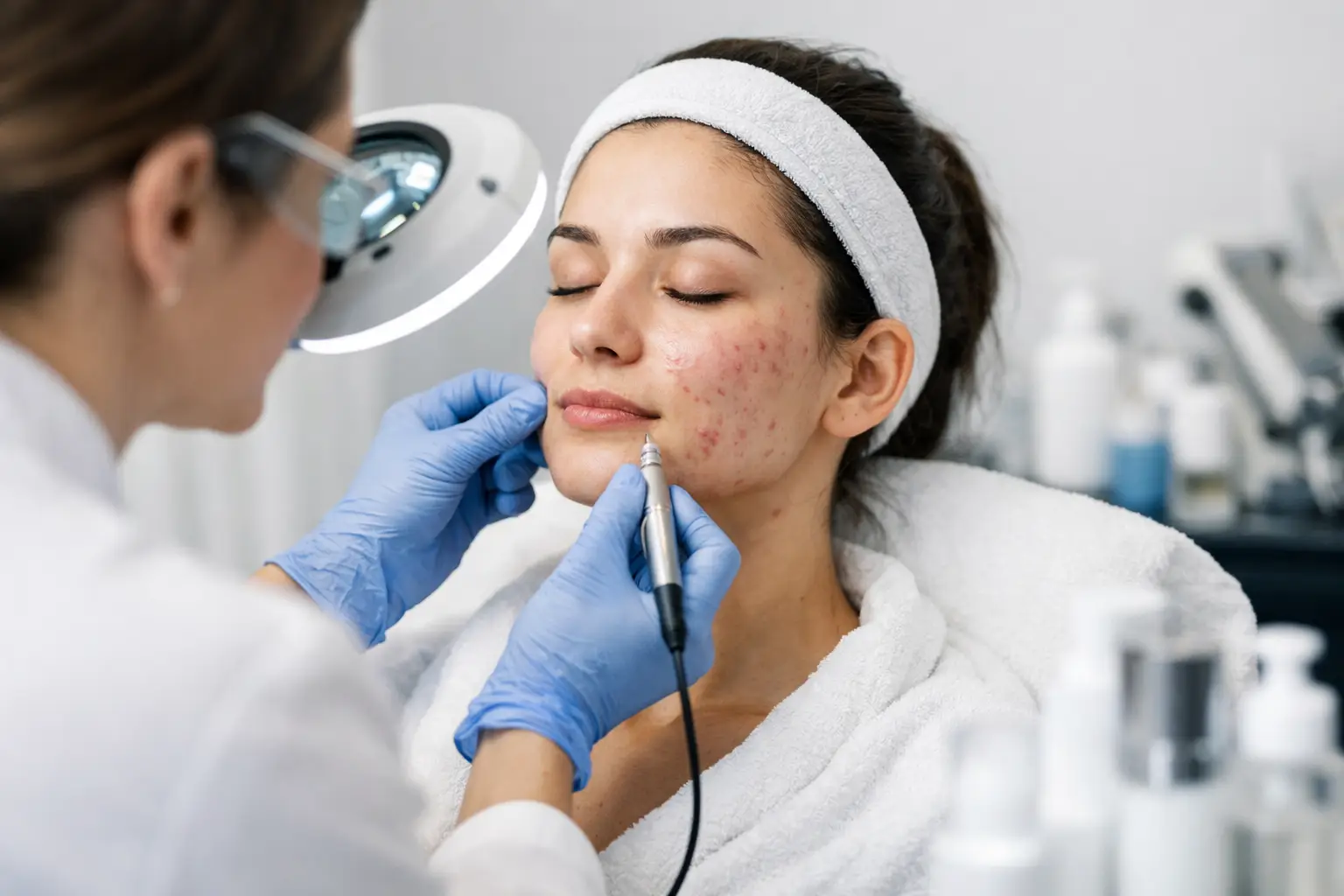
Acne treatment by dermatologist combines precise diagnosis, prescription care, and advanced procedures to clear active breakouts and protect your skin.
A breakout before an important meeting is frustrating. Breakouts that return every month, leave dark marks, or make you avoid mirrors are different. Acne treatment by dermatologist is designed to move beyond trial-and-error skincare, identify what is driving your acne, and create a plan that treats active lesions while protecting the quality of your skin over time.
For adults, acne is rarely as simple as having “oily skin.” Hormonal shifts, stress, certain medications, pore-clogging products, genetics, friction from masks or workout gear, and a disrupted skin barrier can all play a role. The right treatment is therefore personal. A medically guided approach can help you achieve clearer, calmer-looking skin without over-treating it into sensitivity.
Why Dermatologist-Led Acne Care Is Different
A dermatologist does not treat every blemish the same way. During a consultation, they look at the type of acne present, where it appears, how long it has persisted, whether scarring or pigmentation is developing, and how your skin reacts to previous products or treatments.
Whiteheads and blackheads often need a different approach from inflamed papules, pustules, deep cysts, or painful nodules. Acne concentrated along the jawline may point toward hormonal influence, while persistent forehead breakouts can be linked to hair products, sweat, or occlusion. This distinction matters because using the wrong active ingredients can worsen dryness, inflammation, and post-acne marks.
A personalized plan also considers your lifestyle. If you travel frequently, spend time outdoors, wear makeup daily, exercise intensely, or have a demanding schedule, your regimen should be realistic enough to follow consistently. Beautiful results are built through precision and continuity, not a crowded bathroom shelf.
What an Acne Treatment by Dermatologist May Include
Most successful treatment plans combine home care with targeted clinical support. The balance depends on the severity of your acne, your skin tone, your medical history, and your goals for both clear skin and refined texture.
Prescription Topicals for Daily Control
Topical retinoids are among the most established options for comedonal acne because they encourage healthy cell turnover and help prevent pores from becoming blocked. They can also support smoother texture and help soften the appearance of post-acne marks over time. Because retinoids can cause dryness or peeling during the adjustment period, a dermatologist will guide how often to use them and how to protect the skin barrier.
Benzoyl peroxide may be recommended to reduce acne-causing bacteria and inflammation. Topical antibiotics can be helpful in selected cases, typically alongside benzoyl peroxide rather than on their own, to reduce the risk of antibiotic resistance. Other options, including azelaic acid, may be especially valuable when acne and uneven tone appear together.
The goal is not to use every active ingredient at once. A refined routine often performs better: a gentle cleanser, a targeted prescription product, a non-comedogenic moisturizer, and daily broad-spectrum sunscreen. This is particularly important for clients prone to dark spots after breakouts.
Oral Medication When Acne Is More Inflamed
For moderate to severe inflammatory acne, oral medication may be appropriate for a defined period. Oral antibiotics can reduce inflammation and bacterial activity, but they are generally not intended as a long-term standalone solution. They are usually paired with a topical maintenance plan that helps prevent recurrence after the course ends.
Hormonal treatment can be highly effective for some women with cyclical chin, jawline, or lower-face breakouts. A dermatologist may discuss options that address the hormonal component of acne after reviewing your health history and suitability.
For severe, scarring, or treatment-resistant acne, isotretinoin may be considered. It is a powerful prescription treatment with strict monitoring requirements and is not suitable for everyone. When appropriate, it can be transformative, but it requires a thoughtful discussion of expected side effects, laboratory monitoring, pregnancy prevention requirements, and skin-care adjustments during treatment.
Clinical Treatments for Congestion, Marks, and Texture
Medical-grade facials, professional extractions, chemical peels, and selected laser or light-based treatments can complement a dermatologist-led regimen. These treatments are not a substitute for medical acne control when active acne is significant, but they can be valuable in the right sequence.
For example, superficial chemical peels may help with congestion, dullness, and post-inflammatory discoloration. Professional extractions can address stubborn comedones without the trauma and scarring risk of picking. Certain energy-based treatments may be recommended for inflammation, residual redness, or scar-focused care once acne is controlled.
Timing is essential. Aggressive resurfacing on actively inflamed, irritated skin may not be the best first step. Your dermatologist should prioritize stabilizing breakouts, then introduce treatments that improve tone, texture, and acne scarring in a way that respects your skin’s recovery needs.
How Long Does It Take to See Clearer Skin?
Acne treatment requires patience, even when the plan is expertly tailored. Many topical treatments need six to eight weeks before noticeable improvement, while more meaningful clearing may take three months or longer. Early dryness, mild flaking, or a temporary increase in visible congestion can happen with retinoid-based treatment as the skin adjusts.
This does not mean you should push through severe irritation. Burning, swelling, cracking, or persistent redness should be reviewed promptly. The most effective plan is one your skin can tolerate consistently. Sometimes progress means reducing frequency, changing a formulation, or rebuilding the moisture barrier before intensifying treatment.
For clients managing acne marks, the timeline can be longer. Active breakouts may settle before discoloration fades, especially in deeper skin tones. Daily sunscreen, pigment-conscious treatment choices, and avoiding picking are central to achieving an even, luminous finish.
Acne, Acne Scars, and Dark Spots Need Different Strategies
It is common to call every mark left behind by acne a scar, but the distinction affects treatment. Flat brown, gray, or red marks may be post-inflammatory discoloration or redness. These can often improve with time, sun protection, targeted topicals, and carefully selected in-clinic treatments.
Indented scars, such as ice-pick, boxcar, or rolling scars, are structural changes in the skin. They usually require a separate treatment plan after active acne is under control. Depending on scar type and skin suitability, options may include microneedling, chemical reconstruction techniques, subcision, fractional laser treatments, or other dermatologist-directed procedures.
Trying to erase scars while new cysts are still forming can be discouraging and inefficient. First, protect the skin from new inflammation. Then invest in a strategic scar plan designed around your texture, downtime preferences, and desired level of correction.
Habits That Support Professional Acne Treatment
Your daily choices can either reinforce or undermine a clinical plan. Avoid squeezing blemishes, even when a whitehead feels impossible to ignore. Picking drives inflammation deeper and increases the likelihood of discoloration and scarring.
Choose products labeled non-comedogenic when possible, particularly sunscreen, foundation, moisturizers, and hair styling products that touch the forehead or temples. Cleanse after sweating, but do not scrub or use harsh alcohol-based toners in an attempt to “dry out” acne. Over-cleansing can leave skin reactive, tight, and more difficult to treat.
If you suspect a supplement, medication, or cosmetic product is affecting your skin, bring it to your appointment. Even details that seem minor can help a dermatologist recognize a pattern and refine your plan.
When to Book a Dermatology Consultation
You do not need to wait for severe cysts to seek professional support. A consultation is worthwhile when over-the-counter products have not helped after a consistent trial, acne is painful or spreading, breakouts are leaving marks, or your skin care routine has become confusing and irritating.
It is also the right step if acne is affecting your confidence. Clearer skin is not about chasing perfection. It is about feeling comfortable showing up without planning your day around concealer, filters, or the next breakout.
At Fit4You Polyclinic, dermatologist-led acne care can be tailored to your skin’s condition, your schedule, and your vision of healthy, polished skin. A thoughtful consultation is where that transformation begins: with a clear diagnosis, an elevated treatment experience, and a plan that gives your skin the attention it deserves.
Interested in this treatment?
Book a free consultation with our specialists at Fit4You Polyclinic Dubai.
Book Free Consultation